

Do colicky babies actually exist all over the world? What is it like in Africa or Asia, for example? Do parents there have exactly the same problems with their babies? Or is the colicky baby phenomenon more something that affects us people in industrialized countries?
Scientists have found something astonishing: According to their findings, colicky babies are, at least to some extent, typically German. Read on in the article to find out why this is the case.
Are colicky babies a cultural phenomenon?
In South America, Asia, and Africa, colicky babies are unknown. Of course, babies cry there too, but it has a different quality.
Psychologists believe that these peoples have retained a greater natural wisdom. The mothers there are better at knowing how to soothe their babies.
But why is that? Isn't soothing your own child the same worldwide? The answer to this is more complex than it seems at first glance.
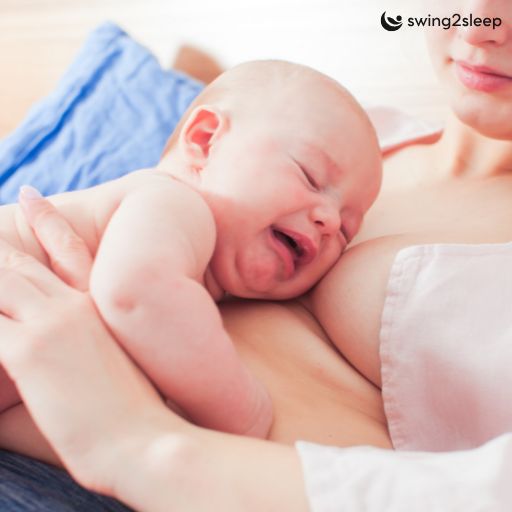
In many regions of the world such as Africa, South America, or Asia, it is a matter of course that babies are always with them. The mothers carry the children almost constantly in a sling on their bodies and accordingly have significantly more physical contact with them. They breastfeed their children more frequently, which strengthens and solidifies the bond.
The natural interaction between baby and mother seems to work significantly better here. The baby sleeps almost always in the parents' bed, and the idea that the baby should sleep in its own little crib tends to cause head-shaking or amusement.
In addition, society in these countries is still shaped to a much greater extent by the traditional extended family. Consequently, children grow up very differently from German babies today. In the large family, everyone takes care of the offspring together.
Grandparents, but also older siblings, cousins, aunts, and uncles are part of the group, and everyone naturally helps look after the baby. This is an enormous relief for the parents, who also benefit from the accumulated experience.

Through close contact with their own grandparents and parents as well as with other expectant or current mothers in the family, they practically learn on the side what it means to be pregnant, to bring a child into the world, and to raise it. No one probably needs to attend a pregnancy course there.
It seems that in the Western world, with our supposedly "civilized" way of life, we have in reality moved far away from our natural and healthy origins.
The fast pace of our professional lives and the fragmentation of extended family units have contributed to the loss of long-standing traditional knowledge to such an extent that it must be re-acquired in every generation and every nuclear family: through books and courses.
Western mothers seem to have forgotten, to some extent, the natural way of interacting with their baby.. Even the basic skill of communicating with the baby is gradually disappearing.
As a result, parents' intuition for their children's well-being also withers away. When the connection is lost and babies feel the separation, it is no wonder that they cry.
Typically German: The fear of spoiling the baby
Typically German is, above all, the constant worry that one might spoil the baby too much. In other countries, it is different. In this country, it seems as if parents are literally afraid of carrying their child too much or holding them in their arms.
The thought of giving the child too much love or closeness seems to be unbearable. Instead, the baby is showered with toys or food at an early stage. Yet it is precisely in the early days that it is enormously important to give the baby as much physical contact and touch as humanly possible.
There can be no talk of spoiling, in the sense of a developmental error – in fact, nothing could be further from the truth. Lots of toys do not make a happy child. What kind of foundations are actually created in the child by trying to compensate for an emotional lack with material goods?
The crazy desire for perfection
The state of our society is illustrated by a thought experiment: What would happen if a girl at school or a young woman at a party were asked what she wants to be or does for a living, and her answer was "housewife and mother".
What images, feelings, and associations arise in you? Motherhood has lost much of its dignity and respect in this country and is now only considered a "hobby" or "side activity". Women today are expected to hold their own in the workplace. This is generally regarded as self-fulfillment.
For this to work, however, the integration of offspring into the CV must be planned with military precision. First comes the qualified education, followed by a few years of working, traveling, partying, and enjoying life and then, perhaps, one child or even two.
Pregnancy, birth, and raising children must fit into one's own life planning, so everything has to run perfectly. Here, too, everything is meticulously planned so that the child can then become the dreamed-of completion of the happy model family.
After a smooth birth, the mother then wants to return to work as quickly as possible, from which she derives a large part of her sense of identity. There is no room for deviations; everything must mesh perfectly like clockwork.
A crying baby is not factored into the ideal vision of a happy family. So when something doesn't quite go as planned, parents often find themselves confronted not only with the current challenge but also with the bursting of their life plan.
Even if everything has gone like clockwork up to this point – children are an unpredictable element.
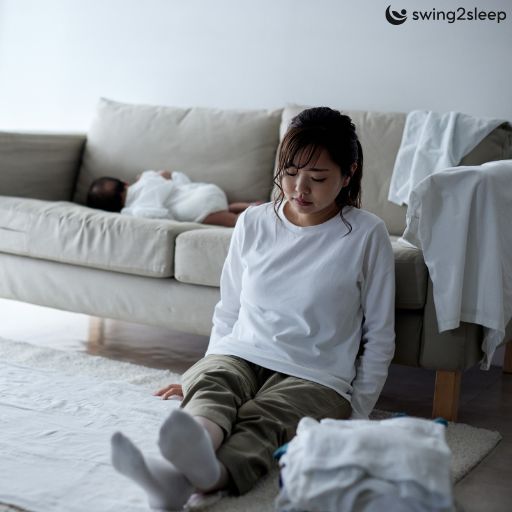
In addition, mothers are exposed to a double burden, because of course they also want to be a good mother despite all their professional ambitions. This puts them under stress practically from the first second, which is also transmitted to the child. And stressed babies cry.
Greater uncertainty among parents
Due to the loss of traditional knowledge outlined above on the one hand, and the lack of support from the extended family in Germany on the other, uncertainty is spreading among young parents. They are constantly accompanied by the fear of doing something wrong.
Experts describe this as "a lack of serenity" and as a "harmful pursuit of perfectionism". Aware of their own inexperience, parents naturally pin their hopes on an easy-care baby, especially since only then will it be possible to continue following their own plan.
But the fact is: babies are human beings who bring their own personality with them at birth. Therefore, there is no way around engaging with your child and their needs. This also includes expecting the unexpected.
Conclusion
Colicky babies, in the sense of babies who seemingly cry frequently and for extended periods for no reason and can hardly be calmed down, appear to be a phenomenon of countries in the so-called "Western world" and here particularly in German-speaking countries.
In contrast, they are virtually unknown in South America, Asia, and Africa—societies where children are handled very differently and where extended families often enable a broad range of care and support for the child.
While within Europe, in countries like Italy or Spain, such multi-generational family structures are still relatively common, they have become a rarity in Germany—with a rapidly declining trend. This opens up room for speculation that the dissolution of traditional family structures could be causally linked to the increase in colicky babies.
And indeed, this development is far from over. Alternative lifestyles, patchwork families, and same-sex partnerships are now also challenging the nuclear family.
But does that mean we should turn back the clock 100 years and that women belong back at the stove? That is neither possible nor desirable.
However, one may certainly ask to what extent the social developments of recent decades have placed people at the center and to what extent overarching economic interests or perceived social necessities have dictated the course.
First tentative signs of a rethink are already visible. More and more employers are concerned about the work-life balance of their employees and are creating offers for flexible working hours, home-office activities, or company childcare.
But as positive as these developments are to be evaluated, they do not solve the actual problem of the lack of family support.
Rather, we as individuals are called upon to close this gap by joining forces with other like-minded people, by specifically forming friendships not only with peers but also with members of other generations, by overcoming isolation by rethinking human communities and human coexistence.
If we also pay attention to local proximity, networks can emerge that are not only emotionally nourishing but also catch us when we need help.
Friendships, cliques, and elective affinities can potentially replace the former extended family functionally in the 21st century without giving up the overcoming of rigid and normative family models. This, of course, requires our own commitment.
Such connections must be sought and nurtured and often renegotiated again and again. But if this creates an environment in which the individual feels secure and protected again, in which knowledge and experience are passed on naturally, and into which babies are born with the security that someone is always there, then it might be worth pursuing this thought further.
A first point of contact could be, for example, our Colicky Baby group on Facebook. Here you can exchange ideas with like-minded people on the subject and make acquaintances.
By the way
Acute relief is provided by our swing2sleep automatic baby hammock. With it, you have a little helper that gently rocks your child to sleep even when you don't have a hand free or just need a break. Added to this is the cozy closeness of the hammock, which ensures that your baby feels as secure as in mommy's belly. This reduces stress and helps the child to relax. Thanks to the swing2sleep, the first time with your baby will be a bit more like you dreamed it would be.