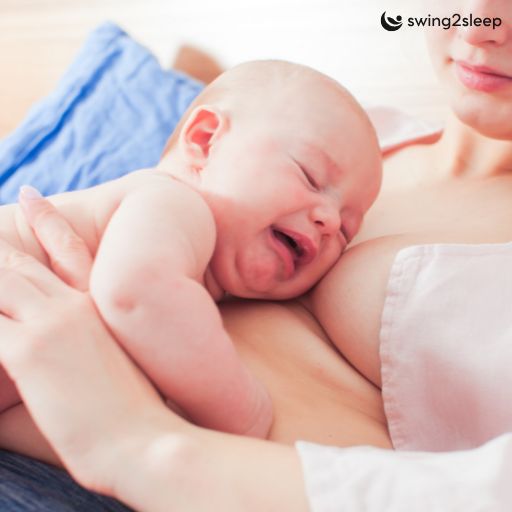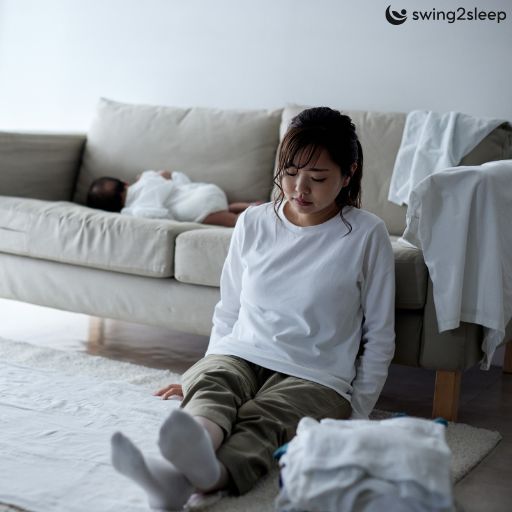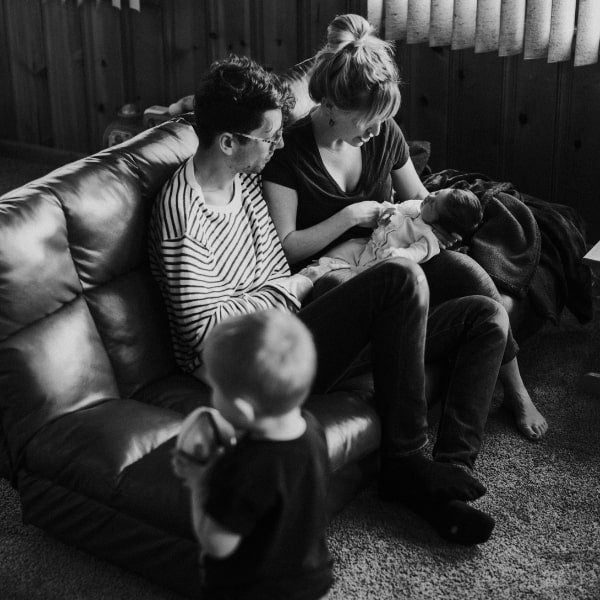


Many parents are familiar with this situation: The day was actually calm, your little one fed, slept, and perhaps even smiled. But as evening approaches, the mood changes. Suddenly, your darling becomes restless, can hardly be soothed, and starts crying or screaming. When your baby cries in the evening, it can feel incredibly stressful, especially after an already exhausting day.
Perhaps you have already tried everything: breastfeeding, carrying, rocking, singing. Nevertheless, nothing seems to really help. Many parents then ask themselves: What is wrong with my baby? Have I done something wrong?
The reassuring news first: In many cases, it is completely normal for a baby to be restless or cry a lot at a later hour. Especially in the first months of life, many families experience a phase in which babies find it particularly difficult to settle down in the evening hours.
In this article, you will learn:
- why babies often cry at the end of the day
- what causes might be behind it
- what can help your baby in this situation
- and why this phase passes by itself for many babies
When your baby cries in the evening, you are not alone
The day with a baby can be beautiful and at the same time incredibly intense. Many parents experience that their little one seems quite content during the day. They feed, sleep in between, and look curiously at the world. But as soon as evening comes, the mood suddenly changes.
Perhaps you know this: Your darling cries at the end of the day, can hardly be soothed, and seems tired and overwhelmed at the same time. Breastfeeding, carrying, rocking, or singing—nothing seems to really help. Especially when the day has already been long, these hours can be particularly exhausting.
Many families experience exactly this pattern. In the late afternoon or early evening, babies often become more restless. Some babies only cry briefly, others scream longer and are difficult to soothe. If your sweetheart cries at a later hour, you are by no means alone with this experience.
For many parents, these hours feel like a small "crying phase" that returns every evening. Perhaps you even have the feeling that your little one cries a lot and particularly intensely in the evening. This can be very stressful, especially if you don't know exactly why your darling is reacting this way.
Why you don't have to blame yourself
When a baby cries loudly at the end of the day, many parents automatically start looking for mistakes. Have I done something wrong? Was the day too exciting? Did I put my darling down too late?
These thoughts are completely understandable. At the same time, it is important to know: In most cases, the crying has nothing to do with you doing something wrong.
Babies are in an enormous developmental phase in the first months of life. Their brain is constantly processing new impressions, their nervous system is maturing, and their sleep rhythm, digestion, and self-regulation also have to develop first. Especially in the evening, all of this can come together.
That's why it happens with many babies that they cry in the evening, even though they have been fed, changed, and given closeness. They are not reacting against you. They are just showing that they need support right now to cope with all the impressions of the day.
Even if these moments sometimes feel endless: For many babies, this phase is a completely normal part of early development. And over time, things will become significantly calmer again for most families.
Baby cries in the evening, is that normal?
Many parents ask themselves exactly this question. During the day, everything seemed relatively calm, and suddenly a phase full of restlessness, weeping, or screaming begins in the evening.
The good news first: In many cases, it is completely normal. Especially in the first months of life, many families experience a time when babies react particularly sensitively in the late afternoon or early evening.
These hours can feel very intense for parents. However, this behavior is often related to completely normal developmental steps that babies go through during this time.
Why many babies become restless especially in the evening
Over the course of a day, your little one collects an incredible number of impressions. Voices, light, movements, new faces, or small changes in everyday life—all of this must be processed by the still immature nervous system.
Many babies manage to cope well with these stimuli during the day. But in the evening, the "system" is often simply exhausted. That is exactly when it can happen that your sweetheart cries loudly at the end of the day, even though their basic needs are actually met.
Some babies then seem:
- very clingy
- quickly overwhelmed
- simultaneously tired and restless
This is also because babies cannot yet regulate their emotions themselves. When tension, fatigue, or overstimulation come together, a baby often reacts by crying or screaming.
In addition, the stress hormone cortisol is broken down more slowly in the evening. This makes it harder for many babies to find their way to sleep. This can lead to loud crying at a later hour, even though they are actually very tired.
How crying can develop in the first weeks and months
In the first weeks of life, babies' crying behavior often changes significantly. Many parents notice that crying initially increases before it later decreases again.
Typical examples include:
- In the first few weeks, many babies cry more frequently overall.
- Crying phases often occur particularly in the evening.
- Crying can reach its peak between the 6th and 8th week.
- After that, it slowly decreases for many babies.
This development is often described as a crying phase. If you would like to learn more about this, you can read more here: Baby crying phase.
Important to know: Even if your little one cries at a later hour, it doesn't automatically mean that something is wrong. For many babies, this phase is simply part of early development, even if it can sometimes feel very long for parents.
Why your baby cries in the evening: common causes explained simply
It is rarely just a single reason. Often, several factors come together. Your little one might be tired, still hungry, exhausted from the day's impressions, and in need of closeness at the same time.
Because babies cannot yet regulate their emotions themselves, they often react with what is available to them: crying or screaming. However, this does not automatically mean that something is wrong. In many cases, your little one is simply showing that the day was just too much.
Overstimulation from a busy day
For adults, a day with a baby often seems quiet. For your sweetheart, however, it is full of new impressions. Voices, light, movements, faces, or noises—all these stimuli must first be processed by the still immature brain.
Over the course of the day, a lot of impressions accumulate. In the evening, your child's nervous system can literally "overflow." Then your sweetheart suddenly seems restless, cries more easily, or starts screaming.
When a baby cries loudly at a later hour, overstimulation is often behind it. Some babies react particularly sensitively to many stimuli. If you feel that your baby is overstimulated, it can help to make the evening quieter earlier and reduce stimuli.
Dimmed lights, a quiet atmosphere, and less activity can help your little one slowly wind down.
Overtiredness: when fatigue makes falling asleep difficult
It sounds paradoxical at first, but a very tired baby often finds it particularly difficult to fall asleep. If your baby has been awake for too long, the body reacts with stress hormones like cortisol.
These hormones make it harder for your offspring to settle down. This is exactly why it often happens that a baby cries at the end of the day, even though they urgently need to sleep.
Overtired babies often appear:
- restless
- tense
- difficult to soothe
Some babies even cry more because they cannot yet find their way to sleep on their own.
Hunger, the need for closeness, and cluster feeding in the evening
Many babies have a particularly strong need for closeness and food in the evening. This behavior is often referred to as "cluster feeding."
During this time, your offspring wants to drink or suckle at the breast repeatedly within a short period. This can be surprising for parents because the baby seemingly just finished eating.
If your baby cries in the evening, it can also mean:
- they are still hungry
- they want to drink more frequently
- they are seeking closeness and security
Breastfed babies in particular use the breast not just for drinking, but also for comfort. Closeness, physical contact, and sucking help many babies to relax.
Gas, air in the belly, and an immature digestive system
The belly can also play a role in the evening. A baby's digestion is still immature in the first few months. While drinking or crying, babies easily swallow air, which can collect in the belly.
This air can cause pressure or discomfort. Some babies react to this with restlessness or crying. If a baby cries at a later hour, parents therefore sometimes also observe:
- legs pulled up
- a firm belly
- sudden high-pitched crying
However, a tummy ache is not always the actual cause. Often, air in the belly only develops as a result of excessive crying.
Why several causes can come together at once
In most cases, there is no single trigger. Rather, several things come together at the same time.
A typical evening can look like this, for example:
- Your little one is overstimulated from the day.
- They are simultaneously very tired.
- Perhaps they are still hungry or want to drink.
- Added to this is a great need for closeness.
When all these factors coincide, it can happen that a baby cries loudly at the end of the day, even though you are already lovingly caring for your child.
The most important thing in this situation: You don't have to find the perfect solution immediately. Often it helps just to stay calm, provide closeness, and show your sweetheart that you are there.
How you can recognize what your offspring needs right now
When your offspring cries at a later hour, many parents try to find out exactly what is behind it. Are they hungry? Are they tired? Or has the day simply been too much?
This is not always easy to recognize. Especially in the evening hours, different needs can overlap. Your offspring might be tired, hungry, and overwhelmed all at the same time.
Nevertheless, there are some signals that can help you understand your offspring better.
Signs of tiredness, hunger, and signs of overstimulation
Babies often show their needs through small signals long before they start to cry. If you recognize these early signs, you can sometimes react beforehand.
4 typical signs of tiredness are, for example:
- Yawning
- Rubbing eyes
- Looking away or averting their gaze
- Suddenly becoming fussy
Some babies also become quieter or seem less interested in their surroundings.
4 signs of hunger, on the other hand, can look like this:
- Rooting movements with the head
- Sucking on hands
- Restless smacking sounds
- Short, impatient noises
Especially in the evening, many babies want to drink more frequently. If your little one cries loudly at the end of the day, it could also be that they simply need closeness and food once more.
You can often recognize overstimulation or too many sensory inputs by the fact that your offspring:
- turns away
- cries more quickly
- clenches their fists
- appears very restless
In such moments, it often helps to make the environment quieter and give your sweetheart closeness.
Why babies are often harder to read in the evening than during the day
During the day, many babies can still be calmed relatively well. A nap, a meal, or some closeness are often enough.
In the evening, it's different. If your little one cries at a later hour, several needs can occur simultaneously. Your baby might be tired but at the same time still hungry or in need of closeness.
Furthermore, your offspring is often already exhausted at the end of the day. The nervous system has processed many impressions, and the ability for self-regulation is still very limited.
That is why many babies react more quickly with weeping or crying in the evening. The signals can be less clear than during the day. For parents, it sometimes feels as if all strategies suddenly stop working.
But this doesn't mean you are misunderstanding your offspring. Rather, it shows that the evening is simply a particularly sensitive time for many babies.
What helps when your offspring cries in the evening?
When your baby cries in the evening, many parents want one thing above all: a quick solution. Unfortunately, there is no single tip that works immediately for every baby. Every child reacts a little differently.
Nevertheless, there are some things that can help many babies in the evening. Often it is about letting the day wind down slowly and helping your sweetheart to settle down.
Reduce stimuli and make the evening quieter
Many babies react sensitively to too many impressions in the evening. Lights, noises, conversations, or screens can cause your baby's nervous system to become even more active.
If your offspring cries loudly in the evening, it can therefore be helpful to consciously make the transition into the evening quieter. Some families start making the environment more relaxed as early as late afternoon.
This can look like this, for example:
- Dimming lights
- Turning off the TV or music
- Fewer visitors or activities
- Creating a quiet atmosphere
A quieter environment helps many babies to better process the impressions of the day. If you feel that your little one seems quickly overwhelmed, the topic of sensory overload in babies can also play a role.
Use closeness, carrying, and steady movement
Closeness is one of the strongest sedatives for babies. Your heartbeat, your voice, and your body heat give your sweetheart security.
Many parents notice that their offspring calms down faster when they carry them or gently rock them. Steady movements remind babies of their time in the womb and can be very relaxing.
These things can help:
- Carrying your baby in your arms
- Using a wrap or a baby carrier
- Walking gently back and forth
- Rocking your baby quietly
Some babies respond particularly well to rhythmic movements, while others primarily need closeness and physical contact.
Understanding breastfeeding, feeding, and sucking as a way to soothe
Many babies want to drink more frequently in the evening than during the day. This may seem surprising at first, but it is completely normal.
When breastfeeding or feeding, it is not just about food for your offspring. Sucking, closeness, and physical contact also have a calming effect. So it may be that they want to drink again or simply have the need to suckle.
Especially in the first few months, many babies also use the breast or bottle to relax and process the day.
Rituals, repetition, and a gentle transition into the night
Babies benefit greatly from recurring routines. A calm evening ritual can help your baby understand that the day is slowly coming to an end.
If your little one cries loudly at a later hour, a consistent routine can sometimes help to de-escalate the situation.
4 typical evening rituals can be:
- a warm bath
- a short baby massage
- quiet breastfeeding or feeding
- a song or quiet talking
The perfect ritual is not what matters. Repetition is much more important. If your little one experiences similar routines every evening, the transition into the night often feels more familiar.
What you can do if your baby cannot be calmed at all
Sometimes nothing seems to help. You have carried, breastfed, and changed your baby, and yet your little one continues to cry in the evening.
Such moments can be very stressful. In this situation, it is important to know that you don't have to do everything alone.
If your baby is crying and cannot be calmed, it can help to:
- briefly get support from your partner
- put your baby down safely and take a moment to breathe
- get some fresh air
- ask someone you know for help
In these moments, your sweetheart needs one thing above all: someone who stays calmly with them. And sometimes that also means that you are allowed to gather some strength yourself first.
What you can do for yourself in an acute situation
A baby's cry is designed to get our attention immediately. Your body reacts to it with stress, your heart beats faster, your muscles tense up, and you want to soothe your little one immediately. This can feel very emotional and very intense.
This is completely normal. At the same time, it is important to know: the calmer you can stay yourself, the easier it is for your offspring to wind down again. Especially in difficult moments, you are therefore allowed to look after yourself too.
Why your own regulation is important now
Babies orient themselves strongly towards the people around them. They sense very precisely whether someone is calm or tense. If your offspring cries loudly in the evening, your own calmness can therefore be an important support.
Of course, this doesn't mean that you always have to stay composed. No one stays calm when a baby cries for a long time. Sometimes just a short moment helps to gain some distance again.
A few things can help with this:
- consciously breathe in and out slowly
- relax your shoulders
- hold your baby calmly and close to you
- tell yourself internally: "This phase will pass"
Even small breaks for your own nervous system can make a difference. If you become a little more relaxed, this calmness is often transferred to your offspring.
Breaks, support, and safe handovers in everyday life
If your baby cries late at night, you don't have to handle this situation alone. Especially after a long day, it is completely understandable if your strength eventually fades.
Many families find it a great relief to take turns. Perhaps your partner can carry your little one for a while while you take a short breather.
These options can also help:
- take a short break in the next room
- place your baby safely in their crib while you briefly collect yourself
- ask friends or family for support
- exchange experiences with other parents
These small breaks do not mean that you are abandoning your darling. On the contrary: they help you regain strength so that you can then calmly accompany your baby.
Especially during intense phases, support is often the key to making everyday life with a baby a little easier again.
When you should take a closer look
When your baby cries in the evening, in many cases this is part of a normal developmental phase. Especially in the first months of life, babies often react sensitively to tiredness, hunger, or the impressions of the day.
Nevertheless, many parents eventually ask themselves: Is this still normal or is there more to it?
It can be helpful to observe your little one's crying more closely. How long does it last? Does it only occur late at night or also during the day? And can your baby be calmed down in between?
These questions can help to better assess the situation.
Difference between evening restlessness and a colicky baby
Many babies have a phase in which they cry particularly much in the evening. This so-called "crying hour" can last between one and several hours and often occurs at the same time every day.
Even if your darling cries in the evening, it doesn't automatically mean they are a colicky baby.
Professionals usually only speak of a colicky baby when the so-called "rule of three" is met.
This means:
- crying for more than 3 hours per day
- on more than 3 days per week
- for more than 3 weeks
If your sweetheart meets these criteria and can hardly be calmed down, it may be useful to take a closer look. Sometimes there is a so-called regulation disorder behind it, where babies need particularly much support with self-regulation.
The important thing is: even in such cases, parents have done nothing wrong. Some babies simply need more guidance and support than others.
When medical advice is useful
In most cases, evening crying is harmless. Nevertheless, there are situations in which it is useful to seek medical advice.
You should contact your pediatrician if, for example, the following things occur in addition to the crying:
- fever
- refusal to drink
- severe vomiting
- unusual or changed bowel movements
- your baby seems very limp or lethargic
Your own gut feeling is also important. If you feel that something is wrong, you can seek medical advice at any time.
When a crying clinic or early support can help
If your offspring cries in the evening and this situation becomes very stressful over a long period of time, it can be helpful to get outside support.
In many cities, there are so-called "crying clinics" or counseling centers for families with babies who cry a lot. Specialists work there to help parents understand their baby better and find solutions for everyday life together.
Midwives, family midwives, or counseling centers for early help can also be valuable points of contact.
Sometimes just a conversation helps to gain new perspectives and take the pressure off the situation. You don't have to go through this phase alone.
How an automatic baby hammock can help
When your baby cries in the evening, many parents want one thing above all: a way to help their baby settle down more easily. In addition to closeness, carrying, or breastfeeding, gentle movement can also play a role.
Many babies are particularly sensitive to steady, rhythmic movements. These movements remind them of their time in the womb, where they were constantly rocked gently, for example when the mother was walking, breathing, or turning.
That is why movement can have a calming effect for some babies, especially in the evening when the day has been very intense.
Why rhythmic movement can be calming for some babies
Rhythmic movements have a regulating effect on many babies. Gentle rocking or carrying can help to release tension.
The reason for this lies, among other things, in the nervous system. Steady movements send calming signals to the body. Heart rate and breathing can stabilize, while stress hormones slowly decrease again.
Many parents therefore notice that their baby calms down faster when they:
- rock them in their arms
- walk slowly through the apartment
- carry them in a sling
These movements convey security and remind babies of familiar physical experiences from pregnancy.
Why an automatic baby hammock can be a possible support in the evening routine
Some parents also discover an automatic baby hammock as a support in everyday life. An automatic baby hammock creates a gentle up-and-down movement that many babies find soothing.
This steady movement can help your baby relax more easily. Especially babies who need a lot of closeness and movement sometimes respond positively to it.
However, it is important to note: An automatic baby hammock is not a miracle cure and does not work the same for every baby. But it can be a way to make the evening a bit more relaxed, especially if your little one responds well to gentle movements.
For some families, it becomes a small support in everyday life while their baby slowly learns to settle down better.
When does it stop when a baby cries in the evening?
When your sweetheart cries at a later hour, many parents eventually ask themselves the same question: When will it finally get easier? Especially when the evenings are regularly very exhausting, this phase can feel incredibly long.
The good news is: For most babies, crying behavior changes significantly over the course of the first few months. Even if it might be hard to imagine at the moment, for many families it becomes noticeably quieter over time.
Why it often gets easier with maturation
In the first months of life, your offspring develops at a rapid pace. The nervous system matures, digestion becomes more stable, and your little one learns step by step to deal better with stimuli.
The sleep rhythm also begins to structure itself slowly. Many babies find it easier to fall asleep as they get older and can calm themselves better.
That is why many parents report that their baby cries particularly often in the evening, especially in the first few weeks. This phase often reaches its peak around the sixth to eighth week of life.
At around three to four months, it becomes significantly quieter for many babies. Some babies even stop crying so much at a later hour from one day to the next.
Why this phase can still feel very long
Even if this development is completely normal, the time feels very intense for many parents. When your sweetheart cries in the evening, you are often already tired from the day and just want a few quiet minutes. That is precisely why these hours can be particularly stressful. Sometimes the feeling even arises that everything repeats itself every evening.
However, many parents later report that in retrospect, this phase feels much shorter than it appeared at the time. With each week, your offspring learns a little bit more about their environment and how they can find peace themselves.
Until then, you can keep reminding yourself: This phase will pass, even if it feels very long at the moment.
Conclusion: When your baby cries in the evening, they don't need perfect parents
When your offspring cries at a later hour, it can quickly feel like a major challenge. Especially after a long day, many parents just want a quiet evening. Instead, exactly then, a phase full of restlessness, crying, and exhausted attempts to calm the baby sometimes begins.
In such moments, one thing is particularly important: You don't have to be a perfect parent. Your darling doesn't need perfect solutions, but above all your closeness, patience, and companionship.
Many babies have a time in the first months of life when they are particularly restless in the evening. This doesn't mean you're doing anything wrong. It just shows that your sweetheart is still learning to deal with tiredness, stimuli, and new impressions.
What you can take away from this phase
Even if this time is sometimes very exhausting, it can help you get to know your offspring better and better. Over time, you often recognize more quickly what is good for your child and what helps them to calm down.
Perhaps you will take these thoughts away from this phase in particular:
- Your sweetheart is not crying to overwhelm you.
- Many babies have a particularly restless time at the end of the day.
- You are allowed to get support if it becomes too much for you.
- This phase will become quieter again for most families.
So when your offspring cries in the evening, it doesn't mean that something is going wrong. Often it is just a small stage in early development, one that passes with time.
And until then, you can tell yourself again and again: For your sweetheart, you are exactly the person they need right now.
5 common questions when a baby cries in the evening
1. Why does my baby always cry in the evening?
Many babies are particularly restless in the evening because they have to process the impressions of the day. Overstimulation, overtiredness, hunger, or an as yet immature digestion can lead to a baby crying at a later hour and having difficulty settling down.
2. How long does the evening crying phase last in babies?
For many babies, this phase begins in the first weeks of life and becomes significantly better from the third or fourth month. As the nervous system matures, babies gradually learn to regulate themselves better.
3. Is it normal if my baby cries every evening?
Yes, many babies have a so-called "witching hour" in the evening. This does not automatically mean that something is wrong. The most important thing is that your little one otherwise seems healthy, drinks, and gains weight.
4. What helps if my baby won't settle down in the evening?
A quiet environment, fewer stimuli, lots of closeness, carrying, breastfeeding, or a fixed evening routine can be helpful. Some babies also calm down through steady movement or monotonous noises.
5. When should I see a doctor if my baby cries a lot?
If your offspring also has a fever, drinks poorly, seems apathetic, or you feel that they are in pain, you should seek medical advice.