

If your baby cannot be calmed and screams excessively for no apparent reason, this is certainly a great burden for you as parents. Often, this behavior is not a classic three-month colic, but a so-called baby regulation disorder, which unsettles many parents.
In this post, we explain the terms and clarify what they have to do with a high-need baby. We also show you how to recognize regulation disorders and what you can do about them.
What is a baby regulation disorder and what does three-month colic have to do with it?
The term "three-month colic" is used to describe excessive crying or seizure-like crying fits in a baby. It used to be assumed that gas and colic were the cause of the crying.
Therefore, for a long time, feeding problems seemed to be behind it. Today, it is more likely assumed that the gas only occurs because the child swallows a lot of air while crying.
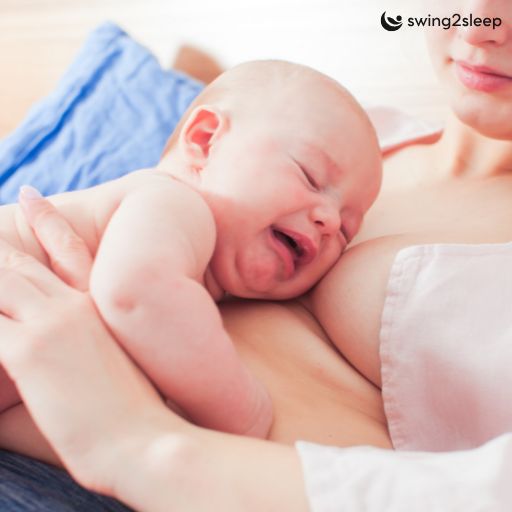
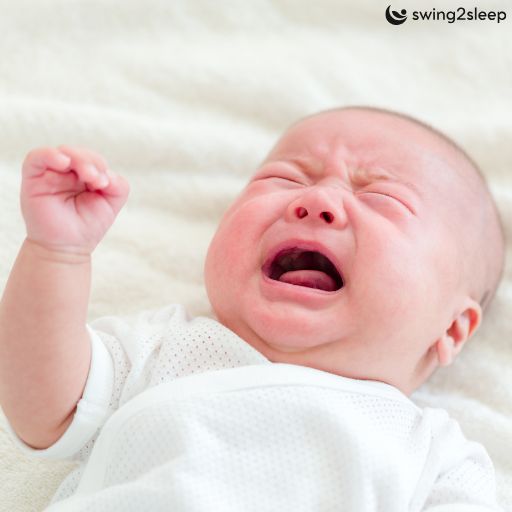
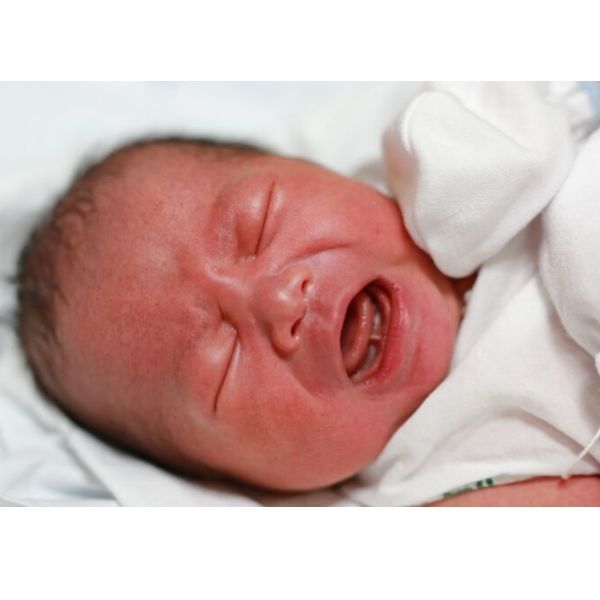
The crying fits occur primarily after feeding or in the early evening hours. The baby doubles over with abdominal pain, pulls up its legs, and overextends its back. It often has a red face and a real bloated belly.
As a parent, you can quickly despair, as apparently nothing can provide the baby with relief and no reason for the crying is recognizable. Nevertheless, all attempts at calming fail and the baby continues to cry for inexplicable reasons. Three-month colic gets its name from the fact that the symptoms often last for three months and then disappear. This assumption is now outdated.
Nowadays, doctors are more likely to assume that it is a regulation disorder. This means that the child cries because it is not yet able to calm itself independently.
Because the abdominal discomfort is a secondary symptom of this, the terms three-month colic and regulation disorder are now used synonymously, although strictly speaking, this is misleading.

What is behind excessive crying in babies?
The seizure-like crying of affected babies usually begins after the first two weeks of life and increases in intensity again from the sixth week of life. It ends approximately at the beginning of the fourth month of life.
It is estimated that about 10 to 20 percent of all infants are affected in the first three months of life. In about 8 percent of babies, the problem even persists beyond the third month of life.
High-need babies often have trouble switching off and are sensitive to stimuli of all kinds. They have difficulty assessing different and new situations and react extremely sensitively and crankily to them. These children first have to learn to process the many new impressions.
They are not yet able to regulate their behavior. This will develop over time, but as long as this developmental step has not yet occurred, they react to overstimulation with excessive crying.
The swing2sleep automatic baby hammock features a special sleep net. It ensures that your baby is not exposed to too many stimuli. Furthermore, the rhythmic vibrations provide a sense of security, just like in mommy's belly. This way, your baby can finally relax and settle down.
To better categorize when this behavior is still normal and when experts speak of a regulation disorder, a clear definition helps.
When is a baby considered a high-need baby?
Every baby cries. For an infant, this is a kind of distress signal with which they communicate that their needs have not been met. First, they try to tell us that something is wrong using milder methods such as body language, facial expressions, or even sounds.
Only when this is not perceived by us do they resort to the last means of communication: crying.
Through this shrill sound, it is perceived by the mother or father as a distress signal. The need to immediately take care of crying babies is biologically deeply anchored in us. This is also the reason why it feels so terrible when you cannot calm your crying baby.
Normally, the crying should subside as soon as the grievance has been addressed. But for some babies, this does not seem to be the case. Even though you have taken care of everything, they continue to cry without any further recognizable cause. This is often a great burden for both parent and child.
If the crying continues for several hours daily over a longer period of time without any apparent reason and without you being able to calm your baby, this indicates that your child is suffering from regulation disorders – you have a high-need baby.
There is a rule of thumb for defining a high-need baby.
The so-called rule of 3 states that it is a high-need baby if it:
- cries on at least three days of the week
- for more than three hours daily and
- over a period of more than three weeks
9 Typical signs of a baby with a regulation disorder
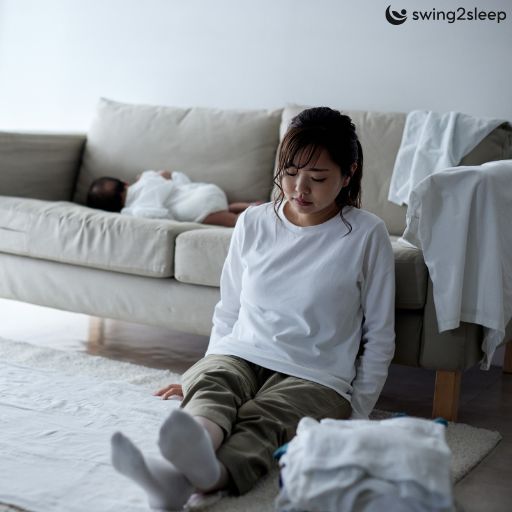
Parental nerves can be quite strained by the seemingly groundless crying of their baby. If a baby cannot be calmed, parents often feel powerless, overwhelmed, and guilty. Perhaps it can help you if a regulation disorder is identified as the cause of the crying.
Early childhood regulation disorders can be recognized by the following signs:
- long-lasting crying (fussing) and restlessness
- general dissatisfaction
- poor sleep-wake rhythm
- difficulty falling asleep
- often very short daytime sleep phases (usually leading to overtiredness towards the evening)
- difficult or impossible to calm or comfort
- bloated belly ("three-month colic")
- high muscle tension (pulling up the legs, clenching fists, and often overextending the back)
- reddish skin discoloration
Serious illnesses or lack of regulation?
Of course, your baby's crying fits in infancy and toddlerhood can also be caused by serious illnesses or childhood diseases. To clarify this, you should definitely have your offspring examined by a pediatrician.
Typical illnesses would be:
- Milk protein intolerance: Some infants have an intolerance to the proteins in cow's milk. These can be contained in infant formula, but also in breast milk. The symptoms here are very diverse.
- Urinary tract infection: A urinary tract infection is very painful, but difficult for parents to recognize. Babies then cry especially when urinating, which we often do not see through the diaper and therefore cannot assign.
- Intestinal obstruction: An intestinal obstruction is a pathological interruption of the intestinal passage. This is an acutely life-threatening situation. An intestinal obstruction can have many causes, such as swallowed small parts or twisted intestinal loops.
- Constipation: Constipation is more common in children who are bottle-fed (supplementary milk formula) or during complementary feeding. Your baby has severe problems passing stool, or bowel movements stop altogether.
- Gastroesophageal reflux: Gastroesophageal reflux is painful. The fed milk flows back from the stomach into the esophagus mixed with stomach acid. The muscle responsible for closing the esophagus is not yet fully matured.
- KISS syndrome: Some experts see a connection between persistent crying and a misalignment in the area of the upper cervical spine.
- Middle ear infection: Even infants can be affected by a painful middle ear infection.
- Inguinal hernia: An inguinal hernia occurs in 4% of all newborns. In about half of these cases, the inguinal hernia occurs in the first year of life.

Can a sleep disorder be prevented?
It is suspected that regulatory disorders in infancy and toddlerhood are related to a problem in the parent-child relationship. This in turn can occur if the parents are exposed to massive stress. This naturally leads to a vicious circle: the baby cries, which causes stress for the parents, which subsequently intensifies the regulatory disorder.
To prevent a regulatory disorder, it is therefore important to strengthen the parent-child bond and keep stress as low as possible for everyone involved. As much skin contact as possible with the baby and a regulated daily routine with rituals for falling asleep can already achieve a lot. In addition, a newborn has to cope with the many new impressions that overwhelm it. Therefore, it is also important to avoid sensory overload.
If organic causes have been ruled out, you could, for example, contact one of the many crying clinics in Germany for a precise diagnosis. They can diagnose sleep and regulatory disorders and give you valuable tips along the way. Centers for child and adolescent health can also help you.
The automatic baby hammock from swing2sleep provides relief for sleep and regulatory disorders
When it comes to shielding against sensory overload and, above all, reducing stress, our motorized automatic baby hammock is a superhero! With its tireless, gentle vibrations, it rocks your baby gently to sleep.
The cozy closeness ensures that your baby feels secure as if in mommy's belly – undisturbed and protected from external influences. This way, even a child with regulatory disorders can fall asleep better. And because you don't have to constantly push the automatic baby hammock from swing2sleep, you also gain valuable free time to take a deep breath.
Frequently asked questions about baby regulatory disorders
How do regulatory disorders manifest in babies?
Regulatory disorders often manifest through long-lasting crying that is difficult to soothe, severe restlessness, and problems falling and staying asleep. Many babies react particularly sensitively to stimuli and quickly seem overwhelmed, especially in the afternoon or evening.
How long do babies have regulatory disorders?
Many babies show the strongest phase in the first weeks of life. Often it gets significantly better by the third or fourth month of life because the nervous system matures and the baby can process stimuli better. The course can vary individually.
How do I help my baby regulate themselves?
Closeness, physical contact, and recurring routines that provide security are helpful. A quiet environment with fewer stimuli and steady movements can reduce overwhelm. If you get relief yourself, it also helps your baby because stress is quickly transmitted.
How long does a regulatory disorder last in babies?
In many cases, a baby regulatory disorder is temporary and subsides as self-regulation develops. If the crying remains very intense for weeks or puts a heavy strain on you, a consultation, for example in a crying clinic, can quickly bring relief.