


New situations challenge us, especially when many impressions flood in at once. We need time to sort through stimuli, categorize them, and feel safe.
For a newborn, this transition is massive. Having just been surrounded by darkness, warmth, and muffled sounds in the womb, they suddenly find themselves in a bright, loud, and vast world. Light, voices, touch, smells, temperature differences—all of this is something an immature nervous system must first learn to process.
Some babies adapt more quickly, while others react more sensitively. If a baby is overstimulated, they show it clearly: they seem restless, find it hard to fall asleep, cry a lot, and seek increased closeness. This is not "bad behavior," but a normal stress response. The small organism is trying to cope with the flood of impressions.
Important to know: Faster breathing or tension can be signs of being overwhelmed. Actual pauses in breathing, however, are not typical symptoms of sensory overload and should always be medically clarified.
But how does it happen that a baby is overstimulated? How do parents recognize that their child needs a break? And why do some children react more sensitively than others? We address these questions in the following article.
Why is the child crying: Sensory overload for the baby
The transition from the protected womb to the outside world is an enormous adjustment for every newborn. Suddenly there are lights, voices, temperature differences, smells, and touch.
However, a baby's nervous system is still immature; it cannot yet filter or prioritize stimuli. Everything is equally important. Everything is new.
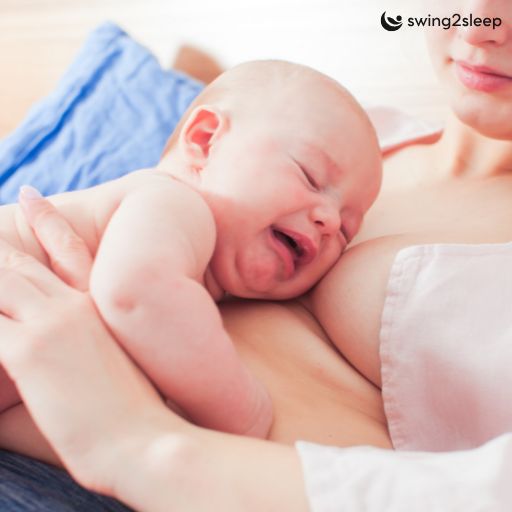
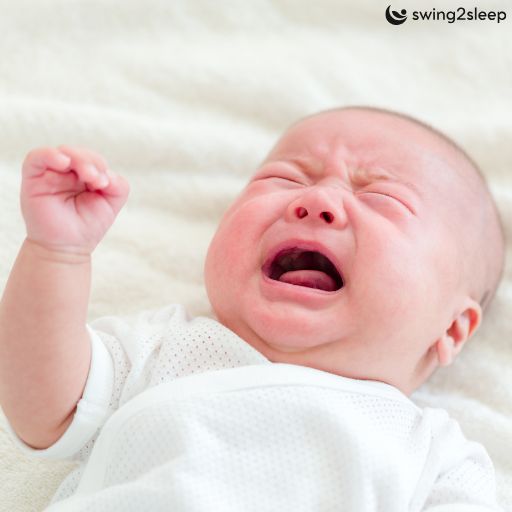
Some children react more robustly, others more sensitively. If a baby is overstimulated, they usually show it clearly: through crying, tension, and difficulty settling down. Crying is not defiance or a "bad habit," but a biological signal. The baby is communicating: it is too much.
Typical signs that a baby is overstimulated:
- frequent, intense crying without a clearly identifiable cause
- restlessness, hectic movements, or arching the back
- problems falling asleep despite being tired
- increased need for closeness and physical contact
- turning the gaze away or "staring into space" as a protective reaction
What such babies need most is reduction. Fewer stimuli mean less stress for the small nervous system. Closeness, recurring routines, and quiet environments help the body find its way back from alarm mode.
Even if the excitement over the new family member is great: in the first months of life, the principle "less is more" often applies. Brightly colored toys, constant background noise from the TV or radio, many visitors, or several activities a day can quickly become overwhelming.
This does not mean that babies should not be encouraged, but that development happens primarily through security and repetition.
As the brain matures, it learns to process stimuli better. Patience, observation, and conscious rest periods are the most effective support during this sensitive time. An overstimulated baby does not need animation; they need regulation. And that begins with calm, present parents.

Overstimulation while carrying
Sensory overload can also occur while carrying, especially when babies are carried facing forward. In this position, they are exposed to the impressions of their environment almost unprotected. The immature nervous system cannot yet filter stimuli; everything feels equally intense.
While the baby sees a lot when facing forward, this is exactly what can be overwhelming. There is no possibility to actively turn away or make eye contact with the caregiver—an important anchor for safety and regulation.
When a baby is carried facing the person carrying them, there are decisive advantages:
- They can make eye contact and receive emotional reassurance.
- They can snuggle up and block out stimuli.
- Body heat, heartbeat, and breathing have a calming effect.
- The M-position supports healthy hip development.
Especially when a baby is overstimulated, close physical proximity helps to calm the stress system. At the same time, carrying facing forward is also considered unfavorable from an orthopedic point of view, as the natural hip position is often not optimally supported.
When in doubt, the carrying method should be coordinated with a pediatrician or a babywearing consultant.
For moments when parents need relief, an automatic baby hammock like the swing2sleep can be a complementary support. Gentle, rhythmic movements have a calming effect on many babies and make it easier to fall asleep, especially for children who are difficult to put down.
The decisive factor is not the amount of impressions, but the possibility for regulation. A baby needs closeness and measured stimuli, not constant entertainment.
Cause of evening crying
Many parents experience it: everything seems to go well during the day, but in the evening the baby becomes restless, fussy, or cries for seemingly no reason. This so-called "evening crying" is not uncommon in the first months of life.
A common trigger is overtiredness and sensory overload. When a baby gathers many impressions throughout the day, is carried from appointment to appointment, or gets too little sleep, their still immature nervous system reaches its limits.
Unlike adults, babies cannot regulate stress themselves. They rely on support.
Typical factors that can contribute to evening crying:
- too many activities without sufficient rest periods
- missed signs of tiredness
- late or irregular bedtimes
- intense stimuli such as visitors, trips, or noisy environments
When under tension, stress hormones such as cortisol and adrenaline are released in the body. These help in the short term to stay awake and alert. However, a small organism can only break down this activation to a limited extent. In the evening, the tension then often discharges in the form of crying.
In the past, evening crying fits were primarily suspected to be caused by stomach aches or "gas in the belly." Today, we know that while physical causes are possible, evening crying is often related to processing the day's stimuli.
The crying serves as a regulation mechanism; it is not an attempt at manipulation, but an expression of being overwhelmed.
When a baby is overstimulated, it does not need additional stimulation, but rather reduction: dimmed lights, quiet voices, recurring rituals, and plenty of closeness. The evening is not a time for new impressions, but for security.
A calm daily rhythm with conscious breaks is therefore not a restriction, but an investment in more relaxed evenings.

Preventing overstimulation in babies
The good news: Sensory overload can often be prevented. A newborn does not need a full schedule. Development does not happen through a non-stop program, but through security, repetition, and sufficient sleep.
Of course, babies can be encouraged, but in an age-appropriate and measured way. Several activities a day, changing environments, or constant entertainment can quickly overwhelm a still immature nervous system. Especially in the first months of life, the rule is: quality over quantity.
Helpful basic rules for everyday life:
- maximum of one major activity per day
- conscious rest phases between activities
- reduce stimuli such as light and noise in the evening
- recognize signs of tiredness early
- establish fixed bedtimes
A structured daily routine provides orientation. Recurring rituals, such as a quiet evening bath, soft singing, or dimmed lights, signal to the baby: the day is coming to an end. This creates predictability, and predictability means security.
If your baby is very restless or cries more than average despite an adjusted daily routine, it may be a so-called high-need baby. In such cases, it makes sense to seek professional support to clarify possible causes and find relief.
Aids can also support everyday life. An automatic baby hammock like the swing2sleep uses gentle, rhythmic movements that calm many babies. It can provide parents with short recovery phases, which should not be underestimated. Because an overstimulated baby often also means overtired parents.
Stimulus reduction is not a renunciation of promotion. It is the foundation for healthy development to take place. A baby does not need more input; it needs appropriate stimuli and reliable guidance.
Conclusion: Overstimulated baby
For a newborn, the world is not a gentle introduction, but a sensory firework display. Light, noise, touch, and social impressions hit a nervous system that first has to learn to organize it all.
When a baby is overstimulated, it is not reacting "difficultly," but in a biologically sensible way. Crying, restlessness, and a strong need for closeness are expressions of being overwhelmed and, at the same time, an attempt to regain balance.
Parents can contribute a lot by dosing stimuli, taking signs of tiredness seriously, and ensuring reliable structures. Closeness, repetition, and calm transitions help the child's stress system to regulate itself. Less of a program does not mean less promotion, but better conditions for healthy development.
In the end, it's not about preventing every bit of restlessness. It's about understanding signals and accompanying them appropriately. A baby does not need a perfect staging of its everyday life.
It needs security, bonding, and adults who are willing to slow down. This is exactly where real regulation arises, and with it, the basis for more relaxed days and quieter evenings.
FAQ
How do I recognize that my baby is overstimulated?
Experiencing an overstimulated baby usually means: a lot of crying, clear restlessness, arching the back, hectic movements, or difficulty falling asleep despite being tired. Some babies turn their gaze away or suddenly seem "absent." These are protective reactions of the nervous system. It is trying to limit the amount of stimuli. What matters is less a single signal than the interplay of several signs and your intuition for your child.
Is evening crying always a sign of overstimulation?
Not necessarily. Hunger, developmental leaps, or physical discomfort can also play a role. However, so-called evening crying is often related to overtiredness and the processing of the day's stimuli. Babies cannot yet regulate stress themselves. They need closeness, peace, and reliable routines to find their balance again.
Can I overwhelm my baby with too much promotion?
Yes, that is possible. Babies need stimulation, but in a measure appropriate to their development. Several activities a day, many new impressions, or constant background noise can quickly become too much. Development arises primarily through secure bonding, sufficient sleep, and repetition, not through a dense schedule.
How long does a phase of sensory overload last in a baby?
This varies individually. Some babies calm down after a few minutes when they receive closeness and peace. Others need significantly longer, especially if overtiredness is involved. In principle: the earlier signs of tiredness or being overwhelmed are recognized, the easier it is to counteract them. As the nervous system matures, especially over the course of the first months of life, babies learn step by step to process stimuli better. The ability for self-regulation grows, but it does not arise overnight, but through repeated experiences of security and co-regulation.