


Probably all parents would feel terrible if they had to admit to themselves that their baby makes them aggressive. That they sometimes develop a burning rage towards the small, helpless bundle and would like nothing more than to throw it against the wall.
Self-reproach, feelings of guilt, and self-doubt are the result. At least in this regard, we can reassure you: such feelings are only human in situations of extreme stress. However, you should definitely find coping strategies. Otherwise, it can become critical if the child does not stop crying.
My baby makes me aggressive: exhaustion and sleeplessness of parents
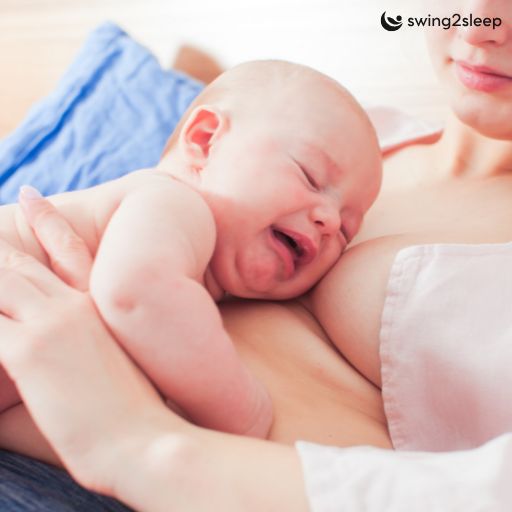
Affected parents know the situation all too well: The baby cries and cries... and cries and cries.... and cries – for hours, for days, maybe even for weeks. And all, really without exception all efforts to somehow calm the crying child have failed.
Nothing helped. No breastfeeding or diaper changes. No carrying around or rocking. No singing, no whispering, no cuddling, and no swaying. And you yourself desperately need some sleep again.
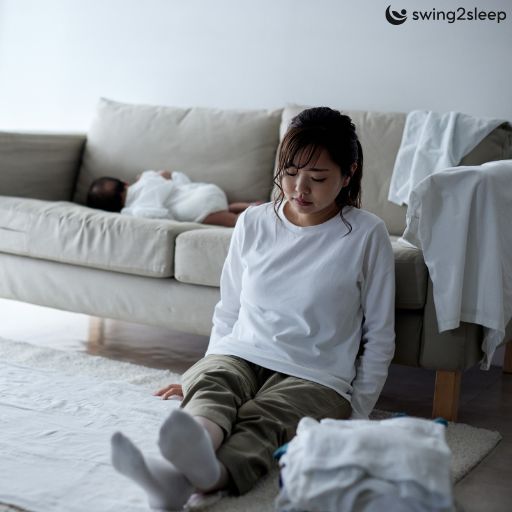
Many young parents underestimate how exhausting an infant can actually be. Overwhelm quickly sets in and with it: fear of failure, frustration, and also aggression. These are then directed against the partner, the situation, the whole world... and the baby.
The following video summarizes the situation and shows ways out.
You are not alone with this problem!
It may not be much comfort, but you are not alone with this problem. The first weeks are particularly hard and demanding. This has pushed many to their limits. No one needs to be ashamed of that.
Realize this: You are not to blame for this situation!
Whose fault is all the crying?
If your baby cries a lot, it is definitely not your fault! It is very important that you realize this. However, it is certainly not your baby's fault either! High-need babies are particularly sensitive and react more sensitively to some things than other children.
In any case, it is completely futile to try to find someone "to blame" in such a situation. After all, your baby is not crying out of malice, but because it is missing something or because it wants to tell you something.
And frustration spreads for you because you cannot identify what it is and what your child needs right now. And that, even though you are trying everything. In such a situation, neither side is to be envied.
Especially parents with a high-need baby know all about it: no matter what they try – the success leaves much to be desired.
But they can hold on to a glimmer of hope: to the irrefutable fact that better times will come again.
Nevertheless, anger can catch you off guard. Then it depends on you mastering methods to keep your feelings under control. Even parents with the strongest nerves cannot stand it forever when their offspring cries without ceasing and they have to cope with permanent sleep deprivation.
Where does this anger come from anyway?
Probably the vast majority of parents love their baby, sometimes to the point of self-sacrifice. But if the wishes and needs of the baby permanently collide with one's own, we eventually reach our limits. Such phases can occur again and again.
Not only when the child is still an infant, but also in the toddler phase or puberty, the nerves and the endurance of parents are often put to a severe test. In all these situations, it is about conflicts because different interests and needs clash.
And in such conflicts, especially with an irrational counterpart (baby, toddler, or adolescent), parents can reach their limits to such an extent that they have to control themselves not to hurt their child – whether verbally or physically.
The use of violence against one's own child is, of course, out of the question in any phase, and this includes shaking your baby. What may seem harmless to you is life-threatening for the child, and many an infant has died from shaken baby syndrome or suffered severe consequences – often for a lifetime.
But where to put the anger when you are at your wit's end?
When your baby arrives, your entire life situation also changes – and to an extent that will probably never have been the case before and never will be again. You might even be suffering from birth trauma.
One of you stops going to work, at least for a while, and thus loses part of their social environment. Contact with childless friends and acquaintances decreases noticeably, and everything revolves only around the child. Furthermore, you can forget about undisturbed night's sleep for the time being.
Your need for several consecutive hours of sleep conflicts with your baby's needs: in the first weeks and months, it does not yet have any sleep-wake rhythm, and its needs or distress follow no schedule. This overall situation is a massive adjustment that you first have to get used to.
And on top of all that, you are in a dilemma. You were so looking forward to your baby, to life as a family of three. You swore to be the best parents in the world, and now? Now you are frustrated, overtired, and irritable. In addition to the external conflict with the baby's needs, there is the internal conflict with yourself.
When all these factors come together – the frustration over a seemingly unsolvable conflict, the radically changed life situation, the identity crisis that may go along with it, and the disappointment that the first time with the baby is developing differently than hoped – a situation like a powder keg arises.
The slightest hint of a spark is enough to cause an explosion. Therefore, it is important not to let it get that far and to develop coping strategies in advance.
Stop the perfectionism!
Many young parents set themselves goals that are far too high, often with completely excessive demands on themselves. You don't just want to be a supermom, but of course also continue to celebrate successes at work, keep the partnership alive, maintain friendships, do sports, go out occasionally, and then the apartment should also be as perfect as possible.
Why, actually? To prove to visitors that you have life under control? And what is that supposed to be good for? Wouldn't it be more important to focus on the baby and its needs, as well as your own, instead of wanting to please other people?
So instead of cleaning and vacuuming, you should rather put your feet up, relax, or take a short nap to recharge your energy reserves a bit. This serves you and your child much more than a perfect apartment. With a baby or toddler, this perfection will only last for a few hours anyway.
So say goodbye to excessive demands as much as possible, both the demands you place on yourself and those that others place on you. Especially in the beginning, it is much more important that you get used to each other, that you take time for yourselves, and do something good for yourselves.
The housework can wait. And better times will come again – for sure!

Baby makes me aggressive: What to do when you see red?
There are certainly strategies for how you can get rid of your pent-up anger without becoming a danger to your own child.
Here are a few helpful tips:
- Get some distance. Often it is enough just to leave the room. When in doubt: It is better to let the child cry than for you to blow a fuse. If your baby is lying safely in their cot, nothing can happen to them.
- Go out into the fresh air for a moment, take a deep breath and count to ten. Then the world usually looks a little different again. When your brain is supplied with oxygen, you can think rationally again – that's not a joke, it's a fact!
- Do you have an urgent need to throw things? Go ahead! But be careful! Dishes or other fragile objects are less suitable as projectiles and can also be life-threatening. Slamming a pillow onto the bed with full force can provide relief and release pressure just as well.
- Often it also helps to simply pack up the little screamer and go for a walk outside with the stroller. A change of scenery helps both parties to calm down again.
- Call a friend or other parent friends. Maybe you can support each other or at least have a little cry. Contact with other parents is important. Nobody understands you better than someone who is in exactly the same situation.
- Use relaxation exercises. Maybe you have already learned some from your midwife. Special breathing exercises also ensure that stress levels decrease.
Avoiding critical situations
Here are a few more tips to help you prevent critical stress situations from arising in the first place:
- Don't take on too much! With a baby, a daily plan is very difficult to implement because something unexpected can happen far too often.
- If it is very stressful, allow yourself to leave the work for a while.
- Learn to distinguish between what is truly important and urgent and what is less important.
- Schedule fixed breaks – for yourself, for your partner, for both of you together.
- Accept any help offered to you: neighbors, friends, parents, babysitters, domestic help – this way you can enjoy a little break and recharge your batteries.
- Do something good for yourself! Whether it's a gossip with your best friend like in the old days, a visit to the swimming pool, the beautician, the hairdresser or a round of sport. All of this gives you new strength for the exhausting everyday life.
- Maintain your contacts and/or make new friendships. It's a shame if you break off all old contacts and only focus on your baby – even if that may seem obvious at first. It is important that you get out among people every now and then and talk about things other than your baby or can talk your frustration out of your system.
- Coordinate with your partner and make agreements on how you divide parental duties.
Getting professional help – why not?
If you really feel like you're at a dead end and don't know what to do anymore, then be sure to seek professional help. Cry clinics exist in every city. Educational counseling centers can also prove helpful. You don't have to be embarrassed! On the contrary: You show strength when you admit to yourself that you are overwhelmed by the situation. If your child or you yourself are ill, you go to the doctor after all and don't try to tinker with the symptoms alone.
Nowadays, having a baby presents a special challenge. A mother is not only expected to be a supermom, she is also supposed to manage her household on the side and, of course, return to peak performance in her job as quickly as possible. It is easy for things to fall by the wayside. Get help before the burden becomes too great and the situation escalates. Most parents who have visited a crying clinic have only positive things to report afterwards.
Conclusion
Admittedly: The first period with a baby can be quite tough, especially if you have a high-need baby. Frustration, being overwhelmed, lack of sleep, and despair are an explosive mixture, so it is important to develop strategies for channeling negative energies early on.
Keep in mind that you are human, and your feelings are part of what makes you human. No parent should have to experience their own helplessness and anger leading to a tragedy. The coping strategies presented in this article can help you defuse the inner bomb. In this way, you can succeed in mastering even this exhausting time.
Until you have children of your own, you have no idea of the extent to which your own strength, love, or exhaustion can reach.
(Peter Gallagher)
By the way
swing2sleep was founded to put an end to the downward spiral of anger, aggression, and despair. Thanks to the gentle up-and-down movements and the cozy closeness, the baby feels as secure in a swing2sleep as in the womb. This allows them to relax better and fall asleep more easily. In this way, more harmony and satisfaction for the whole family are quickly restored.
Frequently asked questions about baby making me aggressive
Is aggression a symptom of autism?
Aggression is not a typical or sole symptom of autism. In autistic children, certain situations can lead to being overwhelmed and resulting aggressive behavior, such as sensory overload or communication difficulties. However, aggression alone is not an indication of autism.
Why is my baby hitting me?
Babies do not hit out of intention or aggression. Often, these are uncoordinated movements, frustration, or being overwhelmed. Babies do not yet have the ability to control or express feelings in a targeted way.
Why does baby crying trigger me so strongly?
Baby crying activates a biological alarm system in the brain. In combination with lack of sleep, constant stress, and a lack of breaks, this stimulus can be extremely stressful. The strong emotional reaction is not a sign of failure, but a natural stress response.
Why does my child make me aggressive?
Aggressive feelings often arise when one's own needs have to be permanently ignored and no recovery is possible. Parents feel helpless, overwhelmed, or powerless. These emotions are not directed against the child itself, but against the situation.