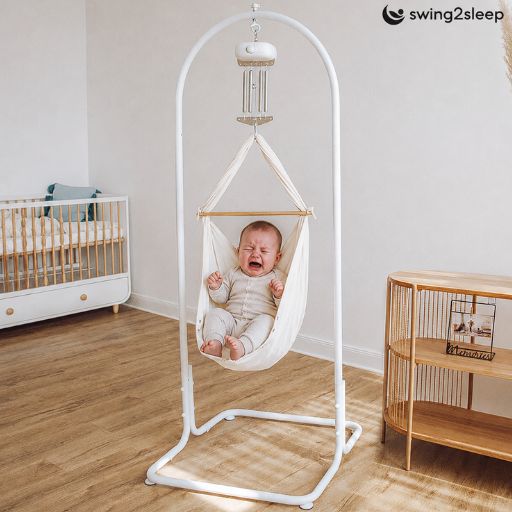



You are tired. Perhaps even completely exhausted. Because your baby wakes up every hour, night after night. No sooner have you fallen asleep yourself than it starts all over again. You comfort, breastfeed, rock… and at some point you ask yourself: “Is this still normal?”
The short answer: Yes. But that doesn't make it any easier.
Many parents experience exactly this phase where their baby wakes up every hour or feels like they aren't really sleeping at all. The nights feel endless, the lack of sleep drains your strength and often your nerves. But there are usually very natural reasons behind this behavior. Your child is doing nothing wrong. And neither are you.
In this article, I will show you why your child wakes up so frequently, what is really behind it and, above all, what can concretely help you in everyday life. You will get gentle, implementable tips that can lead you as a family back to quieter nights.
What common causes could be behind it?
There isn't just one reason; usually several factors play together. Especially if your baby wakes up every hour, it's worth taking a closer look. Often it's small things in everyday life or completely natural developments that influence sleep.
- Sleep phase transition: Babies change sleep phases approximately every 30–90 minutes. In the process, they often wake up briefly. While you simply turn over and keep sleeping, your baby notices: "Something is different than when I fell asleep”. That is exactly when they need your support to find their way back to sleep.
- Need for closeness: Your child is programmed for bonding. Closeness means security. When they wake up at night, they unconsciously check: "Is Mommy or Daddy still there?” Especially after exciting days or during developmental leaps, this need can be even stronger.
- Hunger or habit: Especially in the first few months, it is completely normal that they want to drink every hour or very frequently. The stomach is small, the intervals short. At the same time, a habit can also develop over time; your child links falling asleep with breastfeeding or the bottle.
- Sensory overload & overtiredness: Babies process their day in their sleep. If it was very full of impressions, noises, or new situations, the brain continues to work at night. Also, wake times that are too long quickly lead to overstimulation, which paradoxically ensures more restless sleep.
- Sleep environment: Even small changes can make a big difference. If it is too warm, too cold, too bright, or too loud, your child sleeps less deeply. Also, unusual noises or a changed sleeping place can lead to your child waking up more frequently.
Important to know: Often it is not just "one" cause. Rather, it is an interplay of development, needs, and everyday life. That is exactly why it is worth trying out small changes step by step instead of looking for the one "perfect solution".

Development & age play a major role
How often your baby wakes up at night depends heavily on their age. Sleep is not a fixed state but develops step by step. Especially in the first months of life, an incredible amount changes in the brain, in the body, and in your baby's behavior.
This also means: Sleep does not progress linearly. There are phases in which everything becomes quieter and then suddenly more restless again.
Sleep often changes significantly around well-known developmental steps:
- In the area of baby sleep at 4 months, a so-called sleep regression often occurs. Your child develops new sleep patterns, becomes more awake between sleep cycles, and cannot yet manage these transitions alone. This leads to your child suddenly waking up more frequently again, even if they had already slept for longer stretches before.
- A lot also happens with baby sleep at 6 months. Your baby becomes more mobile, discovers their environment more intensely, and processes the many new impressions at night. Rolling, reaching, first attempts at movement—all this occupies your child even in their sleep.
In addition, these developmental steps also play a role:
- Growing urge to move → your child becomes more active, even at night
- Bonding development → your child notices more strongly when you are not there
- Teething or growth spurts → can additionally influence sleep
Perhaps you know this: Your child falls asleep, seems calm, and suddenly wakes up again and again after falling asleep. This is exactly typical for such phases.
This means: If your child wakes up frequently, there is often no problem behind it, but an important developmental step. Your child is currently learning an incredible amount and needs your guidance in the process.
Even if it feels endless right now: These phases are temporary. With patience, understanding, and a little support, your child will gradually find their own sleep rhythm.
5 gentle tips for quieter nights
These tips can be easily integrated into your daily routine:
- Create a fixed bedtime routine: Repetitions provide security. A consistent sequence (e.g., bath, cuddling, song) signals: Now it's bedtime.
- Observe wake times: If your child is awake for too long, they become overtired and sleep worse, both falling asleep and staying asleep.
- Reduce stimuli in the evening: Less hustle and bustle, dimmed lights, quiet voices—this helps with "winding down".
- Give closeness, but consciously: Your child needs you, and that is completely okay. At the same time, you can incorporate small steps so that they learn to settle down on their own.
- Optimize the sleep environment: Pay attention to a pleasant temperature (approx. 16–18°C), darkness, and a calm atmosphere.
What's important is: You don't have to implement everything at once. Often a small change is enough to feel the first improvements. Observe your child, try things out at your own pace, and stay patient with both of you.

Falling asleep, staying asleep & gentle support in everyday life
A decisive point for quieter nights is the so-called sleep pattern. Your child remembers exactly how they fell asleep. If they were carried, breastfed, or rocked, for example, they expect exactly this support the next time they wake up.
This means: If they wake up briefly between sleep phases, they automatically look for the familiar help to find their way back to sleep.
Here you can start very gently, without pressure and at your own pace:
- Lay your child down slightly more awake, instead of completely asleep
- accompany them with a calm voice, stroking, or closeness
- reduce your support step by step
This way, your child gradually learns to orient themselves better between sleep phases and to settle down again.
At the same time, you are allowed to get support, especially in exhausting phases. Because sometimes you simply need more relief in everyday life.
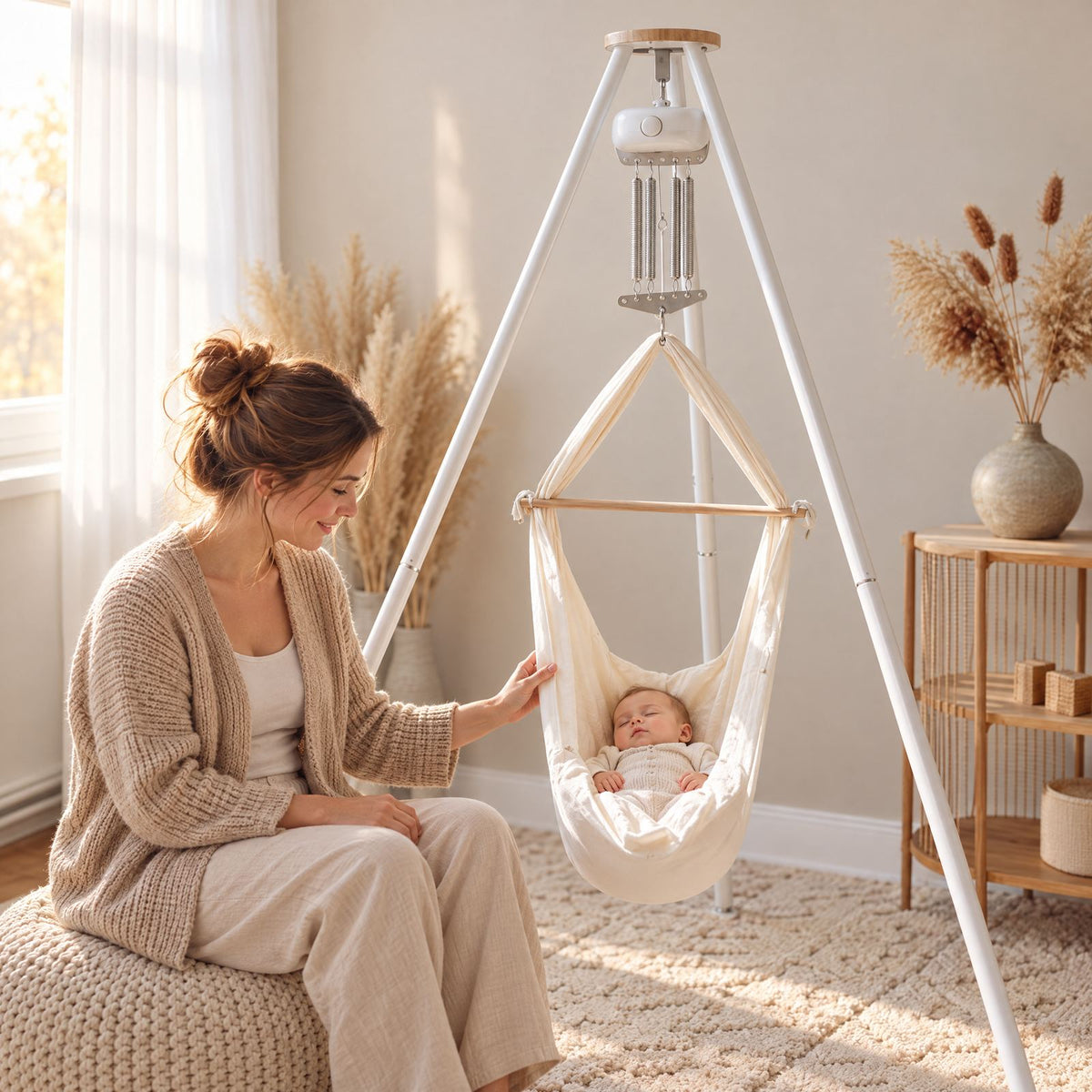
Gentle, steady movement has a calming effect on many children. It reminds them of the time in the womb and helps them to let go faster. This is exactly where an automatic baby hammock can be a valuable help.
The Heia automatic baby hammock supports your child with gentle movements when falling asleep and can simultaneously allow you small breaks. Especially in restless phases, this can noticeably provide more relaxation, for your child and for you.
Often it's just a phase
Even if it doesn't feel like it right now: This time will pass. Developmental leaps, growth, or new skills can temporarily disrupt sleep.
Especially in the first years of life, an incredible amount happens. Your child is constantly learning—motorically, emotionally, and cognitively. New impressions are processed, often at night.
Perhaps you notice that your child suddenly sleeps more restlessly, needs closeness more frequently, or has a harder time settling down.
Common reasons are:
- new skills (e.g., rolling, crawling)
- stronger bonding and need for closeness
- many impressions during the day
- growth spurts
These phases are intense for both of you. Your child now needs security, reliability, and your guidance above all.
What's important is: You don't have to "train away" anything. With calm routines and your closeness, you help your child find orientation again. And even if it feels long right now: After such phases, it usually becomes quieter again.
Conclusion: Baby wakes up every hour
If your baby wakes up every hour, there is usually no problem behind it, but an interplay of development, needs, and habits. Even if this phase feels incredibly exhausting, in most cases it is completely normal.
It is important that you begin to better understand your child and their signals. Frequent waking has reasons: closeness, processing the day, developmental steps, or even small things in everyday life. This is exactly where you can start, without pressure, without rigid methods.
With loving routines, appropriate wake times, and a calm sleep environment, you create the basis for more relaxed nights. At the same time, you can accompany your child, give closeness, and introduce small changes step by step. It's not about doing everything perfectly, but about finding your own way.
Don't forget yourself in the process. Lack of sleep is stressful; get support where possible and allow yourself breaks.
And above all: This phase will pass. With patience, understanding, and small adjustments, you will find more peace again, night after night.