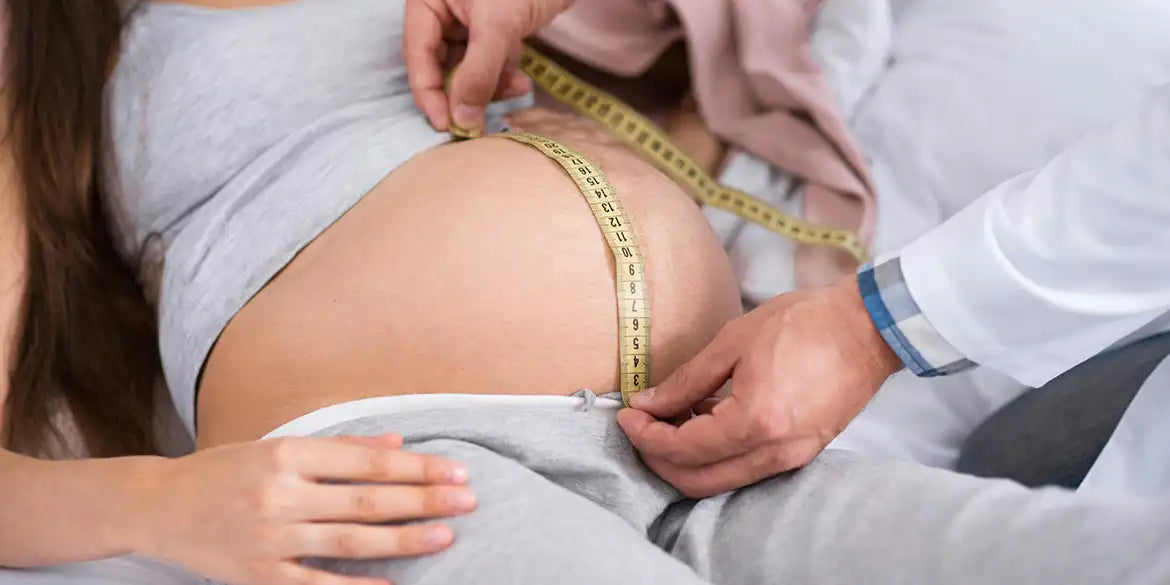



The birth of a child is one of the most intense and unforgettable experiences in life. From the first gentle contraction to the moment you hold your baby in your arms, your body goes through a perfectly choreographed miracle that takes place in different stages of labor.
In this guide, we accompany you through the four stages of labor and give you valuable tips so that you feel safe and well-prepared.
The dilation stage marks the official start of labor. It is the longest and often the most emotional phase, in which your body prepares with impressive strength to pave the way for your baby into the world.
Stage of labor 1: Dilation stage – What exactly happens?
During this time, two decisive processes take place: The cervix shortens until it is completely "effaced," and the cervix begins to open. The goal is 10 centimeters, the full dilation necessary for the next stage.
At the same time, the uterine muscles adapt: In the upper area, they become thicker to build up strength, while they become thinner at the bottom to make it easier for the baby to pass through.
Latent phase vs. Active phase: The two sections
The dilation stage is divided into two sections that flow into one another:
- The latent phase (early phase): It lasts until a cervical dilation of about 4 to 6 cm. The contractions are often still irregular and less intense. Many women can still spend this time comfortably at home.
- The active phase: The contractions now become more regular, stronger, and longer. The cervix opens more quickly. This is the part of labor that requires the most concentration and strength.

How does the dilation stage feel?
The perception of pain is very individual. Some women feel a strong pulling in the lower back, others experience it like intense menstrual cramps in the abdomen. Often it is also a combination of both. The intensity usually increases as the phase progresses.
How long does the dilation stage last?
The duration varies greatly. For first-time mothers, 8 to 14 hours are not uncommon. Women who have already given birth often go through this phase much faster. Important: Every birth has its own rhythm.
Our tip to help things move faster
Movement and relaxation are your best friends to get the contractions going and support them:
- Go for a walk or climb stairs.
- Do light housework to distract yourself.
- Take a warm bath to relax the muscles.
If you have a rupture of membranes after the 37th week of pregnancy and your baby's head is firmly in the pelvis according to your midwife or doctor, these activities are also helpful. If you are unsure, always ask in the delivery room or your midwife.

Stage of labor 2: The transition phase – The most demanding sprint
The transition phase is the intense final sprint of the dilation stage. Technically, it is the moment when your cervix overcomes the last few centimeters from about 8 to 10 cm. Even if it is short, it is perceived by many women as the most challenging time of the entire birth.
- What happens in the transition phase? Your baby is now finally positioning itself for birth and sliding deeper into the birth canal. The contractions reach their maximum intensity and come at very short intervals, so there is hardly any time for recovery. Your body is working at full speed.
It is absolutely normal to feel overwhelmed now.
Many women experience a mixture of:
- Severe exhaustion and the feeling of not being able to go on.
- Trembling all over the body or nausea.
- Doubting their own strength and the desire for pain relief such as an epidural anesthesia (PDA).
This phase is a mental turning point. However, as soon as full dilation is reached and the pushing contractions begin, the doubt often gives way to a new determination.
Our tip against giving up: Remember that this intense phase means you have almost made it! A change of position can work wonders now. Listen to the advice of your midwife and focus only on the next contraction, not on everything that is yet to come. You can do it!
Stage of labor 3: Expulsion stage – Almost there!
Once the cervix is fully dilated, the expulsion phase (also known as the pushing stage) begins. This is the active part of the birth.
After the intense experience of birth, a magical but also challenging time begins: the postpartum period. Your newborn now has to get used to a completely new environment. After nine months of being constantly and gently rocked in your belly, they long for this familiar movement and closeness.
This is exactly where an Automatic baby hammock can be a valuable support for a gentle start in life.
The swing2sleep automatic baby hammock: Security just like in the womb
The gentle up and down movements of the swing2sleep automatic baby hammock simulate the movements your baby knows from the womb. This helps them to calm down, find sleep more easily, and process stimuli. In this way, it not only gives your baby a sense of security, but also gives you the important rest periods you need for your own recovery during the postpartum period.
Our tip for a fast placental stage
Breastfeeding releases the placenta faster and reduces bleeding. This is ensured by the breastfeeding and cuddling hormone oxytocin.
Frequently asked questions about birth (FAQ)
Here we answer the most pressing questions that expectant parents ask about the stages of labor and the process.
How do I recognize the start of labor?
The real start of labor differs from irregular practice or Braxton Hicks contractions. Look out for these three main signs:
-
Regular and intensifying contractions: Real opening contractions come at increasingly shorter intervals (e.g., every 5-10 minutes), last longer (approx. 60 seconds), and increase in intensity.
-
The water breaking: The amniotic fluid escapes in a gush or in drops. In this case, contact your midwife or the clinic.
-
Bloody show: The mucus plug that sealed the cervix detaches. This can be a slightly bloody, mucous discharge and is a sign that the body is preparing.
When should I go to the hospital or birth center?
The "5-1-1 rule" is a good rule of thumb for first-time mothers: Head out when your contractions...
-
...come regularly every 5 minutes,
-
...last for about 1 minute each,
-
...and have been doing so for at least 1 hour.
If your water breaks, you have heavy bleeding, or if you feel unsure, you should always call your midwife or the maternity clinic immediately and follow their advice.
What really helps against labor pain?
Pain perception is very individual, but many women find relief through a combination of different methods:
-
Movement and position changes: Walking, bouncing on a Pezzi ball, or going into a four-legged position helps the baby rotate correctly into the pelvis and can relieve pressure.
-
Breathing: Deep, conscious abdominal breathing (e.g., from hypnobirthing) supplies you and your baby with oxygen and helps you to relax.
-
Heat: A warm bath, a hot water bottle on the lower back, or a warm cherry stone pillow can relax the muscles.
-
Medical options: Don't be afraid to ask for pain relief. Options range from laughing gas to epidural anesthesia (PDA).
Can I speed up the placental stage?
Yes, you can actively support the birth of the placenta. The most important factor is the release of the hormone oxytocin.
-
Bonding: Direct skin-to-skin contact with your newborn immediately after birth is the strongest natural oxytocin booster.
-
Early latching: Latching your baby to the breast for the first time stimulates the uterus to contract and expel the placenta.
-
Upright position: An upright sitting position can provide additional help through gravity.
As a rule, the midwife or doctor waits for the natural signs of placental detachment, which usually occurs within 30 minutes.
Every birth is a unique miracle and the beginning of a lifelong journey. Trust in the incredible power of your body and in your path. We wish you and your baby a wonderful, powerful birth and a gentle start into your life together.