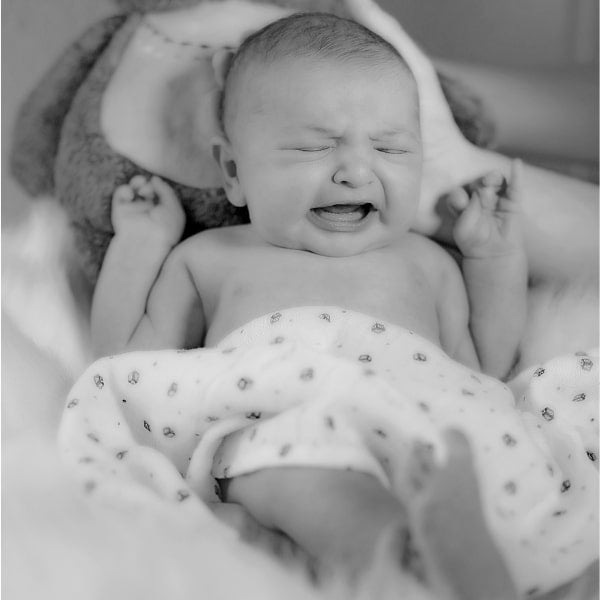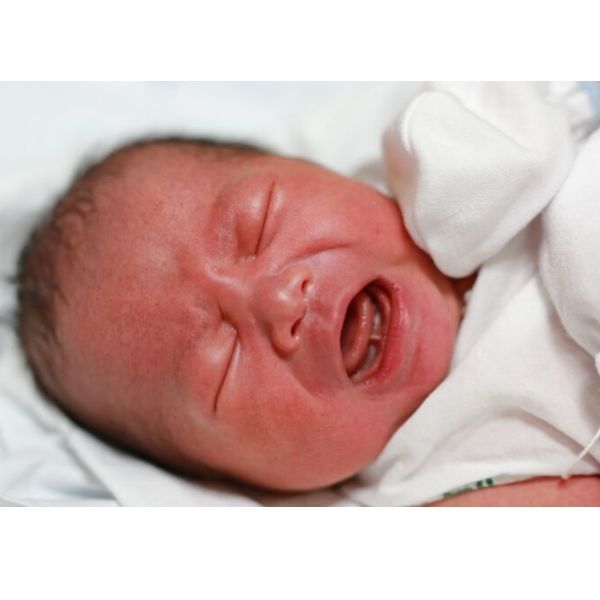



Colicky babies suffer from a regulation disorder and react extremely sensitively to their environment. In most cases, this goes away on its own. But what if it doesn't? Do colicky babies develop ADHD later on?
Do colicky babies get ADHD later?
- Will the child possibly become an ADHD child?
- Will it perhaps still be very exhausting later on?
- Will it have a pronounced defiance phase,
- or be extremely shy with strangers?
- Is a particularly difficult puberty ahead?
- Will it even become incapable of relationships?
- What else might be coming your way?
Although there are hardly any studies on the further development of pronounced colicky babies, when you talk to the affected parents, almost all report that their offspring has developed into a more or less lovable, self-confident child. Many colicky babies later develop into really bright rays of sunshine. They become sensitive and loving – anything but problem children.
It is suspected that colicky children generally have somewhat finer antennae than others. But this can also mean that they are more receptive in school and are interested in many things. It is by no means set in stone that a former colicky baby will develop into an absolute sensitive soul or a crybaby.
The role of the parent-child relationship
Apparently, the mother's condition plays a major role in early regulation disorders, i.e., disorders of sleep, eating and drinking, and digestion.
The developmental psychobiologist and psychiatrist Mechthild Papousek describes this in her essay "Regulation disorders of early childhood: Clinical evidence for a new diagnostic concept" (in: Mechthild Papousek, Michael Schieche, Harald Wurmser (eds.) (2014). Regulation disorders of early childhood. Early risks and help in the developmental context of parent-child relationships. 3rd edition Bern).
In short, she describes that there are babies who communicate relatively poorly, as well as parents who do not succeed in intuitively reading their baby. She postulates the relationship itself as the patient actually in need of treatment.
Therefore, the child cannot be viewed in isolation. Any disorders of the parents can also play a role, which requires a broader approach. Here it can be advisable to visit a cry clinic early on, where exactly such facts are looked at.

ADHD Baby - Stay relaxed
Numerous dynamic factors are therefore involved in the development of ADHD. A clear prognosis can hardly be made so early. If no disorders are known or noticeable in you as parents, you can initially stay relaxed. Otherwise, you have to take care of your own issues.
Even if colicky babies statistically show a higher probability of ADHD or ADD, you certainly don't want this fear to overshadow the earliest days of your offspring.
In fact, you could create a self-fulfilling prophecy with it. If you harbor fears and apprehensions and your interaction with the child is no longer natural as a result, the child will feel this with its fine antennae.
And if you then constantly talk about it possibly having ADHD, it might even integrate that early on.
It's best to let things come as they may. If clear symptoms develop, you will act. Until then, leave yourself and the child as unburdened as possible.
Give it enough love and self-confidence along the way. Everything else will work itself out. And even if it should get ADHD, that's not the end of the world either. On the one hand, there are approaches to meet the problem, and on the other hand, many ADHD children also become successful later on.
Even if you currently have a colicky baby, it is not yet possible to foresee what will develop from it later. So stay positive and optimistic. That's how you help your child the most. Because what really counts in the end is an attentive, loving, and positive environment.
Sincerely,
Yours, Maik Schwede
Further information
Further information on this comprehensive topic can be found, among others, on the website of the doctor Sarah Buckley (in English).
The crisis hotline of the Children's Center Munich is also very well known.