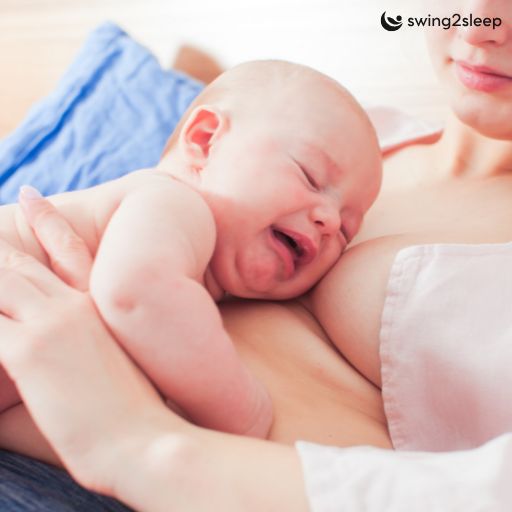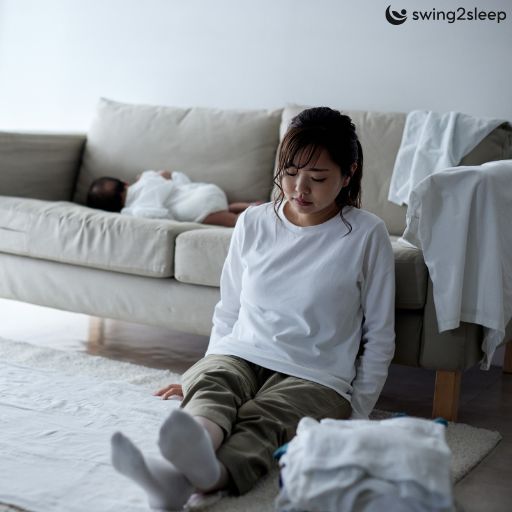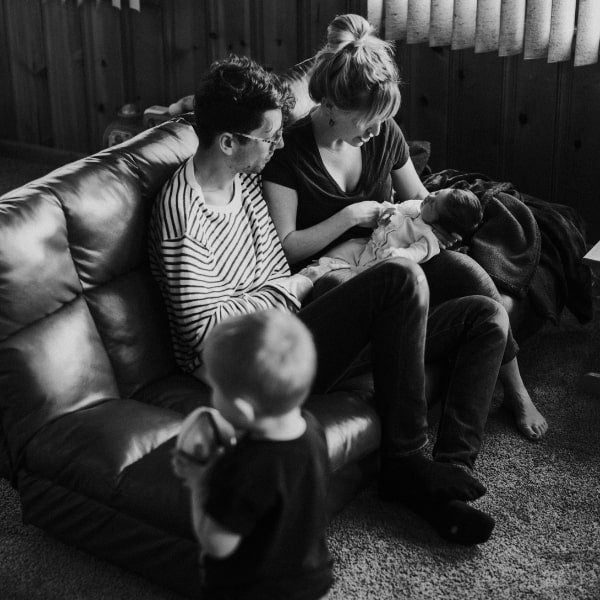



Imagine the collective knowledge of hundreds of parents who have gone through exactly what you are experiencing right now. In 25 years of practical experience, our phone has become the first point of contact for exhausted parents of high-need babies, and we learn something new in every conversation.
One of the most common questions is: "What to do while we wait for our swing2sleep automatic baby hammock?"
We have summarized this vast wealth of experience for you. The following 28 tips are not our invention – they are proven methods from the real world, collected by parents for parents.
28 tips for soothing your high-need baby: What really helps parents::/H2
These 28 tips (and the bonus tip) are valuable tools in the toolbox of successful high-need baby tamers. Especially the first four have proven to be true miracle cures. Approach the suggestions with an open mind and just give them a try. You will be amazed!
Tip 1: Trust your intuition::/H3
When your child cries, it is best to trust your intuition. In most cases, you will quickly figure out what your high-need baby is trying to tell you.
Parental intuition, or gut feeling, is by no means esoteric hocus-pocus. Rather, this phenomenon is repeatedly scientifically confirmed and is one of your most important allies when raising your children. So take the time to listen to yourself. Then you will often get an inkling of what your baby is trying to communicate with its crying and its entire body language.
Does it perhaps need attention? Fresh diapers? The breast? Does it have a stomach ache? The more reliably you meet its needs, the better your baby can develop.
Maybe the child is simply hungry. Especially in the first three months of life, babies do not always drink the same amount and do not yet have a regular rhythm. So it could be that your baby is hungry again, even though it was only fed half an hour ago.
Tip 2: Establish a rhythm for your baby::/H3
Many babies react by crying whenever their daily routine changes significantly or they experience the day in a great rush. The more consistent the daily routines are for your child, the more secure they will feel.
Rhythm brings structure to your day. For example, you could start every morning with diaper changes, breastfeeding, and cuddling. Always pay attention to the same sequence: A day that follows a clear pattern of activity and rest gives you as a family clear orientation and thus stability.
Looking at the clock is a great help: If your little baby has been awake for an hour to an hour and a half – and that is sometimes already reached after one diaper change and feeding – then it needs a break and sleep again.
Important: Reduce appointments to the absolute minimum. No baby massage, no swimming course, and no postnatal gymnastics follows the internal clock of your high-need baby. Often these appointments take place exactly when your child would much rather be sleeping. As a result, your high-need baby finds no peace again. Of course, there are babies who slumber in the stroller even when there is a lot of commotion around them, but high-need babies cannot do that. They need a fixed rhythm.
This rhythm cannot be created as a fixed list on a drawing board. Rather, it develops in dynamic exchange with your child. Orient yourself to their natural rhythm, their sleep, rest, and wake times, and form a daily routine from this that meets the child's needs.
Tip 3: Create fixed rituals::/H3
While rhythm is about a clear daily structure, rituals define a fixed sequence of individual events throughout the day. Your baby feels most secure when these processes are familiar to them. This gives them security, which is an important aspect of your child's life – they must be able to rely on the fact that you as parents are there for them and provide for their safety.
First change, then breastfeed ... or vice versa ... or completely different
In most cases, you will change the diaper before breastfeeding, so that your offspring associates the change with the calming breastfeeding and thus gains security. However, many parents also change diapers only after breastfeeding because the baby fills the diaper while drinking. And still others give the child one breast first, change them, and then breastfeed them with the other breast.
Here, too, it depends on what suits your child best. More important than the exact sequence is that you try not to change it once it has become established. Again, it is about orientation and trust. Both arise when the child already knows beforehand what will happen next. This is enormously important for high-need babies, as is the intensive physical contact during breastfeeding and diaper changes, which also has an extraordinarily positive effect.
Bedtime ritual – always at the same time
A bedtime ritual can have an amazing effect when babies cry. It helps your child overcome their fears of falling asleep and not feel excluded. In this way, sleep disorders and the associated chronic fatigue can be reduced and possibly even completely resolved.
Keep the ritual very simple, especially in the beginning, for example by simply accompanying bedtime with a wound-up music box or a lullaby. This bedtime ritual should be calming in itself and support your baby in falling asleep.
But again, the key lies above all in regular and consistent repetition. In this way, your baby learns that the music box or the lullaby heralds their bedtime and can orient themselves by it. The crib and falling asleep itself lose their threatening character, and the ritual creates stability.
Bathing and baby massage
Bathing and the subsequent baby massage can also merge into a valuable ritual if both are always carried out one after the other. Even while bathing, your baby will know that a soothing massage awaits them afterwards.
The more small rituals you find, the more structure you create for your baby. This helps them to feel completely safe and comfortable. This also has a positive effect on their crying behavior.

The swing2sleep automatic baby hammock: Security like in the womb::/H3
The gentle up and down movements of the swing2sleep automatic baby hammock simulate the movements your baby knows from the womb. This helps them to calm down, find sleep more easily, and process stimuli. In this way, it not only gives your baby a sense of security, but also gives you important rest periods, which then makes it easier to implement rituals.
Discover our automatic baby hammocksTip 4: Calm your crying baby with the automatic baby hammock from swing2sleep ::/H3
Through the mother's movements, the child was practically constantly rocked in mama's belly. This is exactly why it has such a calming effect on babies when they are rocked or swayed. However, this can be a very tiring affair. Eventually, every arm gets tired, and besides, mom or dad can hardly do anything else during this time.
An automatic baby hammock from swing2sleep provides a remedy here. With its reliable and silent motor, it rocks your baby for several hours a day if necessary. The only thing that gets tired is your child. With its cozy closeness, a swing2sleep simultaneously simulates another characteristic of the womb – the feeling of limitation.
As a result, your child feels twice as comfortable and soon sinks into a relaxed sleep. And because you no longer have to constantly push it, you suddenly have time for yourself again. Perhaps you use it to catch up on housework, or you take time for a quiet cup of coffee or a good book again. In this way, a swing2sleep relaxes not only your baby, but you as well.
Tip 5: Keep a crying diary::/H3
To find out when the crying fits occur, it is recommended to document the daily routine with a so-called crying diary. This can also help you find out if your baby is a "crying baby" at all. If they cry for more than three hours on at least three days within three weeks, then you have a crying baby.
To do this, note down the times of all important events for five days:
- When is your baby restless?
- When do they cry or sleep?
- When are they fed, bathed, or changed?
- When do they play?
- When do they cuddle with you?
- When are they just awake and when are they both awake and interested?
Experts advise also writing down which calming techniques you used during a crying phase and with what success. These records may already show one pattern or another. If this is the case, it will be easier to help you and your baby.
Incidentally, many professionals also swear by the crying diary to get an overview of the baby's crying phases.
Tip 6: Try swaddling::/H3
 When swaddling, you wrap your baby tightly (but not too tightly) in a blanket or a cloth. This prevents uncontrolled arm movements during sleep, which could wake your child up. It also restores the familiar closeness that your child is used to from the womb.
In this way, it is easier for them to relax and calm down. For your child, it is a return to prenatal security.
If your baby cries a lot, it could actually also have to do with the fact that some babies are often overwhelmed in the first week of life after birth with the boundless freedom of movement and the associated loss of feeling themselves.
By swaddling, you give the baby back this feeling. Your little one might protest at first. Try it anyway, because normally most babies calm down within a very short time. If the child absolutely refuses to be swaddled despite all your gentle efforts, you can create the feeling of closeness instead by simply holding the child firmly in your arms.
Despite all the advantages, swaddling is not without controversy. Pediatricians warn of several dangers that you should definitely be aware of:
- Overheating: Due to the tight wrapping, heat may not be dissipated as well. This can lead to heat accumulation and overheating of the child.
- Legroom: When wrapped tightly in a cloth, your child's legs may be fixed in a straight position. This can interfere with your baby's physical development and lead to hip misalignment (hip dysplasia). Make sure that the legs can move as freely as possible. Alternatively, there are also swaddle bags with a wide bottom part.
- Nerves: Wrapping too tightly carries the risk of pinching nerves.
- Breathing: Breathing can also be impaired by tight wrapping. This can become really dangerous, especially as soon as the child can roll onto their stomach independently while sleeping. At that point at the latest, you should stop swaddling.
Tip 7: Provide noise::/H3
During pregnancy, your baby was surrounded for nine months by sounds such as the heartbeat, digestive noises, and the mother's blood flow. In particular, the constant rushing of blood flow during the time in the womb has dug deep into all our consciousness and has a calming effect on most people throughout their lives. This is even more true for infants in the first three months, for whom the memory is still very fresh.
How you create such rushing sounds is not that important – the easiest way is to make a long and loud (!) "shhhhhhhhhh". This sound is known as white noise. For babies, you can actually use the extractor hood, the hair dryer, or the vacuum cleaner - they all have monotonous sounds.
In addition, there are countless CDs or files with calming sounds available in stores.
Tip 8: Try an exercise ball::/H3
Sit on an exercise ball with your baby in your arms and bounce up and down.
If such movements calm your baby and help them fall asleep, then purchasing an automatic baby hammock from swing2sleep could be a real alternative for you. It achieves the same effect while protecting your back and arms.
Tip 9: Don't let your baby cry::/H3
In the first six months, you can't spoil your baby enough! React immediately when they cry. They only master intentional crying towards the end of the first half-year. If your baby is only a few months old, they can only make themselves heard by crying and need your attention.
Tip 10: Accept the crying::/H3
If you have tried everything and the baby still won't stop crying, take them in your arms and give them the feeling that everything is okay through your physical presence and quiet, calm words. Let them feel that you are there.
Try to accept that your baby simply cannot be calmed at this moment. You are not bad parents because of this. You are taking care of your baby and are with them. Perhaps your child simply needs to cry out the tension they feel...
Let go of the thought that you absolutely have to calm your baby. Instead, offer them comfort. If you manage to stay calm, your baby will calm down faster, even if that is sometimes easier said than done.
A crying baby puts your nerves to an extreme test. The constant tension, sleep deprivation, plus frustration and helplessness could lead to a fuse blowing. Acknowledge that you are human. You too are not immune to such an extreme situation. Therefore, it is good if you know how best to behave in such a case:
If you can no longer stand the child crying continuously at some point, don't wait until you lose control, but remove yourself from the situation in good time BEFOREHAND. Put your baby in the crib, leave the room, and close the door if necessary. Take a break for yourself for a few moments. This is absolutely necessary so that your nerves do not break under the strain and your mind can maintain the upper hand. After a break, during which you might treat yourself to a coffee or tea, you will be strengthened again and can devote yourself to your child with renewed energy.
Tip 11: Use the football hold for gas & stomach pain::/H3
 In the so-called "football hold", you place your baby with their belly on your forearm. The head rests in the crook of your arm. This position is relaxing for children with three-month colic or other stomach problems such as gas. If your baby is already heavier, you can also use two arms.
Tip 12: Test a baby wrap or carrier::/H3
With a baby wrap or another carrying aid, you ensure that the baby is always with you. Through direct contact with the chest, the baby can hear your heartbeat. It still knows the mother's heartbeat very well from pregnancy. Close skin contact is also very important for the baby. You will be able to observe that your baby snuggles its face right into mom's chest in the wrap. There it feels her warmth and smells her scent – there is nothing better for a baby. This may also help your high-need baby to overcome the seemingly never-ending crying fits and fall asleep.
When your baby has fallen asleep in the carrier, it is best to place them in an automatic baby hammock from swing2sleep. Due to the up and down swinging movements, your baby continues to have the feeling of being carried and continues to sleep peacefully.
Tip 13: Do not wear perfume::/H3
Completely avoid perfume, deodorants, and other fragrances in the first few weeks so as not to irritate your baby's sense of smell. Instead, your child loves a comforter that smells like mom. You can simply place it in your automatic baby hammock from swing2sleep or in the crib.
Tip 14: Cuddle your baby::/H3
Cuddling is super important for every baby because they need skin contact. For high-need babies, intensive cuddling significantly increases the prospect of quick calming.
Tip 15: Let your baby suckle::/H3
Give your child opportunities to suck, because this is an absolute basic need for babies. However, if you use aids such as a pacifier, you should be aware that this can lead to so-called nipple confusion in breastfed children. Children with nipple confusion are no longer able to suck milk from the mother's breast.
Parental fingers are also a popular object for the little ones to suck on.
Tip 16: Breastfeed your baby::/H3
Breastfed babies are said to cry less. There are no official studies on this, and we were not able to confirm this with our own tally list back then. So for now, it remains a matter of faith. However, from our own experience, we know that a baby can often be calmed very quickly by the mother's breast.
Especially at night, it was more relaxed and less stressful for us when no one had to get up to make a bottle, and the baby could be breastfed while half-asleep instead. As a result, we were more rested during the day, and in many cases, this also had a positive effect on our baby.
Tip 17: Reduce external stimuli::/H3
Sometimes it is external stimuli that prevent your baby from settling down. In such a case, you can support their relaxation by shielding your child from external disturbing factors. One possibility would be for you to become a human partition for your baby: take your baby in your arms and lie on your side, with their face facing your belly. In this way, you shield most stimuli with your body.
Here you can find more information about sensory overload in babies
Tip 18: Try rocking or bouncing::/H3
In the womb, the baby was rarely still because the mother was active in some form for most of the day. As a result, rocking and bouncing immediately makes them feel transported back into mom's belly. The range of movement should not be too large. It is enough if you move your baby back and forth over a distance of 3 to 5 cm. This is also where our automatic baby hammock supports you. It continues to bounce your child tirelessly when your arms have long since given up.
Tip 19: Test a baby massage::/H3
A soothing baby bath or a baby massage with oil can work wonders. However, make sure your hands are warm. If you deep-freeze your baby with ice-cold fingers, they will hardly cry less.
In the first few months, a newborn perceives its environment more through the skin than with hands or eyes. This makes it all the more important for your baby to experience a lot of touch. Intensive physical contact also helps colicky babies to calm down.
However, you should pay special attention to a few points:
- The room where the massage takes place should be warm. Your baby is completely undressed during the massage and is therefore sensitive to the cold. Make absolutely sure that they do not get cold.
- You yourself should be calm and balanced during the massage. If you are constantly thinking about what to do next, you cannot transmit any calmness to the child through your hands.
In principle, you can use any fragrance-free baby oil for the massage. However, there are also special oils that enhance the effect:
Four winds oil
Fittingly named, this oil is used when the baby suffers from flatulence or colic. The four winds oil is rubbed in a clockwise circle around the child's belly button. Start above the belly button and massage the oil in with light pressure around the belly button. If colic and flatulence are relieved, then you have a good chance that the crying will also decrease.
Pure almond oil::/H4
Pure almond oil is particularly popular for baby massage due to its special skin compatibility, especially if the child is prone to rashes or allergies.
Caraway oil
Caraway oil is very suitable for massage and has a regulating effect on the stomach and intestines. Massage your colicky baby's belly clockwise to stimulate digestion.
Tip 20: Rely on homeopathy::/H3
There are certainly homeopathic remedies that can help your colicky baby to settle down better. Most midwives can help you with valuable tips and also know which globules should be given in each case. Always discuss the dosage with your midwife or a naturopath!
Among the most popular globules for toddlers are:
- Aconitum – e.g. for acute illnesses (e.g. colds), restlessness, anxiety
- Lycopodium – popular remedy for colicky babies; also helps against skin rashes behind the ears and stuffy noses in breastfed babies
- Chamomilla – real chamomile is always a good remedy to soothe and relieve; also indicated for teething troubles and abdominal cramps
- Plantago Major – against pain and restlessness during teething
Tip 21: Give your baby a cool down::/H3
If your baby really works themselves up into a crying fit, their body heat may increase even further. This makes them feel even more uncomfortable, and the crying intensifies further. You can break this vicious circle in acute emergencies with a cool, damp compress. Add a little essential oil (sparingly) to ensure an even better effect.
Place the cool compress briefly on the back of the neck, on the forehead, and on the cheeks of your baby one after the other. Most children calm down very quickly thanks to the cool cloth. However, do not leave the compress on for more than a few minutes at a time. It is better to do short applications with breaks in between.
Tip 22: Visit a crying clinic::/H3
The crying clinic is there for you! It can already be a great relief to realize that you are not alone. In addition, any medical causes for the crying can be ruled out during an on-site examination. The most important thing, however, is that you find psychological help and support in the crying clinic. here you can vent your despair, ask your questions, and receive advice that you may not have heard from your midwife or pediatrician in this way before.
Tip 23: Avoid overstimulation::/H3
From the security of the womb, the child was suddenly thrown into a bright, loud, and hectic world with many stimuli. Every day, they must now process countless new impressions – from the running television and radio to many strangers who come to visit and then even pick them up. It is no wonder that your baby is completely overwhelmed by this sensory overload.
Don't worry, over time they will develop the same filters that protect us as adults from permanent overwhelm, but for the moment, it is all too much for them. Therefore, it helps if you create a quiet and low-stimulus environment for the child where they can switch off. A hot tip would be an automatic baby hammock from swing2sleep. Due to its protective closeness, it keeps stimuli away from the baby and ensures that they feel protected and secure.
Tip 24: Have a pediatric examination performed::/H3
If you have a high-need baby and nothing helps, then you should find out the reason for the crying. In 5–10% of all high-need babies, there is an organic cause. Therefore, the pediatrician should always be your first point of contact to rule out physical complaints.
If the doctor finds something, you have saved your child a lot of suffering and yourselves many nerve-wracking hours. There is also no reason to wait. That's what the doctor is there for, and you are not being over-cautious if you want to play it safe with a child who is constantly crying unhappily. On the contrary: this is what responsible action looks like.
Tip 25: Take your baby for a drive::/H3
Many parents use a simple trick that works excellently in most cases:
They buckle their baby into the infant car seat and drive around the block a few times. However, such a child seat is not a suitable sleeping place for a baby due to the unhealthy back posture. Therefore, you should move the baby as soon as possible after they have successfully fallen asleep.
However, the child usually wakes up again in the process, and the car ride was in vain...
Fortunately, an automatic baby hammock from swing2sleep achieves the same sleep-inducing effect – right in your home and completely without exhaust fumes!
3 convincing arguments for a swing2sleep
Tip 26: Check your baby's diaper::/H3
With a full diaper, your offspring will hardly be able to relax. A check is worthwhile, even if you have only just changed your baby. It's great if in the end it really was just a full diaper.
Tip 27: Check the temperature::/H3
By reaching into the back of your baby's neck, you can easily check whether they are too warm or too cold and adjust their clothing accordingly. If the skin there feels warm and sweaty, you should take something off to avoid heat accumulation. If, on the other hand, it is cold, your child is most likely freezing.
Tip 28: Pre-warm the sleeping area::/H3
If you pre-warm the crib to body temperature beforehand with a grain pillow or a hot water bottle, your baby will not be startled when being moved, but in the best case will simply continue to sleep.
Caution: Hot grain pillows and hot water bottles can cause burns to your child. Be sure to remove them from the bed beforehand.
Special tip: See an osteopath or pediatric physiotherapist::/H3
Often, blockages have arisen during birth or due to the position in the womb, which can be easily corrected by an osteopath or pediatric physiotherapist. If your child cries a lot, it is worth having it checked out early to save your child and yourselves a lot of suffering. For example, the so-called KiSS syndrome is a misalignment of the upper cervical spine that may have occurred during birth.
❓ Frequently asked questions from affected parents::/H2
What helps fastest with a crying baby?
The 4 fastest soothing methods are: 1) Hold your baby in your arms and rock them gently, 2) Create soothing sounds (long "shhh" sounds), 3) Offer the breast or a pacifier, 4) Check the diaper and body temperature. In 80% of cases, one of these immediate measures helps within a few minutes.
When is a baby considered a colicky baby?
According to the medical rule of three: If your baby cries for more than 3 hours a day, at least 3 days a week, for more than 3 weeks, they are considered a colicky baby. About 20% of all babies fall into this category.
How long does the colicky baby phase usually last?
Most colicky babies calm down significantly between the 3rd and 4th month of life. The peak is often at 6-8 weeks. However, with the right soothing techniques and aids such as an automatic baby hammock, you can make this challenging phase considerably easier.
Can an automatic baby hammock really help with colicky babies?
Yes, the gentle up-and-down movements of an automatic baby hammock simulate the movements in the womb. In our experience with hundreds of families, about 85% of colicky babies calm down in a swing2sleep automatic baby hammock within 15 minutes. The motor takes over the hours of bouncing for you.
When should I take my colicky baby to the doctor?
See a pediatrician if: The crying suddenly sounds different than usual, your baby has a fever, refuses to drink, appears apathetic, or if you are very worried. In 5-10% of colicky babies, there is an organic cause that should be treated.
What is the difference between normal baby crying and a colicky baby?
Normal baby crying lasts an average of 2-3 hours daily and can usually be soothed by breastfeeding, changing, or cuddling. With a colicky baby, often nothing helps - they cry for over 3 hours daily, at least 3 days a week, over a period of 3 weeks. The crying is often piercing and can hardly be interrupted.
What helps fastest with a crying baby?
The 4 fastest soothing methods are: 1) Hold your baby in your arms and rock them gently, 2) Create soothing sounds (long "shhh" sounds), 3) Offer the breast or a pacifier, 4) Check the diaper and body temperature. In 80% of cases, one of these immediate measures helps within a few minutes.
When is a baby considered a colicky baby?
According to the medical rule of three: If your baby cries for more than 3 hours a day, at least 3 days a week, for more than 3 weeks, they are considered a colicky baby. About 20% of all babies fall into this category.
How long does the colicky baby phase usually last?
Most colicky babies calm down significantly between the 3rd and 4th month of life. The peak is often at 6-8 weeks. However, with the right soothing techniques and aids such as an automatic baby hammock, you can make this challenging phase considerably easier.
Can an automatic baby hammock really help with colicky babies?
Yes, the gentle up-and-down movements of an automatic baby hammock simulate the movements in the womb. In our experience with hundreds of families, about 85% of colicky babies calm down in a swing2sleep automatic baby hammock within 15 minutes. The motor takes over the hours of bouncing for you.
When should I take my colicky baby to the doctor?
See a pediatrician if: The crying suddenly sounds different than usual, your baby has a fever, refuses to drink, appears apathetic, or if you are very worried. In 5-10% of colicky babies, there is an organic cause that should be treated.
What is the difference between normal baby crying and a colicky baby?
Normal baby crying lasts an average of 2-3 hours daily and can usually be soothed by breastfeeding, changing, or cuddling. With a colicky baby, often nothing helps - they cry for over 3 hours daily, at least 3 days a week, over a period of 3 weeks. The crying is often piercing and can hardly be interrupted.
Conclusion: Soothing a colicky baby with the automatic baby hammock from swing2sleep
When we were faced with the problem 25 years ago that our first daughter did nothing but cry day and night at the age of just a few weeks, we felt quite alone. We couldn't find help anywhere – crying clinics did not exist back then. So we can empathize very well with how you feel with a colicky baby. That's why we hope from the bottom of our hearts that the tips we offer here will help you in dealing with your baby and the whole situation. And that applies to all parents, of course – not just those with a colicky baby.
By the way: In 2014, 714,927 babies were born in Germany (Source: statista.com), and approx. 20% of them are very sensitive babies (colicky babies). So you are not alone. Network, find help at crying clinics, and the products from swing2sleep can also be an invaluable help to you during this challenging time.