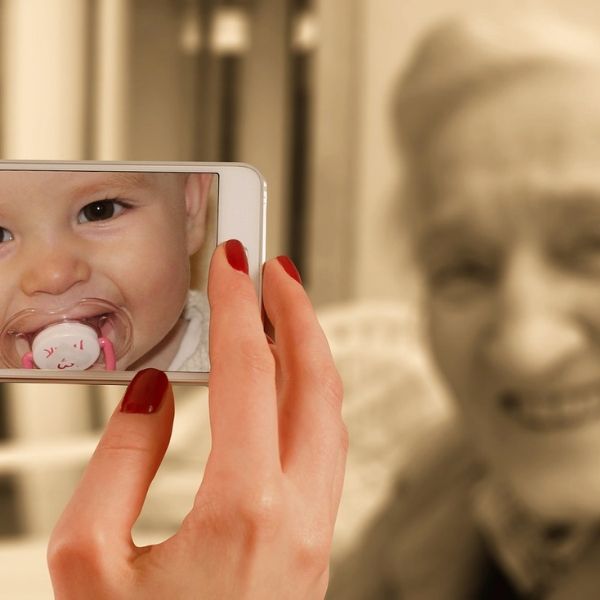


Like so many things, parenting methods are subject to the spirit of the times. For example, the 1968 generation paved the way for the anti-authoritarian education of the 70s, rebelling with good reason against an outdated educational ideal that had sprung from the authoritarian spirit of the parental generation. And in the upbringing of earlier years, such as during National Socialism and the post-war years, the little ones truly had nothing to laugh about. We rightly find the parenting methods of our grandparents hair-raising and sometimes disturbing today. But could it be that long-obsolete parenting methods still influence us more strongly in the present than we believe?
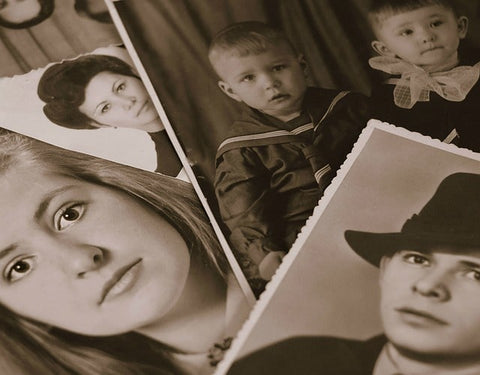
Upbringing used to mean discipline and order
Johanna Haarer was the author of the guidebook "The German Mother and Her First Child," published in 1934. Although the PhD lung specialist had never received training in pediatrics or pedagogy, she was widely regarded as a luminary of education. Her books were bestsellers; almost all mothers had a copy on their shelves. The guidebooks fully corresponded to Nazi ideology, so Johanna Haarer enjoyed targeted support from the National Socialists. In so-called "Reich Mother Training Courses," more than 3 million mothers were familiarized with her teachings, and the generally applicable rules for infant care were standardized according to her specifications. Her guidebook provided the basis for education in kindergartens and children's homes. By the end of the war, 690,000 copies of the book had been sold. However, in a sanitized form, it remained available in West Germany even after 1945 until 1983, reaching a total of 1.2 million books sold.
Baby's needs? Best ignored
To ensure that the offspring would become good soldiers or "German mothers" and, above all, followers, it was recommended to subject them to appropriate treatment even as babies. In this way – entirely in the spirit of the Nazi regime – "hard," merciless, and weak-willed followers were to be raised, who would be easily manipulated due to their unfulfilled longing for recognition and belonging.
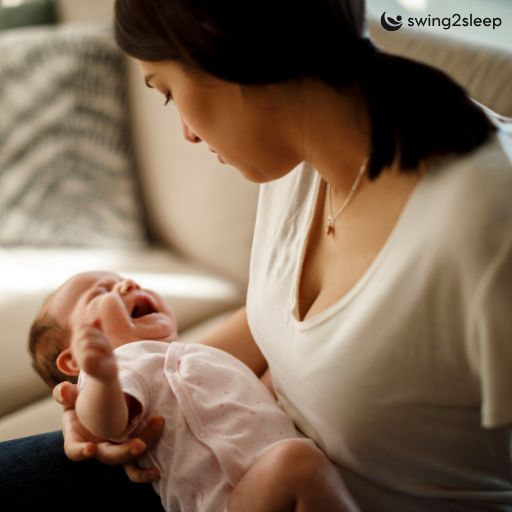
The young mother was explicitly warned against treating her baby with too much care. It was not to be taken out of its crib, and carrying and rocking, as well as simply holding it on one's lap, were to be strictly avoided. Otherwise, the baby would have quickly learned that it only needed to cry to successfully demand care. It would then have given no peace until it got its way. And that was exactly what had to be avoided.
The baby was literally seen as a nuisance whose will had to be broken. Changing, dressing, and feeding were still allowed for the mother, but showering it with love was taboo. This would supposedly only have unnecessarily softened the child. Mothers were urged to provide their babies with the bare essentials but otherwise simply ignore them and be extremely sparing with affection and touch.
Other cruel recommendations included separating the baby from its mother for 24 hours after birth and only speaking to it in proper German, never in baby talk.
It is therefore not surprising that mothers were also encouraged to simply let their children cry. It was said that this strengthened the lungs. The goal was to raise children to be citizens of the Third Reich with as little emotion and attachment as possible. Therefore, mothers were also supposed to keep physical contact with their babies to a minimum and even avoid eye contact.
From one generation to the next
Of course, not every mother became a perpetrator against her own children in the wake of Haarer's teachings. Many recognized the inhumanity and rejected the methods. Nevertheless, the figures mentioned at the beginning are shocking and show that a large part of society at the time still adhered to these ideas. Their implementation in kindergartens and children's homes is to be assessed as particularly devastating. The consequences of this brutal parenting method were then seen in psychologists' offices long after the post-war years. The emotionless and attachment-poor handling of the child inevitably led to the loss of basic trust and, as a result, to emotionally stunted and traumatized people. And the children of this war generation now have to deal with parents who never experienced emotional closeness in their formative years and whose ability to bond is massively disturbed. As a result, the trauma is passed down from one generation to the next – until it is successfully resolved.
Social consequences until today?
Surprisingly, there are still no randomized controlled studies on the after-effects of Haarer's educational theory, and the topic is largely ignored in public. But even if this requires stepping onto the thin ice of speculation and even if a variety of other factors must undoubtedly be taken into account for the current state of society, tendencies can be seen everywhere that can possibly be traced back to disturbed empathy and a lack of bonding abilities. Mental illnesses such as depression or burnout are booming, fewer and fewer couples are choosing to have a child, and in 2020, every third marriage ended in divorce. Through consumption and other addictions, people try to fill an inner void, and ever-new gadgets like the latest smartphone or the latest app, as well as increasingly shrill forms of entertainment, offer a welcome distraction from an otherwise increasingly bleak everyday life – but also from the people around them. Their own children, for example. And the trauma moves into the next generation.
New approaches – for self-confident and empathetic children
Although the parenting philosophy of a Johanna Haarer evokes disgust and horror today, the consequences continue to have an effect. Fortunately, a rethink has taken place over the last few decades that is becoming increasingly widespread. After the experiments of the 68 generation, we have arrived today at approaches that put the needs of the child at the forefront without letting this degenerate into a directionless laissez-faire. This gives hope that we are equipping our children with everything they need to not only lead a successful and happy life but also to leave old traumas behind and build a better, more humane society. But close, loving, and empathetic contact with our children is not a one-way street. By touching and being touched, giving and receiving empathy, we can succeed today – through our children – in healing old wounds and creating the future together with them. Thus, we build the road while we drive on it.
Sources:
- Die Zeit (09/2018)
- Spektrum (17.02.2019)
Other blog articles that will surely interest you:::/H2