

Hardly any topic unsettles young parents as much as the question of whether they are spoiling their baby too much. Old parenting myths repeatedly surface, especially regarding carrying, comforting, or reacting quickly to crying. Well-intentioned advice from those around them can create additional pressure.
This article sheds light on where these ideas come from, what modern science knows about them today, and why satisfying needs in the first months of life has nothing to do with spoiling. Instead of creating feelings of guilt, it is intended to give parents security and encourage them to trust their gut feeling.
Can you spoil babies? A taboo in modern parenting?
If you as parents also occasionally worry that you might be spoiling your baby: Don't let it unsettle you! In contrast to the past, science today holds the theory that you simply cannot spoil babies. However, to understand the reasons for this, it is first necessary to clarify the term "spoiling."
Spoiling or coddling?
Those who speak of spoiling often mean "coddling." Because "spoiling" is fundamentally not a negative term. In the context of caring for offspring, this interpretation of spoiling means giving the child more than it needs.
And above all: doing things for the child that it has long been capable of doing itself. It is exactly at this point that it becomes clear that you actually cannot yet spoil a very small baby. You can never give it more love than it needs. And not more physical contact either.
Babys need an infinite amount of it. And many things that we could take over for them, even though they can actually already manage them alone, do not yet exist.
Grandma's upbringing – the shadow of Johanna Haarer
Most of the time, the criticism that young parents spoil their children too much comes from the older generation: "You are spoiling your baby if it is carried around all the time, or if you come running immediately at every little sound."
It is obvious that this can be quite unsettling for young and new parents. But where does this constant concern that you might be spoiling your child actually come from?
The (great-) grandparent generation
When our grandparents were parents, times were very different. The highest priority was to raise perfectly healthy, efficient, and strong children. In the Third Reich, children were to be hardened and prepared for later life.
Anyone who showed too many feelings (according to the widespread opinion) was soft and coddled. Both boys and girls were not supposed to cry or show fear, but always be strong.
As is well known, the goal of the ideology at that time was not to raise free, self-confident, and independent personalities, but to train physically robust and mentally obedient subjects. A dissolution of the individual person in favor of the "national body." That is why no time was lost in "upbringing" – it began directly after birth.
Parenting books from that era
This attitude can be read about in parenting guides of the time, most notably in “The German Mother and Her First Child” by Johanna Haarer. The teachings conveyed there continued to have an impact until the 1980s. For example, it was recommended to separate newborns from their mothers as much as possible in the first hours and days after birth and under no circumstances to pick them up or comfort them if they cried.
It was assumed that attention would “spoil” the child and that they instead had to learn to calm themselves down alone. The goal was for the child to sleep through the night as early as possible. Today, this approach is rightly considered cruel, but parents of that time acted in the belief that they were following the current state of science.
These guides were politically supported and shaped entire generations, as alternative information was hardly accessible. This makes it all the more difficult for some members of the grandparent generation to question these beliefs to this day – because doing so would mean admitting to having harmed their own children.

Why old parenting beliefs are still defended today
This explains why some representatives of older generations still hold rigidly to their beliefs today. It is often argued that today's parents “coddle” their children, while the harsher upbringing of earlier times was, after all, survived.
In addition, it is argued that scientific findings change every few years anyway and that soon it might be said again that children should be left to cry.
However, the argument that the children affected survived this treatment falls short. Statistics show that significantly fewer children reached toddlerhood in the past than today. In addition to medical progress, new findings from developmental psychology and attachment research in particular have helped to reduce risks.
Furthermore, this perspective completely ignores possible long-term psychological consequences – as well as the dark figure of those who were severely traumatized by loveless treatment and unconsciously passed these wounds on.
Scientific change and why closeness is still not a mistake
It is true that science evolves over time. It thrives on discourse, on weighing arguments and new findings. However, earlier parenting teachings were not the result of a free scientific exchange, but were created under ideological guidelines in which dissenting voices were hardly heard.
Even today, it makes sense to view research critically and form your own opinion. But on the fundamental question of whether a newborn needs closeness, comfort, and attention or should be deliberately ignored so that it “learns” to cope alone, the answer is clear.
The mother's natural instinct: go to the baby and pick it up
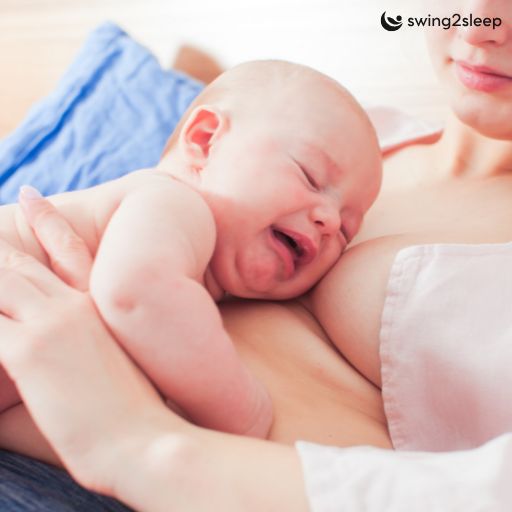
Even back then, it must have been difficult for mothers to resist their own urge and not run to the crying child. Mothers have a natural instinct to react to the crying of their baby by going to them and picking them up.
This is based on a very primal form of communication between mother and child. The child cries to establish contact, which is why it is also called “contact crying.” The child's instinct and the mother's instinct thus mesh perfectly to ensure the care of the helpless bundle.
When the baby is put down, it does not yet understand that its parents are nearby. In prehistoric times, being abandoned meant life-threatening danger for the child because it was defenseless against all the dangers that lurked there.
Its crying was its vital means of communication. That is also the reason why human babies were naturally equipped with a powerful voice.
Can you spoil babies? Why meeting needs is important
When a child cries, they are communicating a need. Especially in the first weeks of life, closeness and attention are just as crucial as food. This has nothing to do with spoiling, but with necessary care.
After the long, close connection to the mother, the sudden separation represents a major transition that can be gently cushioned by plenty of closeness and love.
The more the child can perceive the closeness, warmth, smell, and heartbeat of the mother, the better they get through the first weeks. But the benefits go far beyond immediate satisfaction of needs!
If you respond reliably to your baby's cries for help, the child develops a basic trust in you because they know they can rely on you, that they are important, and that they are loved. These are already important pillars for healthy self-confidence in later life.
In addition, they experience their world as positive, friendly, and attentive, which can allow the child to become a positive, friendly, and attentive person later on. Furthermore, it lays the foundations for a sense of self-efficacy in the subconscious. They learn that their actions can improve a situation for the better. This is how they start their life strong, full of confidence and self-assurance.
By the way, our swing2sleep automatic baby hammock can be an invaluable help here because it steps in when you need a break. With its smooth motor, it rocks your little sunshine in tireless, soothing up-and-down movements that the child is still accustomed to from the womb.
The cozy snugness also feels to the child like being in mommy's tummy. When parents need to have a hand free during the day or as a sleep aid in the evening, the swing2sleep relieves both child and parents and ensures even more precious moments of pampering.
When spoiling becomes coddling
In the first few weeks of life, it is important to fulfill all the child's needs completely and unconditionally. At that age, they do not yet possess an awareness of cause and effect, which means they do nothing to achieve something specifically and consciously.
This requires a much higher level of development, but that is reached at some point. From that moment on, the child will begin to test boundaries and manipulate you. That sounds more malicious than it is. In fact, it is part of the natural process of self-discovery, differentiation, and becoming an individual.
Now would actually be the time for those who do not want to spoil their child under any circumstances, because to define one's own self, one's own and the other's, the difference between yours and mine, boundaries must be set. From this point on, it is also important to trust the child more and more and not to take away anything they could do themselves.
Interestingly, the little ones all too often manage to wrap exactly such parents around their little finger. Then there is indeed an acute danger of coddling. And then parents also have to say no consistently.
However, when this point occurs is difficult to answer. Usually, by about one year, the baby can cope if their needs are not met immediately and directly: however, psychologists are of the opinion that you cannot yet spoil a baby in the first two years of life.
By the time they reach kindergarten at the latest, however, the time has certainly come. And it is precisely then that many parents tend to take over things like carrying the bag, putting on the jacket, or tying the shoes for their children, which they could and should just as easily manage themselves.
Otherwise, they may not build confidence in their own abilities, become dependent, and rely on others to do everything for them; they become spoiled.

Spoiling out of pure convenience
But how can it be that so many parents eventually give in? One possible explanation could be that it is often simply the path of least resistance.
As sweet as they are, children are exhausting, and parents are only human too. In the hectic everyday life of work and family, the strength is sometimes simply lacking to face yet another nerve-wracking confrontation with the nagging and whining defiant offspring and to consistently follow through with a no.
Another possible reason is a guilty conscience. Time is short, and many parents feel they are not giving the child enough attention. But such misunderstood leniency is a disservice to the child, especially if it is intended as compensation for neglect.
The after-effects of anti-authoritarian upbringing are also a possible reason. In response to the overly strict educational ideals of the war and post-war years, the pendulum swung in the other direction, and children were supposed to find their own way and their own personality in a quasi-self-determined manner.
According to this philosophy, parents preferred to be their children's friends rather than authority figures. However, this deprives children of the chance to look to you for guidance.
Especially in child-rearing, the path of least resistance is in the vast majority of cases a dead end. If the child learns that they get their way if they just grumble, whine, or make a huge scene if necessary, the relationship between parents and children is turned upside down.
Experts agree: children must learn to go without sometimes. And they must learn to accept defeat and develop perseverance. Those who always get what they want cannot do that.
Conclusion: Can you spoil babies?
It is simply not possible to spoil your child in the first months of life. During this time, it is about pure satisfaction of needs, which is also absolutely necessary. You can and should give your baby unconditional love and attention. This leads to the baby having an important primal experience: "When I have an ache or a worry, someone takes care of me! I am not alone."
This realization leads to trust in you as parents and ultimately also to self-confidence. Only in this way can your offspring grow into an open, friendly person and build trust in their environment and in their parents.
Babies are meant to be carried. So you can rest assured: if you carry your child frequently and respond promptly to their crying, you are doing exactly the right thing. Just as food nourishes the body, closeness, love, and attention give the child emotional security. A lack of these could, just like with food, have serious consequences for development.
If you enjoyed this post, feel free to share it with your contacts!
The team at swing2sleep wishes you lots of fun spoiling your little one!