


For 17 years now, we have been at home in the world of colicky babies, and during this time, we have repeatedly encountered the high need baby. The baby cries and cries, and as parents, you understandably ask yourselves quite quickly: What is going wrong with us? What are we doing wrong? Is there perhaps something wrong with our baby? Affected parents immediately notice that their baby somehow "ticks" differently than other babies. While the friend's baby always slumbers contentedly, your own offspring constantly wants to be carried around. They are restless, sleep poorly – and cry. But why is that? Is the baby really different? Or do they perhaps just have different needs than other babies? In this article, we dedicate ourselves to these questions and also to what your baby needs to find peace.
In this accompanying video to the blog article, you will also find much of this content presented in an audiovisual format. Ideal while washing up, driving, or simply if you don't feel like reading.
Unpredictable and often dissatisfied - the 12 criteria of high need babies
Of course, even very small babies are already true individuals – even in the first few weeks, newborns differ significantly from one another in terms of their sleep rhythm, their needs, and their habits. As parents, you should definitely acknowledge this. Why doesn't the baby sleep like the friend's baby? Quite simply: because they are a different person with a completely different character. If you have a baby with strong needs, it is all the more exhausting compared to other babies. This is not how you imagined parenthood. Parents of high need babies suffer from constant sleep deprivation and quickly tend towards absolute self-sacrifice to do everything possible to make the baby sleep and stop crying. But what exactly is a high need baby?
William Sears and his parenting philosophy::/H3
It has now been discovered that there are so-called high need babies. And here, the name says it all. The term comes from the professor of pediatrics William Sears from California, father of eight children, and his wife Martha Sears, who as a lactation consultant and nurse also brought a lot of expertise to his research. Parents often notice shortly after birth that these babies seem difficult to satisfy. Some midwives even claim they can tell by the first cry. They cry frequently and for a long time, always seem tense, and often startle awake at the slightest noise. Sears and his wife had to experience with their 8th child what it is like when a baby cannot regulate itself, and he also knew reports of exactly such children from his daily practice. However, unlike what was common at the time – namely letting children cry and training them – he and his wife developed tips for parents on how to recognize and easily satisfy their offspring's mood swings through attachment-oriented and needs-oriented parenting. Sears recommends checking whether your baby falls into the high need category using the following 12 criteria that he developed with his wife.
1. Intensive babies::/H3
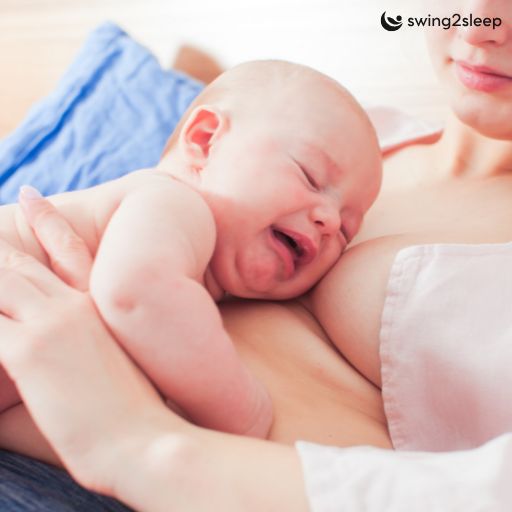
A high need baby challenges you as parents to the limit. Your baby constantly wakes up and always wants to be carried. Without physical contact, sleep is generally out of the question and your baby is unpredictable. They cry incessantly and can hardly be calmed down. Parents quickly reach the end of their strength, and especially the primary caregiver in focus often has to go beyond their own limits. Many babies react to all environmental influences, experience feelings more intensely, and express these through crying and intense body language. Many parents hope for only one thing: that this phase will soon be over.
2. Insatiable hunger::/H3
An HN baby is hungry for food, but even hungrier for closeness. They often cry for the breast, then drink hastily and swallow air, which in turn leads to more crying. A longer period of rest or a phase of contentment? No chance. Even at such a young age, a child knows exactly what they need and want, and so many high need babies are constant nursers or pacifier junkies.
3. Demanding babies::/H3
Wait until Mom has time? Why, if there's another way! HN babies cry immediately and instantly if even the smallest thing doesn't go the way they imagined. The crying is even so loud that you actually can't do anything else but immediately comfort, carry, or rock them. But hang in there: there are good and bad days. And even if the housework gets left behind, the bond with your child comes before everything else.
4. Always awake children::/H3
The tiresome topic of sleep: it stands to reason that there are problems here too. Babies with high needs actually generally have trouble falling asleep and staying asleep. They generally have problems relaxing. You should therefore try to take your baby into bed with you, because that is exactly where such babies usually like to sleep best: very close to Mom or Dad. This also saves energy, because frequent waking can be quite exhausting.
5. Dissatisfied babies::/H3
Admittedly: it is frustrating for parents, but it can hardly be changed. High need babies are almost always dissatisfied. No matter what you do as parents, recognizing and satisfying their needs seems impossible.

6. High sensitivity::/H3
Your baby is oversensitive. As soon as something doesn't suit them, they start crying. An unfamiliar environment? They wake up and cry at even the slightest noise. They notice small changes immediately. Their sensitivity is simply significantly greater than that of their peers.
7. Babies who cannot be put down::/H3
Parents of high-need babies know this all too well: your baby cannot be put down. Why lie alone when the baby enjoys being carried? It is very typical for these babies to like physical closeness and snugness and to need constant movement to be able to relax. An automatic baby hammock like the swing2sleep can make life a little easier for you in this regard. Through its gentle up and down movements, it gently rocks babies to sleep, allowing parents to breathe a sigh of relief and recharge their batteries. The new intelligent swing system adapts to your baby's movement patterns and can even inform you via app when your little one is most active.
8. The art of self-regulation ::/H3
While other babies sometimes manage to calm themselves down without mom, dad, or a pacifier, this is usually not the case with HN babies. Attachment Parenting, i.e., bond-oriented upbringing, refers to them as Stone Age babies. These children need a person as a sleep aid, and it is of course important not to want to break them but to strengthen the baby's trust until they can manage it on their own.
9. Separation-sensitive babies::/H3
High-need babies are very fixated on their closest caregivers. Of course, it can be quite exhausting when you have a little dwarf who clings so much. Please do not lose heart. Even HN babies eventually manage to stay with their grandparents or go to kindergarten without tears after the settling-in period. Patience is important, not force.
10. Unpredictable::/H3
High-need babies are actually always a bit unpredictable. Even if your child can be calmed by a lullaby today, it may be that tomorrow the same song leads to loud screaming. It is a real challenge when you have a high-need baby. It gives you no peace and simply has enormous demands on you as parents.
11. Hyperactive babies::/H3
Your baby doesn't just seem tense; their little muscles are constantly in motion. Their brain can also hardly switch off and is driven. Even in sleep, your baby seems to be active. But even if your baby is a very active child, that doesn't necessarily mean they must have ADHD.
12. Your baby is exhausting
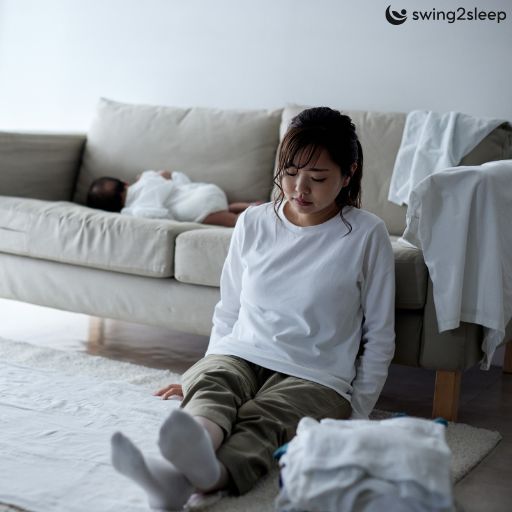
That sounds harsh at first, but it is the bitter reality for parents of high-need babies. Ensuring the baby is doing well is the top priority, and fulfilling the needs of a child where exactly that seems impossible can drain the energy tank quite quickly.
Tips for parents of high-need babies::/H2
Clearly: if you actually have such a baby, the first few months are particularly exhausting, around the clock. Whether it's your first child or your fourth child, it's definitely not your fault! You are doing your best and simply have to come to terms with the fact that you can't always manage to satisfy your baby. Nevertheless, you are there for them and provide comfort when they have sorrows or fears. And that is very important!
Asking for help is no shame::/H3
It's no wonder that these children can rob parents of their last bit of strength. But take care of yourself! That also means taking advantage of any help that is offered. Try, for example, to contact like-minded people on the internet (—> Facebook group for crying babies). Here you will quickly realize: you are not alone. In case of doubt, visit a crying clinic or contact your pediatrician.
Rethink standards::/H3
The idea that a baby should "function" as much as possible and how nice such a model family would be with happy parents and happy babies is something most parents throw overboard quickly anyway. It is important that you find a compromise that you and your baby can live with to some extent. What parents, friends, or neighbors think really doesn't matter in this case. For which young parents does everything run smoothly? See it as a challenge! Later in your child's life, other challenges will surely come your way. In plain English, this means that you should not let yourself be pressured by a false image you have in your head: the baby is here, and everything is harmonious and beautiful.
Also interesting: Perfectionism: Balancing act between desire and reality.
Do not set the bar or the demands on yourself too high. However, if you notice that you are completely at the end of your strength and on the verge of burnout, then be sure to get professional help from outside!
Do these needs persist?
The question that arises here is obvious: are there only high-need babies, or do these character traits possibly persist a bit longer? Both are true in a way. A high-need baby will certainly not become a completely uncomplicated toddler overnight. As a rule, some character traits disappear, while others remain or even become more pronounced. However, a high-need baby usually remains very strong-willed as a toddler and child. It becomes easier, however, when the child starts to speak, as they can finally express their will and communicate, while parents, as long as it is still a baby, have to constantly guess how they can help their little one.
It is extremely exhausting to have a high-need baby. But it is also a beautiful experience. Your baby is significantly more sensitive than others, but that doesn't necessarily have to be a bad thing. High-need babies, like crying babies, have very special demands on life and later develop into very special people. Promised!