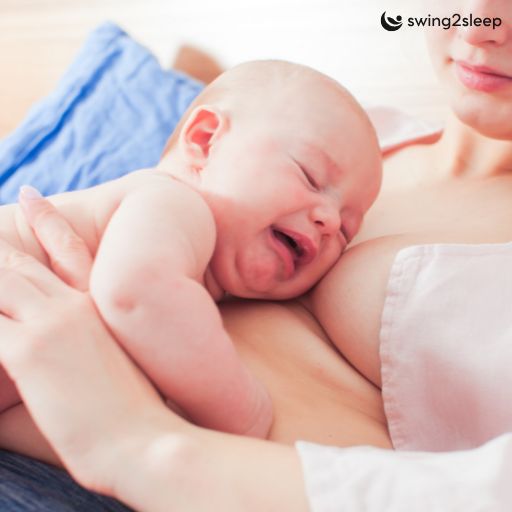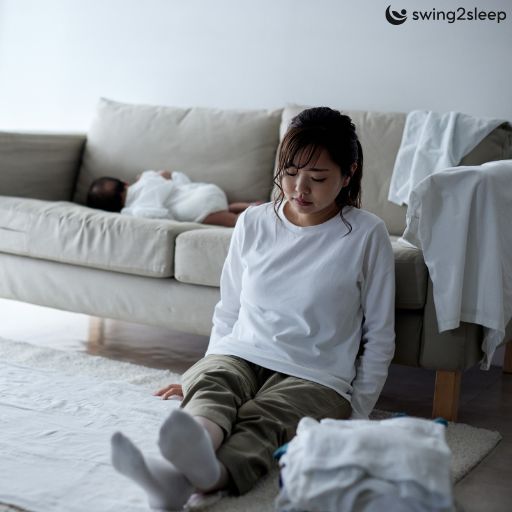



Shrill, hours-long baby crying and increasing sleep deprivation is everyday life for weeks for parents of high-need babies. This eventually pushes even the calmest and most level-headed people to their mental limits. This can become dangerous: there is a threat of losing control. It is all the more important that you know how to calm yourselves down again. We have 14 relaxation tips for you that are applicable to all stressful life situations.
With a crying baby: relaxing can save lives
One of the greatest dangers facing infants comes from parents who lose their nerves. An estimated 100 to 200 children are hospitalized every year because they were shaken by their parents in the heat of the moment. For about a quarter of the children affected, the consequences are fatal.
The reason is as tragic as it is mundane: in the face of sleep deprivation and ongoing nervous strain, a parent loses control and shakes the child to quiet them. Because the infant's muscles are not yet sufficiently developed, this violent movement has fatal consequences. It is therefore all the more important that parents learn how to lower their stress levels so that such tragic situations do not occur. Fortunately, there are ways. We have put together 14 tips for you.
They are intended to help you reduce stress or prevent it from arising in the first place. It makes sense to take these tips to heart as early as possible. Your little one depends on you and needs you with all your strength.
14 tips for better stress management
It may sound paradoxical, but very often you don't notice the stress at all until it's too late. And the first time with a baby is undoubtedly one of the most stressful phases in your entire life. Actually, you should be mentally prepared for it because it's exactly what you hear from all sides over and over again. And yet: many new parents are caught completely off guard. The reality looks quite different from what you had imagined.

In advance, few can probably estimate what is coming their way. Sleep deprivation plus constant noise. In this way, high-need babies can literally drive you into a frenzy. Of course, no baby does this on purpose, but knowing that doesn't help you in acute distress either. The accumulated frustration, the anger, all the stress – all of this will discharge explosively and, in the worst case, be directed against your child.
That is exactly why it is important to think of yourselves in this difficult and exhausting phase. You must not lose sight of your own needs, because only if you are reasonably strong can you take proper care of your offspring. And right now, your baby needs you most.
1. Saying no
If you have found it difficult until now, it is high time to learn it: saying no. In some situations, there is simply no other way. For example, when you are actually completely exhausted and visitors have announced themselves again.
That would mean: tidying up, preparing snacks and drinks, getting ready, etc. When all you want is to have your peace and quiet and enjoy being a family of three.
Clear case: if you don't feel like having visitors, then say a rigorous no! No one is served if you receive your visitors half-heartedly when you don't feel like it at all. This won't be a pleasant situation for your visitors either. Then you might as well save yourself the stress right away.
You can also feel free to say no in other areas. If someone strains you excessively, if someone expects things from you that you simply cannot perform or give at the moment, you can counter them with a friendly but firm no. The first few weeks with a baby are exhausting enough.
So don't let additional stress be burdened upon you just to please someone. With a clear "no," you preserve your sovereignty. Those who wish you well will have understanding, especially in this situation.
2. Thinking positively
Also very important: think positively! This doesn't mean that you should ignore reality and escape into a dream world of fairies, unicorns, and rainbows. It has more to do with the glass that is half empty or half full depending on your perspective. Always try to see the good in a situation, even if it's just that you learn from it. This may be a bit difficult at first, but after a while, it works automatically. And never has it been more important to see the silver lining on the horizon. Granted, the time now might actually be much worse than expected, the lack of sleep has you running on fumes, and you had imagined everything quite differently.
Well, so what? Millions of other parents feel exactly the same way as you do. So you will get through it too. And it won't last forever. A few weeks, and then the nightmare will be over. Get used to it: with children, there are always good times and bad times. It probably won't be the only phase where you'd like to throw everything away and emigrate under a false name. But – hey! – nobody ever said that parenting would be easy!
But in return, you will also experience many wonderful moments with your baby that you would never want to miss. The first word, the first steps, kindergarten, the first day of school! In the end, you will find yourself more than compensated for all the sacrifices. Basically like at birth, where the mother took all the pain and hardship upon herself, only to have forgotten everything as soon as she holds her baby in her arms for the first time.
Thinking positively therefore does not mean ignoring the downsides, but accepting them because the upsides are worth it. And if everything always ran without problems and conflicts, life would be somehow boring. Stagnation would be the result.
Positive thinking does not make the problems disappear. But it enables you to take them by the horns.
3. Laughing
Laughing is healthy, that is medically proven. Anyone who laughs several times a day sees life more easily, increases their well-being, counteracts stress and depression and at the same time strengthens their cardiovascular system.
So going to the basement to laugh is absolutely not the thing to do. And especially in the hours when you feel most desperate, laughing can give you new strength and make the situation seem less threatening. How could it not? You are laughing at it! What might seem unimaginable to you now – while you are reading these lines – can be achieved, for example, by imagining this episode of your life as a comedy. Picture the scene and don't be afraid to exaggerate. Maybe even imagine the music to go with it. Many seemingly serious situations have an absurd side. A dry sense of humor can be a real help in such situations. But be careful: if your partner doesn't share your humor, it can also backfire badly. In that case: laugh for yourself. The main thing is that you laugh at all.
4. Lowering expectations
A big problem for many parents – but also clearly a problem of today's world – is entitlement. Quite a few parents have too high expectations of themselves, but also of their offspring. A large proportion of pregnancies today are planned exactly in terms of timing. First, all wishes are fulfilled in the job and then a baby is supposed to round off the happiness. But if you only imagine a happy family with a peacefully slumbering or heartily laughing baby and completely ignore the possibility that your baby might have a rather melancholy or gloomy nature – or possibly scream all the time – you could experience an unpleasant awakening here too. Children come in all sorts of variations, and which one life pulls out of the hat for you is hard to predict. But you will also see how little that matters: you will love your child, and they will love you too!
5. Simply plan less with a baby
It's best to be clear from the start that perfectionism is simply not appropriate right now. New parents usually don't manage to always look like they've just stepped out of a salon or have a picture-perfect apartment. Why should they? With the child, chaos moves in for a while. At best, planning can be done in broad strokes. For you, of course, this means saying goodbye to the idea that you can control everything. Your children show you that control is an illusion and that you should leave room for coincidences. This starts with the thought of the right upbringing. Parents will not manage to raise or "bend" their baby so that it is always peaceful and friendly, that it never has worries and grief and that it instead always only brings joy. Neither as a baby nor later as a schoolchild and certainly not as a teenager. After all, your baby is a person with rough edges, just like you. That is exactly what life is: chaotic, anarchic and exuberant.
This does not mean that you should not teach the child principles and values. It also does not mean that you should let bad manners and disrespectful behavior towards you and others slide. However, it does mean not wanting to force your will and your ideas on the child, but letting them find their own way.
You see: any meticulous planning is doomed to failure. Micromanagement will not work. Think more on a larger scale and leave room for surprises in the small things.
6. Accepting help
This is also a really important tip: If help is offered anywhere, take it! Any help you can get relieves the burden on you, and you really urgently need that in this phase. Remember that young parents used to be supported by an extended family. In some countries, this is still the case. However, if this option is not available to you, grab every helping hand that is offered to you. It doesn't matter if it's grandma, the aunt, or the neighbor offering, and it doesn't matter if it's for babysitting, shopping, cooking, or vacuuming the apartment. Nothing better could happen to you right now.
So you don't need to have a guilty conscience if you simply accept any help you can get. You can certainly return the favor to the person in question at the appropriate time.
7. Take breaks

Especially in the early days, which are the most exhausting, you have to take breaks again and again. This may sound paradoxical, as this is exactly the phase in which you really have no time for such things. Nevertheless, it must be done. If you are traveling at 180 km/h on the highway, you also have to refuel more often. If you don't take the time for it, you will eventually break down and nothing will work anymore. Transferred to your body, you won't just tip over. However, other symptoms of failure will appear, specifically the ones you want to avoid: irritability, aggressiveness, and possibly loss of control. So don't immediately fill the time when the baby finally sleeps with the next activity. The housework won't run away. And with a baby carrier or a swing2sleep, you can even do both at the same time: take care of the child by having them close to your body or being gently rocked, and wash dishes or vacuum. In any case, you must take care of yourself and draw strength for your exhausting everyday life. It doesn't work without breaks.
It is enough if you just take a few minutes to breathe deeply, put your feet up, daydream, drink a cup of tea or coffee, and simply do nothing except follow your thoughts. Afterwards, you will be fit again for the next exhausting round with the baby.
8. Find allies
In the worst moments, you may feel alone and abandoned by the world, but that's not true. Many other parents out there feel exactly the same way as you do. And they too feel left alone and long for support, for someone who understands their situation. What could be more natural than setting out and looking for such people? In this way, you might find valuable allies in your area. And maybe you can even team up and make everyday life easier for each other. In the best case, a network is created in which one stands up for the other, you do the shopping for each other and look after the children, and otherwise support each other with words and deeds. And of course, the fun doesn't have to be neglected either. Perhaps friendships for life will even develop.
A first point of contact could be our Facebook group , for example.
If you are in a relationship, your partner is of course your most important ally. Therefore, you should take turns and look after the baby in shifts. While one takes care of the baby, the other takes a break and has time for themselves. And vice versa.
9. Take a relaxing bath
A fragrant bubble bath is balm for body and soul. Of course, you can celebrate it with scents, soft music, and the sensual atmosphere of candles, but it is also completely sufficient to just lie in the warm tub for a short while. The main thing is that you take a little time for yourself. Afterwards, you will feel like a new person.
10. Detox
At first, detox might not sound like relaxation. After all, it requires a certain amount of discipline, perseverance, and sacrifice. Acidifying foods such as meat, sausage, milk, cheese, white flour, coffee, and sweets are taboo. Alcohol and cigarettes are also forbidden when detoxing, of course. Instead, you can eat your fill of vegetables, fruit, and whole grain products and drink plenty of water. But stay calm: on the one hand, it sounds more difficult than it is, and on the other hand, you will be rewarded with a real energy boost. One detox day per week is enough to start with, and you will quickly feel a significant gain in energy. And with more energy, everyday life is also easier to manage.
11. Exercise
Exercise not only keeps your body fit, but also your mind. It helps you get rid of pent-up stress by physically exerting yourself.
A round of power walking, jogging, or even just going for a walk strengthens the immune system and increases well-being and self-confidence. In addition, there is more balance and serenity. All ingredients to be able to approach everyday baby life in a more relaxed way.
12. Yoga, autogenic training, Qigong
Yoga can certainly involve movement, but above all, this ancient Indian tradition is about bringing body, mind, and soul into harmony. In some variations of yoga, this includes physical exercises, but the focus is on breathing exercises, relaxation techniques, and meditation. The goal here is also improved vitality and greater inner serenity.
Autogenic training also serves the purpose of relaxation. However, unlike yoga, this is not a technique based on ancient traditions. Instead, it was developed in the 1920s for psychotherapeutic purposes. Therefore, this technique lacks any philosophical foundation, which in some ways makes it more easily accessible for many people.
Qigong is another ancient Asian tradition, this time from China. It consists of a series of meditation, concentration, and movement exercises, which sometimes incorporate martial arts. Its goal is the harmonization and regulation of the flow of Qi, where "Qi" means something like "breath" or "life energy".
13. Relaxation through herbs
Mother Nature has created an entire pharmacy for us. This includes herbs that have a calming effect on us, such as lavender or lemon balm. You can take a full bath with them, for example, or just as easily prepare a delicious and relaxing tea. Balm for the soul!
14. Take a deep breath!
How often have you given friends or yourself the advice to just take a deep breath in stressful situations?
In many meditation and relaxation exercises, the breath plays a central role. The reason for this is that while we breathe quickly and shallowly when stressed, we breathe calmly and deeply in a state of rest and relaxation. The trick is that there is an interaction between our expression – facial expressions, body language, and also breathing – and our inner state. For example, it is much harder for us to be gloomy when we put on a happy face.
It is the same with breathing. Relaxation makes us breathe deeply, but deep breathing also makes us relax.
And you can consciously influence your breathing. An exercise for this could look like this:
- Sit up straight with your feet on the floor.
- Inhale deeply.
- Imagine the breath flowing all the way to your toes.
- Relax your shoulders and your face.
- Consciously perceive the floor beneath your feet.
- Then place your hands on your belly below your navel.
- Direct your breathing into your hands.
After just a few breaths, a clear sense of relaxation will set in. You will feel calm and grounded.
Conclusion
Imagine you had to have your baby cared for by a robot. Wouldn't you do everything in your power to ensure that this robot is perfectly maintained and cared for so that it functions optimally and can take ideal care of the child?
Fortunately, you don't need a robot for this; you can do it yourself. Instead of a machine, the child is dependent on you. Shouldn't you then do everything in your power to ensure that you are in the best possible condition?
Of course, especially in the first few weeks and months, it seems almost impossible to take time for yourself. But it is urgently necessary. Because even if you are not robots, you too must be cared for and "maintained". And precisely because you are not machines, you need breaks. You need relaxation. You need small oases of calm in the hectic daily life with a baby, where you can draw strength for the constant challenges. Just a few minutes a day can work wonders. And if you find like-minded people to join you, it can enrich your life for a long time.
By the way
A swing2sleep can also be an invaluable help. It gently and tirelessly rocks your baby to sleep while you gain a few moments for yourself. Thanks to the whisper-quiet motor, you don't have to constantly push the cradle. It swings and swings and swings. Additionally, the cozy snugness provides a comforting sense of security. In a swing2sleep, your baby is always in good hands.
Warmly,
your Kerstin

Get our free Colicky Baby Guide to download here!