


When a baby is born, they do not bring a fixed sleep rhythm with them. For newborns, neither "day" nor "night" exists; their sleep follows their own biological pace.
Many parents therefore experience in the first few weeks that their baby wakes up frequently, has difficulty falling asleep, or needs a lot of closeness. This is not a flaw in the system. It is nature.
During pregnancy, movement was a constant state. Every step, every turn, every time the mother stood up provided a gentle rocking. This rhythmic swaying stimulated the vestibular system, our sense of balance, and conveyed security. After birth, this constant movement is suddenly missing.
The world is brighter, louder, and larger. For a newborn, this is a massive adjustment.
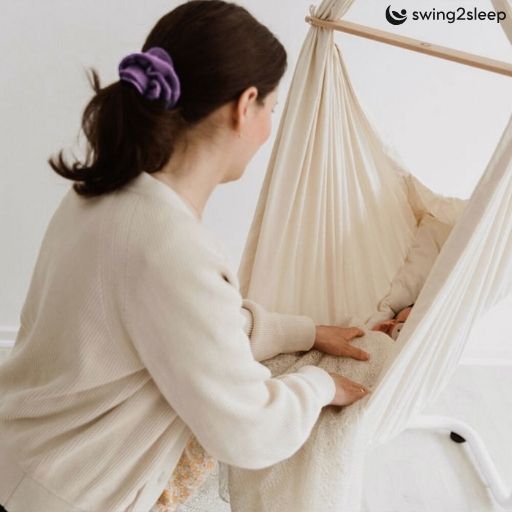
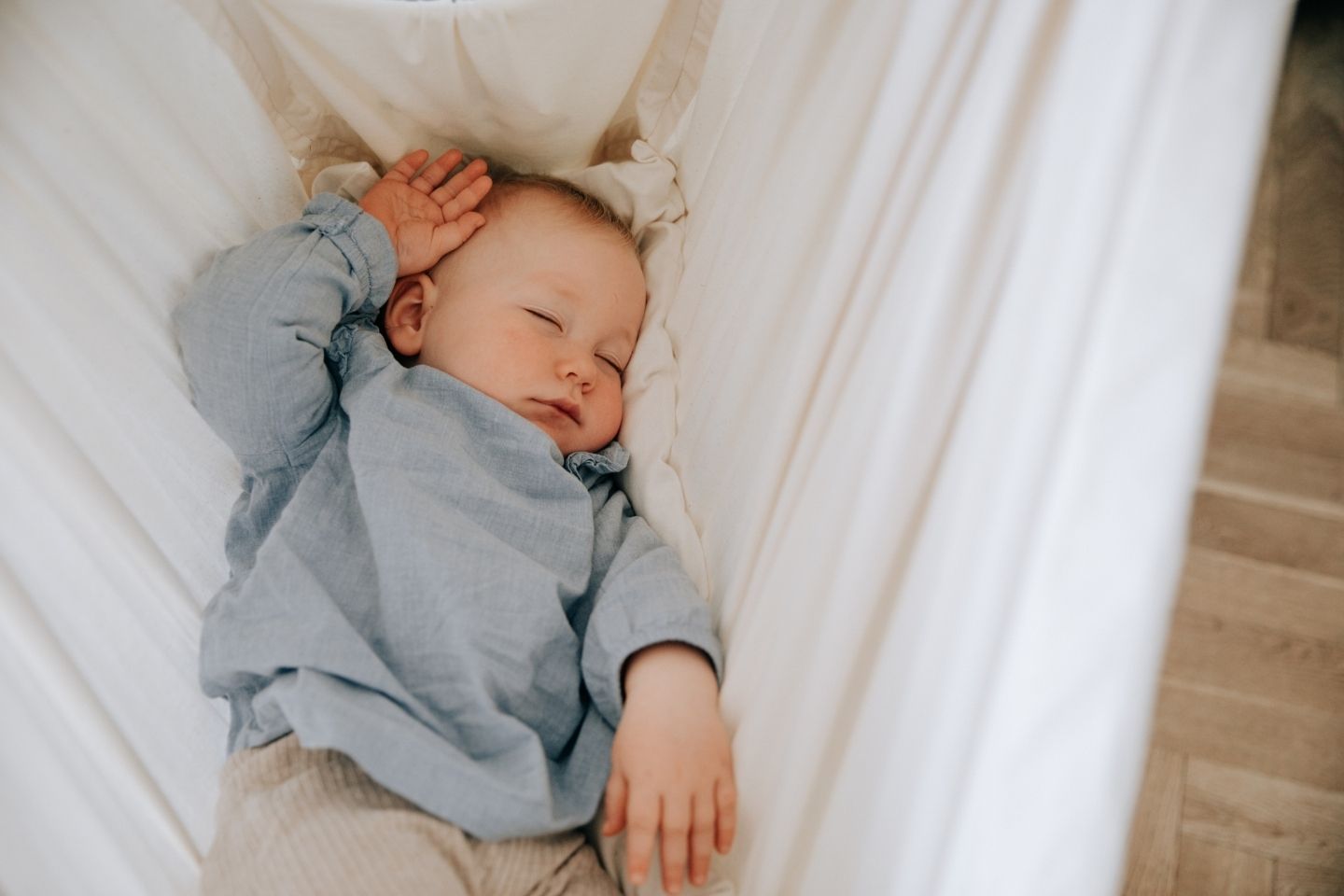
This is exactly where a baby cradle comes in. It creates a protected space that combines security, boundaries, and rhythmic movement. The gentle swinging can help them settle down faster and fall asleep more relaxed. Instead of a rigid sleep environment, a natural transition is created between the womb and a new phase of life.
A modern baby cradle is therefore more than just a piece of furniture. It is a well-thought-out baby sleeping place that is oriented towards original needs and can thus relieve both babies and parents in everyday life.

Understanding baby's sleep: Why movement calms
Babies sleep differently than adults. Their sleep cycle lasts only about 40 to 50 minutes, while an adult needs around 90 minutes per cycle. This means: newborns switch more frequently between light and deep sleep and wake up again faster.
This frequent waking is not a "sleep disorder", but a protective mechanism of nature. In the first months of life, safety takes precedence over sleeping through the night.
In addition, the internal clock, the so-called circadian rhythm, first has to develop. A baby does not know that it is dark at night and light during the day. It reacts to hunger, the need for closeness, and stimuli. This is exactly why many babies need support when falling asleep.
Movement plays a decisive role in this. Even in the womb, the baby was permanently exposed to gentle vibrations. This steady rocking stimulates the vestibular system in the inner ear, which is closely linked to relaxation and regulation. Rhythmic movements can help reduce stress and calm the nervous system.
If this movement is missing, the environment seems unusually static for some babies. A baby cradle picks up on this natural need for rhythm. It does not replace closeness or attention, but it can help make the transition from wakefulness to sleep gentler, especially in the first months when everything has to reorganize itself.
Baby cradle & vestibular system explained simply
To understand why a baby cradle can have such a calming effect, it is worth taking a brief look at the inner ear. That is where the vestibular system, our sense of balance, is located. It registers acceleration, changes in position, and rhythm. In babies, this system is already well-developed and reacts particularly sensitively to movement.
Gentle, steady vibrations send clear signals to the nervous system: everything is safe. No sudden stimuli. No abrupt change. Just rhythm.
Why rocking can be so effective:
- Rhythm conveys security: Steady movements are reminiscent of the time in the womb.
- The nervous system is regulated: Monotonous impulses help to reduce inner restlessness.
- The transition to sleep is easier: Movement supports the descent from wakefulness into light sleep.
- Sensory overload is dampened: Rocking acts like a natural filter against external impressions.
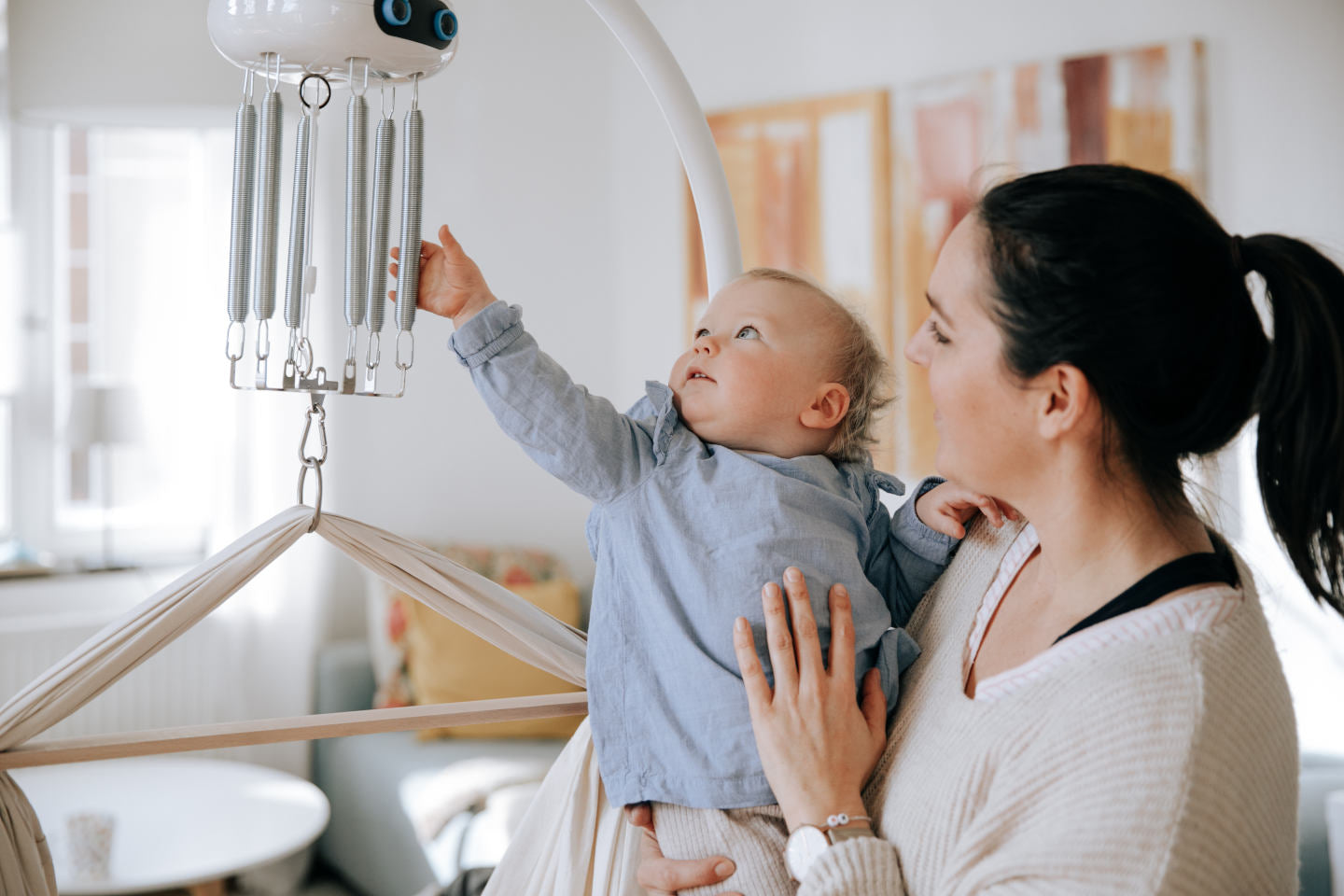
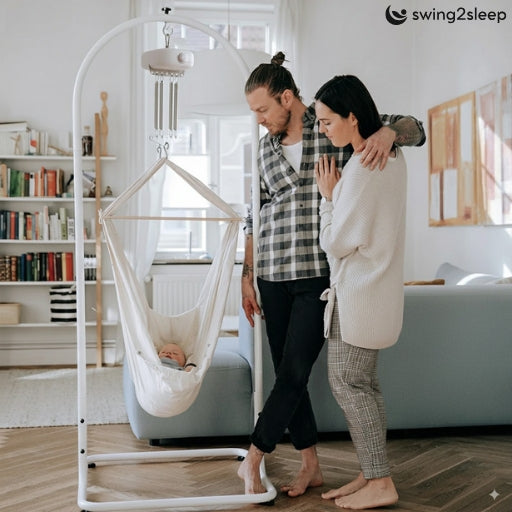
A baby cradle or an Automatic baby hammock uses exactly this biological mechanism. Instead of manually rocking the baby over and over again, a modern solution takes over this task constantly and evenly.
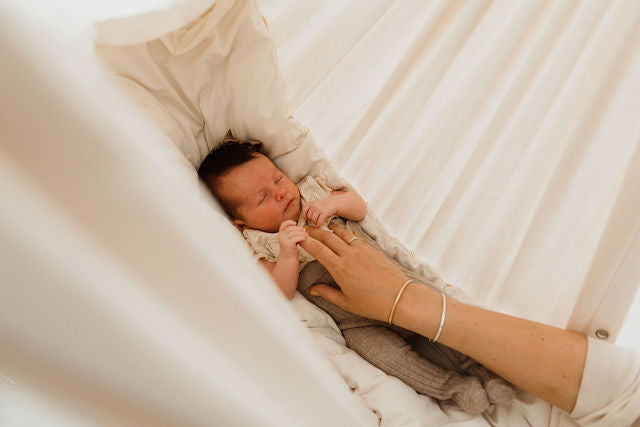
This is where the advantage of a well-thought-out construction like the Automatic baby hammock from swing2sleep shows: the movement remains calm, steady, and stable over a longer period. No abrupt stops, no constant pushing. It is precisely this consistency that many babies find particularly soothing.
Sleeping is not a switch that you flip. It is a process. And rhythm is often the gentlest way.
Learn the 7 benefits of an automatic baby hammock in the following video:
Using a baby cradle safely and making the right decision
When it comes to baby sleep, safety and trust always come first. Especially in the first months, sleep is still light, sleep cycles are short, and the need for closeness is great. A baby cradle can provide support here, provided it is used consciously and safely.
What parents should look out for:
- Observe age and weight specifications: Each cradle is intended for a specific developmental period.
- Ensure an ergonomic, stable lying position: The baby should be bedded calmly and safely.
- Avoid additional pillows or loose blankets: A clear, free baby sleeping place is crucial.
- Choose tested materials and secure fastening: Quality ensures stability and durability.
We also answer many questions about sleep duration, safety, and development in detail in our Baby Sleep Guide. There, parents will find further information to help design the right sleeping environment for their child.
A well-thought-out solution like the Automatic baby hammock from swing2sleep combines gentle, steady movement with a clear safety concept. This creates reliable conditions for more relaxed baby sleep and more peace in everyday family life.
Safe sleep is not a product of chance. It arises where knowledge, mindfulness, and a suitable environment work together.
Conclusion: Baby cradle as gentle support in everyday family life
A baby cradle is not a miracle cure, but it can be a powerful tool. Baby's sleep does not follow a fixed clock in the first months, but biological patterns. Closeness, rhythm, and safety are at the center. This is exactly where gentle rocking comes in.
Movement is nothing new for newborns. They know it from the womb. If this familiar rhythm is picked up again, many babies find it easier to fall asleep. A baby cradle thus creates a transition between the protected world before birth and the new environment afterwards.
At the same time, a well-thought-out solution also relieves parents. Instead of permanently rocking by hand, a motorized version reliably takes over the steady movement. The Automatic baby hammock from swing2sleep combines this natural approach with modern technology and tested safety, creating practical support in everyday life.
In the end, it's not just about a piece of furniture. It's about peace. About small recovery breaks. About the feeling of offering your own baby a safe and secure place to sleep.
Babies don't sleep "wrong". They sleep biologically. And sometimes a gentle rhythm helps everyone get through this intense first period a little easier.
FAQ about the baby cradle
How long can a baby sleep in the baby cradle?
A baby cradle is usually intended for the first months of life. Decisive factors are less rigid time specifications and more the weight, size, and developmental stage of the baby. As long as the child lies calmly and does not yet actively sit up or turn over, the cradle can be used as a sleeping place. It is important to follow the manufacturer's instructions and regularly check whether the cradle still fits the current developmental phase.
What is the ideal age for a baby cradle?
A baby cradle is particularly suitable for newborns and babies in the first months. In this phase, the need for closeness, boundaries, and rhythmic movement is particularly pronounced. As soon as babies become more mobile and begin to pull themselves up independently, it is time to switch to a classic baby bed.
Is a baby cradle good for babies?
A baby cradle can be very good for babies if it is safely constructed and used correctly. Gentle, steady movement can calm the nervous system and make it easier to fall asleep. A stable lying position, a free sleeping environment without loose objects, and compliance with all safety guidelines are always important.
How long can a baby stay in the automatic baby hammock during the day?
There is no blanket hourly figure that applies to every baby. Many babies use the automatic baby hammock for several sleep phases throughout the day. It is crucial that the baby gets enough freedom of movement outside of sleep times and that age-appropriate developmental steps are not restricted. Use should always be based on the individual needs of the child and the manufacturer's recommended weight and age specifications.