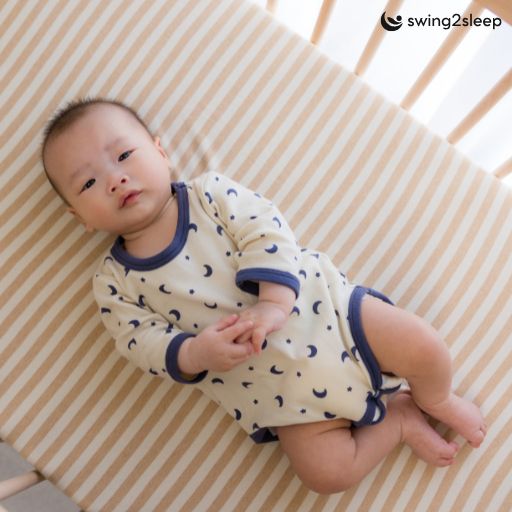
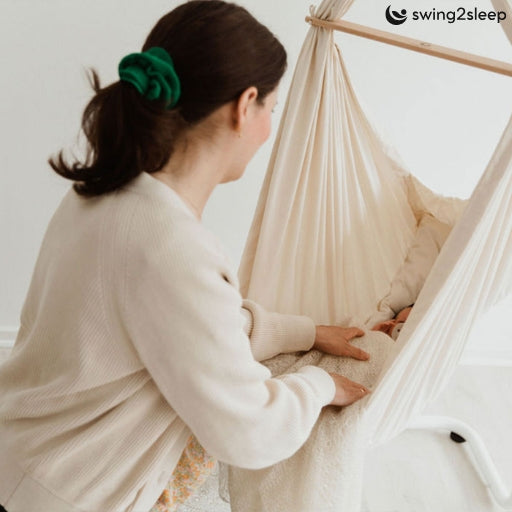


Rocking has been a proven method for centuries to calm babies and help them fall asleep. But did you know that rocking while sleeping actually has numerous scientifically proven benefits for babies?
In this blog post, we will examine various studies that highlight the positive effects of rocking while sleeping and explain how the innovative product swing2sleep uses these findings to make babies and parents happy and satisfied.
Horizontal rocking is more effective for falling asleep
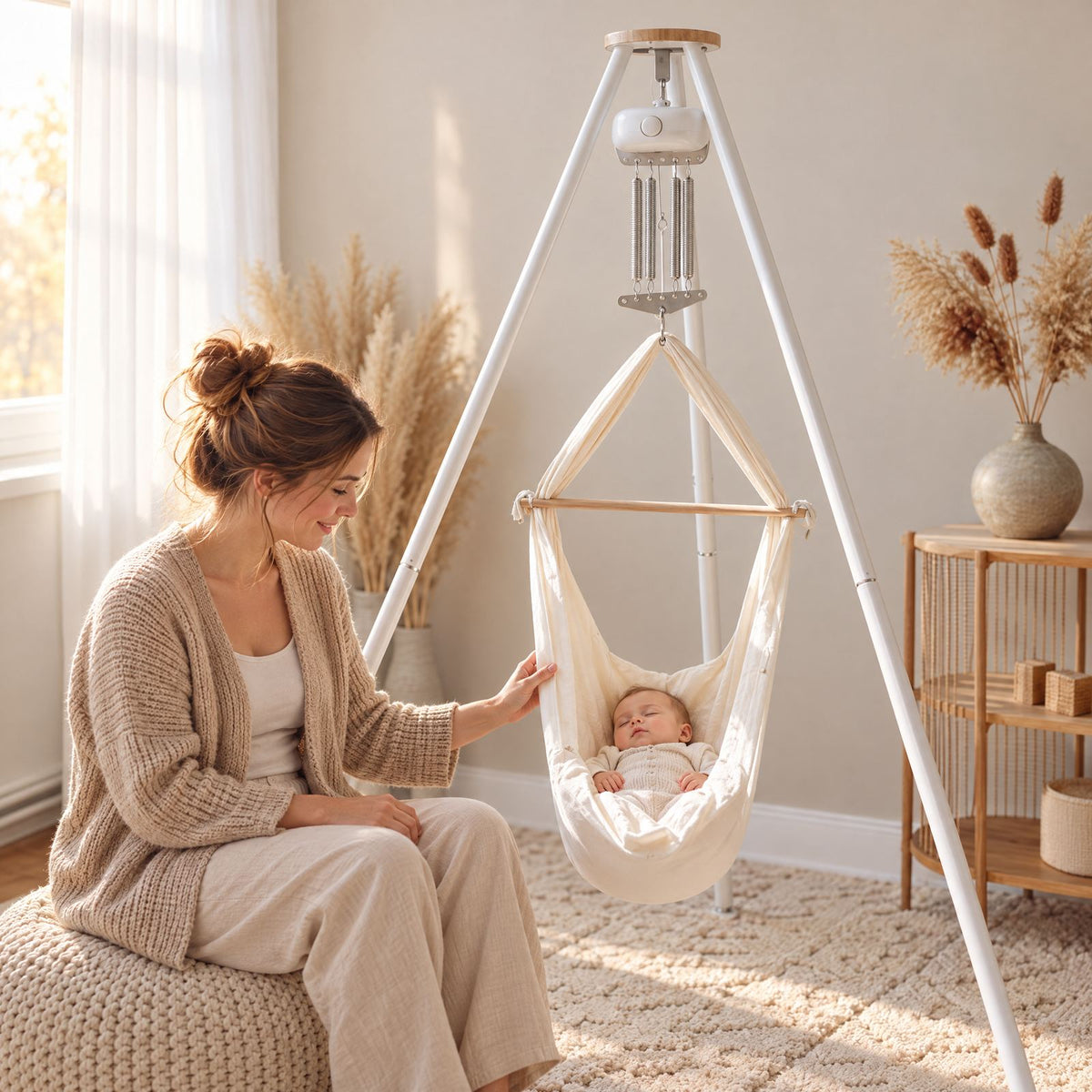
The soft fabric that surrounds the baby in the swing2sleep gently adapts to the body shape and conveys a sense of security and safety. In combination with a steady horizontal rocking motion, the child's nervous system can relax more easily and find its way to sleep.
The reason for this lies in the sense of balance, the so-called vestibular system. This is already active before birth. In the womb, the baby predominantly experiences gentle, lateral, and swinging movements, such as when the mother walks or moves.
The brain recognizes these movements as familiar and safe after birth. Steady horizontal rocking builds exactly on these early childhood experiences and can help the baby reduce stress and fall asleep more easily.
Vertical movements, on the other hand, often have a more activating effect, especially if they are irregular. They are more likely to keep the nervous system awake instead of leading it into a relaxed state.
A calm, predictable rocking motion in a horizontal direction therefore supports the baby's natural self-regulation and promotes a gentle transition from wakefulness to sleep.
Studies on the influence of rocking on babies
Studies on the influence of rocking on babies have shown that babies sleep better when they are gently rocked or swung (Pederson, 1969).
This is because the rhythmic movement imitates the gentle rocking they felt in the womb (Barnard, 1972).
The gentle rocking gives babies a sense of security and comfort, which helps them sleep better.
Neal (1968) found that babies rocked by a cradle or hammock showed significant improvements in weight gain, motor maturation, auditory and visual responses, and muscle tension responses compared to babies who did not receive such stimulation.
Barnard (1973) also found that babies stimulated by the rocking motion of the baby cradle develop distinct sleep patterns earlier, show significant increases in the duration and length of quiet sleep, and score higher on a general measure of motor maturity.
1. The University of Geneva: Rocking for better brain development
Researchers at the University of Geneva have published a study showing that rocking while sleeping promotes brain development. The study examined the effects of rocking movements on sleep and found that these movements improve sleep quality and increase synchronous activity in the brain.
The scientists found that rocking while sleeping improves the processing of sensory impressions, which is crucial for healthy brain development. This is particularly important for newborns and infants who are still in the process of developing their sensory skills.
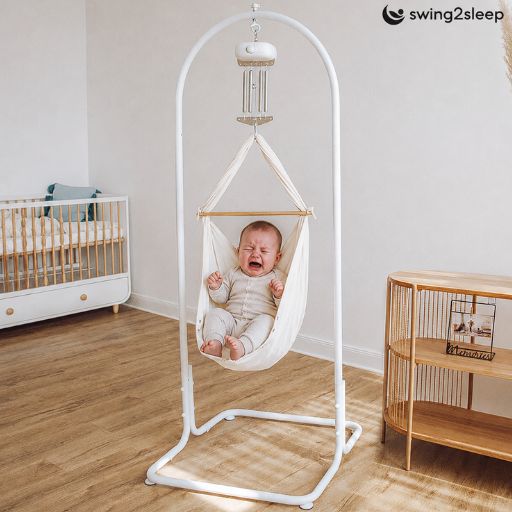
swing2sleep utilizes these findings by providing gentle rocking movements through its patented spring technology, which support the sleep of babies and promote their brain development. The design of the swing2sleep also promotes sensory integration and helps babies reduce stress and relax.

2. University of Lausanne: Improved sleep quality through rocking
A study by the University of Lausanne has shown that rocking while sleeping calms and improves sleep quality. The researchers found that rocking movements facilitate the transition into deep sleep and prolong sleep duration.
This is said to be particularly important for babies who have difficulty getting enough sleep due to sleep problems or restlessness.
With the smarla, swing2sleep offers a solution by adapting to changes in baby sleep (partial waking) and using technology for the rocking movements to calm babies and help them transition into deep sleep more easily.
The swing2sleep was developed to imitate the natural rhythm, which helps to relax babies and enable them to have a restful sleep.
3. University of Zurich: The benefits of rocking for sensory integration
Studies by the University of Zurich have shown that gentle rocking while sleeping not only relaxes but also supports development. The researchers discovered that rocking promotes sensory integration and reduces stress.
Sensory integration is the process by which the brain processes and interprets sensory impressions from the environment. Good sensory integration is crucial for the cognitive, emotional, and motor development of babies.
The automatic baby hammocks from swing2sleep take these findings into account and offer gentle rocking movements that help babies develop their sensory skills and reduce stress.
By improving sensory integration, swing2sleep helps babies adjust better to their environment and cope with new experiences and challenges.
Washington University School of Medicine: Rocking and the processing of sensory impressions
A study by the Washington University School of Medicine has found that rocking while sleeping supports the brain development of babies, particularly in the area of processing sensory impressions.
The researchers found that rocking movements calm the body and improve the processing of sensory impressions. This ability is crucial for the emotional and cognitive development of babies.
The swing2sleep builds on this research and offers gentle rocking movements that help to relax the baby's body. By promoting the processing of sensory impressions, swing2sleep supports the emotional and cognitive development of babies and helps them to better deal with their environment.
Summary: swing2sleep and the benefits of rocking while sleeping
The swing2sleep automatic baby hammock is an innovative product based on scientific findings that offers numerous benefits for babies and their parents.
By utilizing the results of various studies showing the positive effects of rocking while sleeping, swing2sleep supports brain development, improves sleep quality, and promotes the sensory integration of babies.
Parents who use the automatic baby hammock from swing2sleep can rest assured that they are providing their babies with a safe and effective method to relax, sleep better, and promote their development. The swing2sleep is not only a practical tool for everyday life but also an investment in your baby's future.
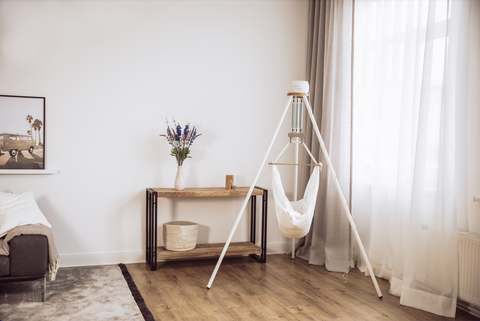
Conclusion
Based on scientific studies and findings, swing2sleep offers a solution that makes babies and parents equally happy.
With the benefits of rocking while sleeping, such as promoting brain development, improving sleep quality, and supporting sensory integration, swing2sleep is a valuable companion for every parent who wants to give their baby the best possible start in life.
Try swing2sleep today and experience for yourself how it can positively influence your baby's life and your own.
Studies and their sources investigating the benefits of rocking while sleeping:
- Bayer, L., Constantinescu, I., Perrig, S., Vienne, J., Vidal, P. P., Mühlethaler, M., & Schwartz, S. (2011). Rocking synchronizes brain waves during a short nap. Current Biology, 21(12), R461-R462. https://doi.org/10.1016/j.cub.2011.05.012
- Perrault, A. A., Khani, A., Quairiaux, C., Kompotis, K., Franken, P., Muhlethaler, M., & Schwartz, S. (2019). Whole-night continuous rocking entrains spontaneous neural oscillations with benefits for sleep and memory. Current Biology, 29(3), 402-411. https://doi.org/10.1016/j.cub.2018.12.028
-
Barnard, K. (1973). The effect of stimulation on the sleep behavior of the premature infant. Communicating nursing research, 6, 12-33.
-
Barnard, K. E. (1972). The effect of stimulation on the duration and amount of sleep and wakefulness in the premature infant. PhD Thesis, University of Washington.
-
Neal, M. (1968). Vestibular stimulation and developmental behavior of the small, premature infant. Nursing Research Reports, 3, 2-5
-
Pederson, D. R., Champagne, L. & Pederson, L. L. (1969). Relative Soothing Effects of Vertical and Horizontal Rocking. ERIC Number: ED046504.
Please note that the studies mentioned above do not all refer only to babies, but they illustrate the effects of rocking on sleep. Further studies are required to investigate the specific effects of rocking on babies and their development.
FAQ: Rocking babies to sleep
Should you rock babies to sleep?
Yes, gentle rocking can help babies fall asleep. Steady, calm movements have a soothing effect and are reminiscent of movements in the womb. It is important that the rocking is calm, predictable, and not jerky.
How do you get a baby to fall asleep quickly?
It works best if you recognize signs of tiredness early and reduce stimuli. Dimmed lights, a consistent ritual, and gentle movements help them settle down faster.
Why do children rock themselves to sleep?
Rhythmic movement supports self-regulation via the sense of balance and provides a sense of security. Many children use this instinctively to calm down and switch off more easily.
Can you rock a baby too hard?
Yes. Jerky shaking is dangerous and can cause severe damage. When rocking, the rule is: always calm, steady, and gentle, without abrupt movements.