

How does sleep change in the ninth month?
In the ninth month, habit slowly turns into a routine. Many babies now find it easier to settle into a more stable sleep rhythm – and react more sensitively when it gets out of sync. The days follow a more predictable course, which noticeably influences sleep: not every nap is a coincidence anymore, but part of a pattern.
In this phase, many babies are extremely active physically: they crawl, pull themselves up, or explore their surroundings more and more intensively. This new independence ensures exciting discoveries during the day – and significantly more tiredness in the evening. At the same time, however, the need for security also grows: especially when falling asleep or after waking up at night, babies now often show how important familiar routines are to them.
Typical in the ninth month are two fixed sleep phases during the day as well as a longer night sleep. The total sleep duration usually continues to be between 12 and 15 hours of sleep – distributed throughout the day and night. What is important here is less the exact number of hours, but that your baby appears balanced and rested overall.
In the ninth month, sleep rhythm and daily structure gain further depth: your baby develops more independence – but needs reliability and closeness right now for good sleep.

Why do some babies still sleep restlessly?
Even if the daily routine increasingly stabilizes for many 9-month-old babies, restless nights remain no rarity at this age. The causes for this are manifold – and often part of completely normal development.
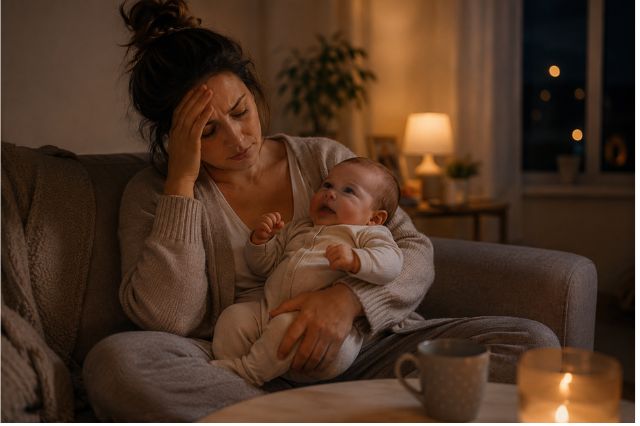
A possible trigger is the so-called sleep regression, which can still occur or persist in the ninth month. Some babies who previously slept peacefully suddenly wake up more frequently again or have a harder time falling asleep. Such phases are usually temporary – but demanding precisely because they often come unexpectedly.
At the same time, rapid motor development causes inner restlessness: many babies are now not only learning to crawl but are trying to pull themselves up or stand up with their first steps. These new skills also occupy them during baby sleep – and can promote nighttime restlessness.
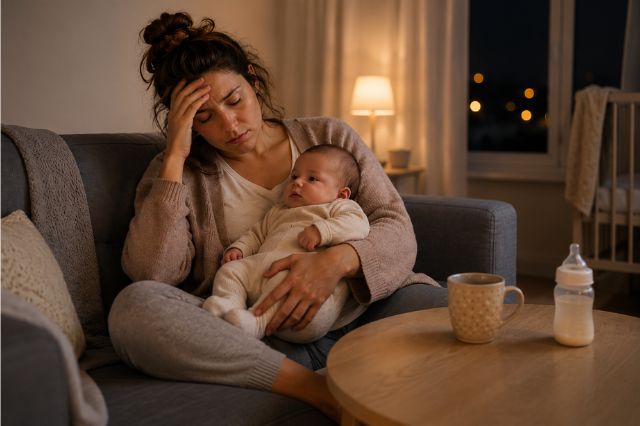
A lot is also happening emotionally. Separation anxiety often intensifies in this phase – especially when falling asleep or after waking up at night. Your baby now notices more consciously whether you are nearby or not – and then increasingly seeks closeness and orientation.
All this leads to the fact that your baby's sleep rhythm can temporarily change – even though the external conditions have remained the same. It is important to stay calm and not to view the behavior as a step backward: restless sleep at this age is often simply part of development.
What helps your baby fall asleep particularly well?
At 9 months, your baby begins to perceive the world more and more consciously – and exactly that affects falling asleep. Many babies are still full of impressions in the evening and need time to process them. This makes a clear structure around bedtime all the more important, helping your baby to settle down internally.
A reliable sleep routine – for example with quiet music, a certain light, or a soothing voice – can make the difference now. Recurring rituals signal to the brain: now it's bedtime. Particularly helpful are gentle transitions in which no new stimuli hit your baby.
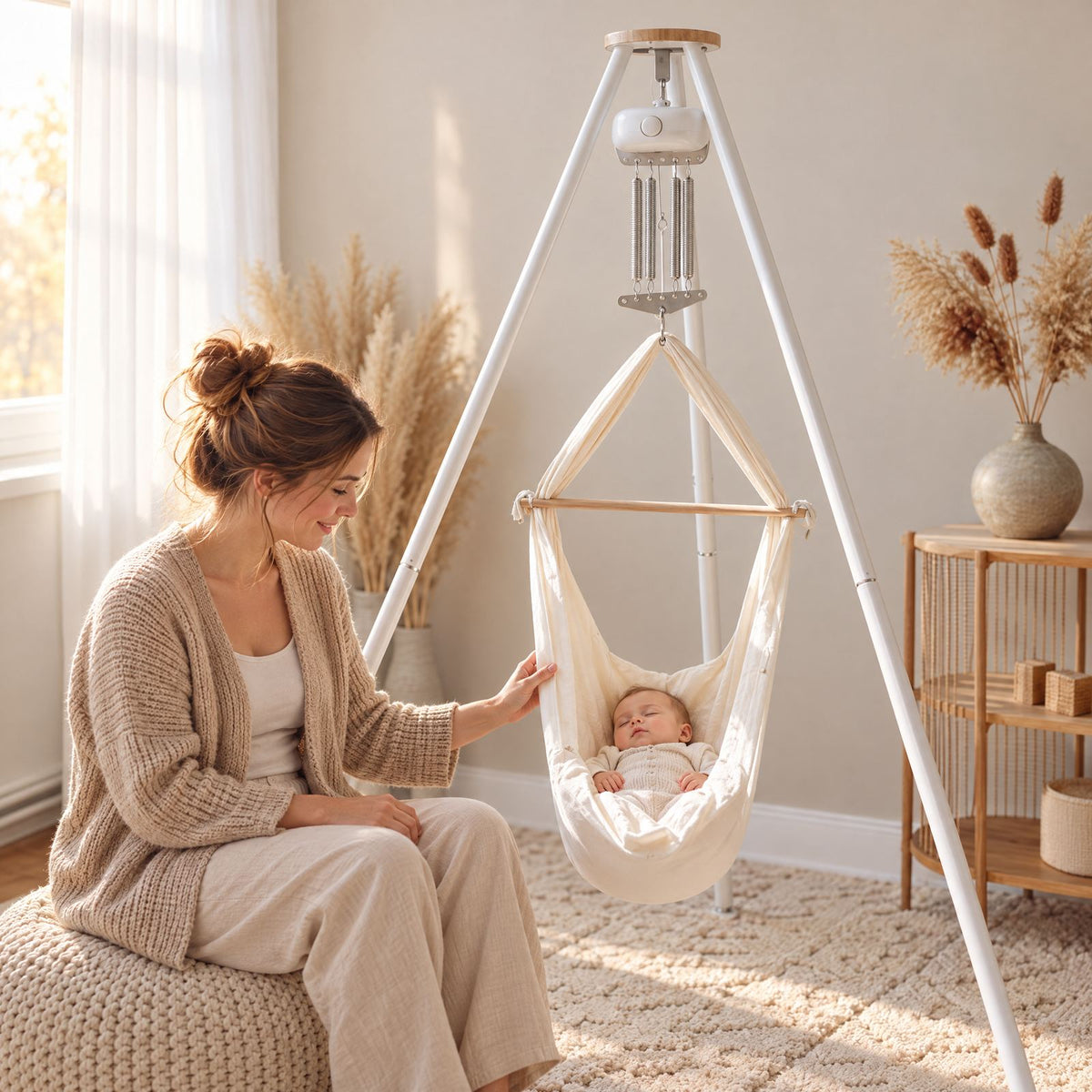
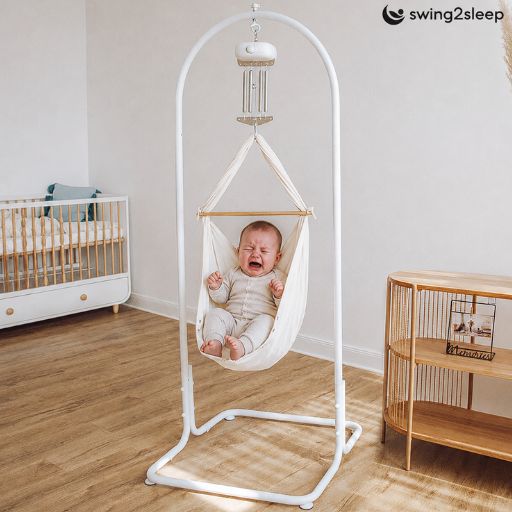
Movement stimuli also play a major role in this phase. Babies who were very active during the day often need a bit more support to relax in the evening. Some parents rely on sleep aids here, such as an automatic baby hammock motor from swing2sleep – the rhythmic movement reminds many babies of familiar security and supports them in relaxing faster.
What is important here: there is no universal recipe. Observe what really helps your baby – and trust that even small, quiet changes in everyday life can have a big effect.

How do you support your baby during nighttime waking?
In the ninth month, nighttime interruptions are nothing unusual. Many babies wake up more frequently now – even if they have already managed longer sleep phases before. The reason often lies not in a real disturbance, but in the interplay of development, inner restlessness, and changed self-perception.
Important: your baby does not have to become fully awake every time to continue sleeping. If you notice that they are only moving slightly or mumbling, it can help to wait a moment. Sometimes your baby finds their way back to sleep without support – especially if the sleep environment remains constant and familiar.
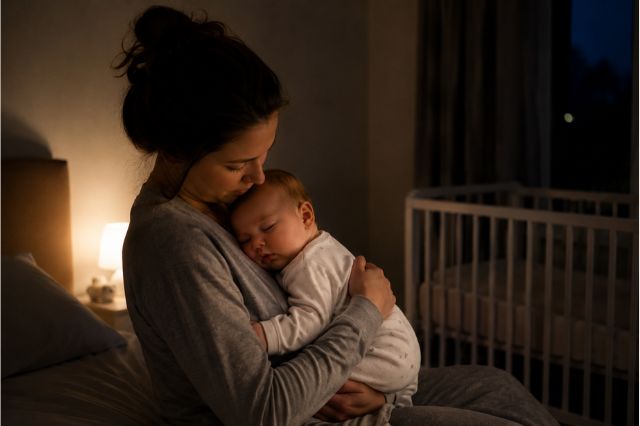
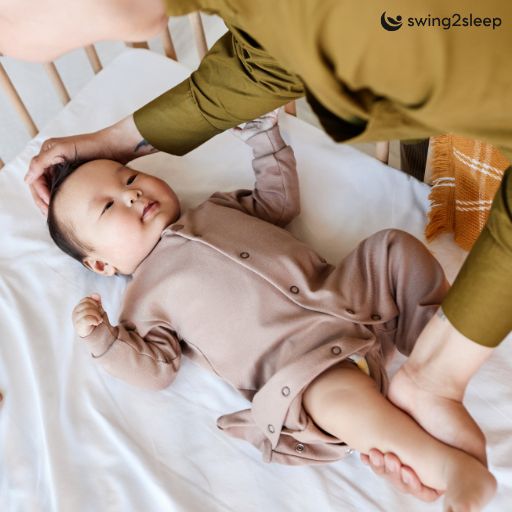
If your baby is actually awake and needs closeness, small signals are often enough. A quiet voice, gentle touch, or your mere presence convey security without unnecessarily throwing them out of rhythm. It's not about falling back asleep as quickly as possible, but about providing trust and orientation.
On some nights, your baby can be particularly restless – for example after exciting days or when they are going through an intense developmental phase. For many parents, gentle sleep aids with steady movement, which help the baby to settle down faster again, prove their worth in such moments.
Sources:
(1) Cleveland Clinic – Sleep in Your Baby’s First Year https://my.clevelandclinic.org/health/articles/14300-sleep-in-your-babys-first-year
(2) Familienservice.de – Babyschlaf verstehen https://www.familienservice.de/-/babyschlaf-verstehen
(3) Babyartikel.de – Schlafbedarf Baby: Tabelle und Tipps https://www.babyartikel.de/magazin/schlafbedarf-baby-tabelle-und-5-tipps-fuer-erholsamen-babyschlaf
(4) Stanford Children’s Health – Infant Sleep https://www.stanfordchildrens.org/en/topic/default?id=infant-sleep-90-P02237