


At the age of 7 months, many babies' sleep becomes more structured. The day is more clearly organized, most babies now take two naps a day – one in the morning and one in the afternoon. The third nap, which was often still necessary in the previous months, is dropped by many babies at this age.
The wake windows are also becoming longer and more active. A 7-month-old baby is often awake for 2.5 to 3.5 hours at a time before becoming tired again. The total sleep requirement at this age is on average 12 to 15 hours of sleep per day – divided between daytime sleep and nighttime sleep.
Night sleep becomes more stable overall, even if many babies continue to wake up briefly at night. These interruptions are part of the natural sleep pattern and are calmer for many children at this age than in the months before.
In addition, babies at 7 months react increasingly to familiar routines throughout the day. A predictable daily routine with fixed sleep times supports the internal clock and ensures that your baby can better handle tiredness.
In the seventh month, baby sleep often appears more stable: two naps, longer wake windows, and a reliable daily rhythm characterize the new sleep routine.

Why do sleep problems still occur in many babies?
Even if the daily routine for a 7-month-old baby becomes more and more stable, new sleep problems often occur in this phase – especially at night. Many parents report that their baby suddenly wakes up more often again, even though they had already slept more peacefully before.
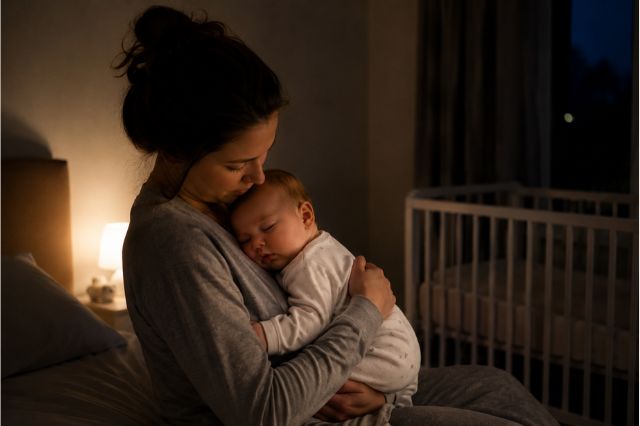
One reason for this is emotional development: your baby recognizes you more and more clearly as the most important caregiver – and increasingly senses when you are not there. This new perception can lead to separation anxiety, which is particularly noticeable in the evening when falling asleep or at night through frequent waking.
In addition, there are physical changes. Many babies get their first teeth at the age of 7 months. This early teething can cause restlessness, which also affects night sleep – sometimes without immediately visible signs.
Furthermore, your baby's development makes big leaps at this age: rolling, crawling, or pulling up – all these are new skills that must be processed mentally and physically. Many babies sleep more restlessly in such phases because they continue to process the newly gained impressions in their sleep.
Even if night sleep is better structured overall, one must not forget: every baby reacts individually – and some children simply need more closeness again during this time to find peace at night.
What helps your baby fall asleep in this phase?
If your 7-month-old baby has a hard time settling down in the evening, it is often due to a mixture of inner restlessness, new impressions, and a growing need for closeness. In this sensitive phase, a reliable structure helps particularly to make falling asleep easier.
A fixed daily routine with clear signals before bedtime provides orientation. Many babies now benefit from a stable sleep routine – e.g., a quiet transition time with dimmed light, a short sleep ritual, or soft music. A constant sleep environment in which your baby feels safe and secure is important.
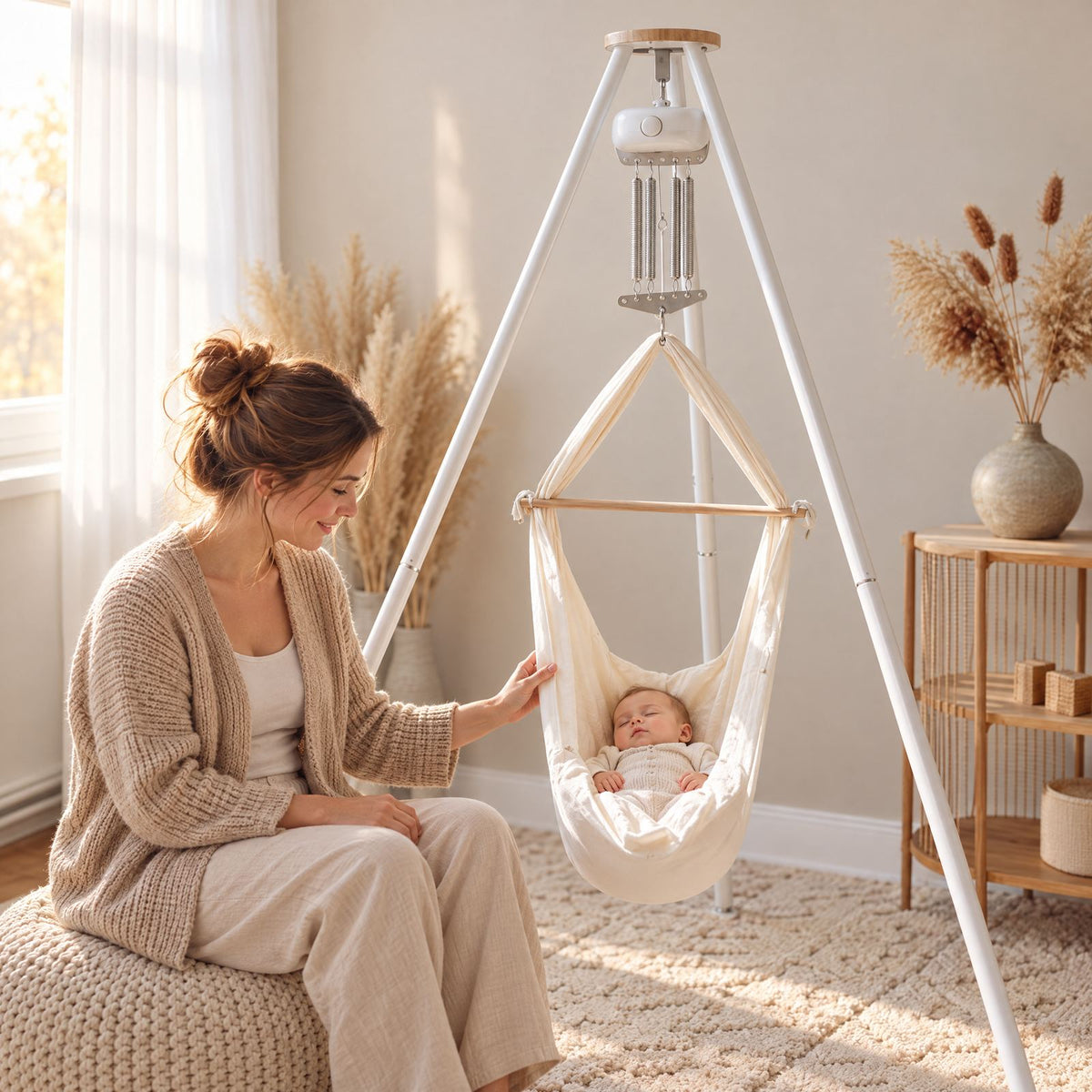
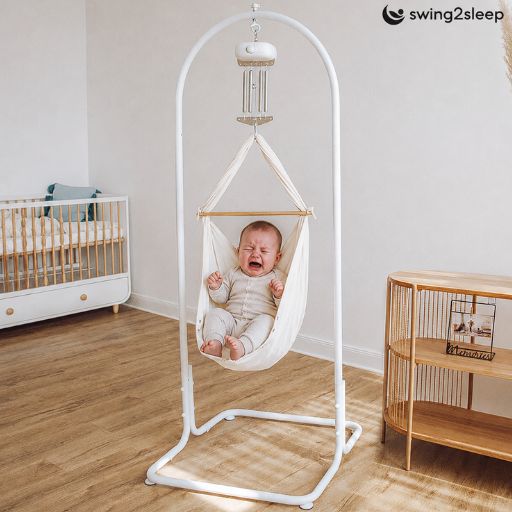
Gentle movements can also help when falling asleep – especially when your baby is restless in the evening or wakes up more frequently at night. In such moments, some parents fall back on proven sleep aids such as an automatic baby hammock motor, e.g. from swing2sleep. The steady up-and-down movement has a calming effect on many babies and supports them in settling down.

How do you deal with your baby's nightly waking?
Many babies wake up more frequently at night at the age of seven months – even if the daily routine is stable and night sleep is already well developed overall. These nightly interruptions are usually harmless, but they can still be challenging for parents.
It is important to know: your baby does not necessarily wake up at night because something is wrong – but because their sleep rhythm is continuing to develop. At this age, many babies are in a transition phase in which they learn to connect sleep phases themselves and not to manage every small waking with outside help.
When your baby wakes up at night, it often helps to wait calmly at first. Some babies find their way back to sleep on their own if they are not immediately completely pulled out of their sleep rhythm. Others still need a gentle signal – a soft voice, short physical contact, or the familiar feeling of the environment.
Here, too, it shows: every baby is different. While some children at 7 months already sleep through the night without interruption, others still need support. The decisive factor is that your baby gets enough sleep overall – and feels safe and supported when they wake up at night.
Sources:
(1) Parents.com – Understanding Baby Sleep: 7–12 Months https://www.parents.com/baby/sleep/basics/understanding-baby-sleep-7-12-months/
(2) Babyschlummerland.de – Daily routine baby 7 months https://www.babyschlummerland.de/tagesablauf-baby-7-monate/
(3) PMC – Longitudinal Study of Sleep Behavior in Normal Infants https://pmc.ncbi.nlm.nih.gov/articles/PMC4173090/