


How does sleep change at five months?
At around five months, your baby's sleep begins to change noticeably. Many babies now show a clearer day-night rhythm and sleep in longer stretches at night more frequently – often six to eight hours of sleep at a time, although not always continuously. For many, a pattern with two to three naps also settles in during the day.
This development shows: Your baby's sleep is becoming increasingly structured – and yet it remains individual. Some children already sleep surprisingly peacefully, while others continue to need a lot of support. It is important now to pay attention to your baby's signals: How long are the wake windows? How quickly do they fall asleep? Which stimuli are stimulating – or overwhelming?
Your baby's brain is also working at full speed now: it processes experiences, builds new connections, and begins to grasp the world more and more clearly. All of this can influence sleep – sometimes beneficially, sometimes challengingly. A reliable framework in the daily routine is crucial, as it gives your baby security and takes their sleep needs into account.

What is behind restless nights at this age?
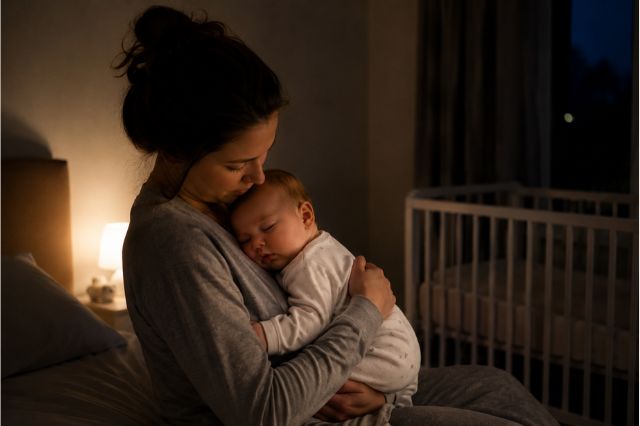
Many parents observe that their 5-month-old baby's night sleep suddenly becomes more restless again – even though the sleep rhythm has actually already settled in better. However, such changes are completely normal at this age. The reason for this is the increasing maturity of the nervous system: babies at this age go through clearly recognizable wake phases and wake up more frequently between sleep phases at night.
At the same time, many 5-month-old babies are currently developing new motor skills – they roll over, reach more purposefully, and are more active overall. This development also influences sleep: movement during sleep or more frequent waking are not uncommon. Some babies then need more support again to find peace once more.
In addition, the day is becoming increasingly exciting for your baby. New impressions and experiences need to be processed – this often happens at night. The desire for closeness also increases: many babies need the security of their caregivers more intensely at night.
Baby sleep is therefore still in transition – but that is exactly a sign of healthy development. With loving support and a constant daily routine, your child will learn step by step to sleep through the night better again.
Even at five months, baby sleep can suddenly become more restless again. New motor skills, increased stimuli, and nightly wake phases often mean that many babies need more support again to find peace.
Sleep support: What is good for your baby now?
At five months, your baby has already made noticeable progress – and yet they often still need support when falling asleep. A reliable sleep routine can be particularly helpful now: recurring sequences, such as a short evening ritual or gentle sounds, signal to the baby that it is time to sleep.
The daily routine also gains more structure: two to three naps spread over the day and about 14 to 16 sleeping hours per day are typical for most babies at this age. It is important not to let the wake windows get too long and to watch for subtle signs of tiredness – such as yawning, rubbing eyes, or restlessness.
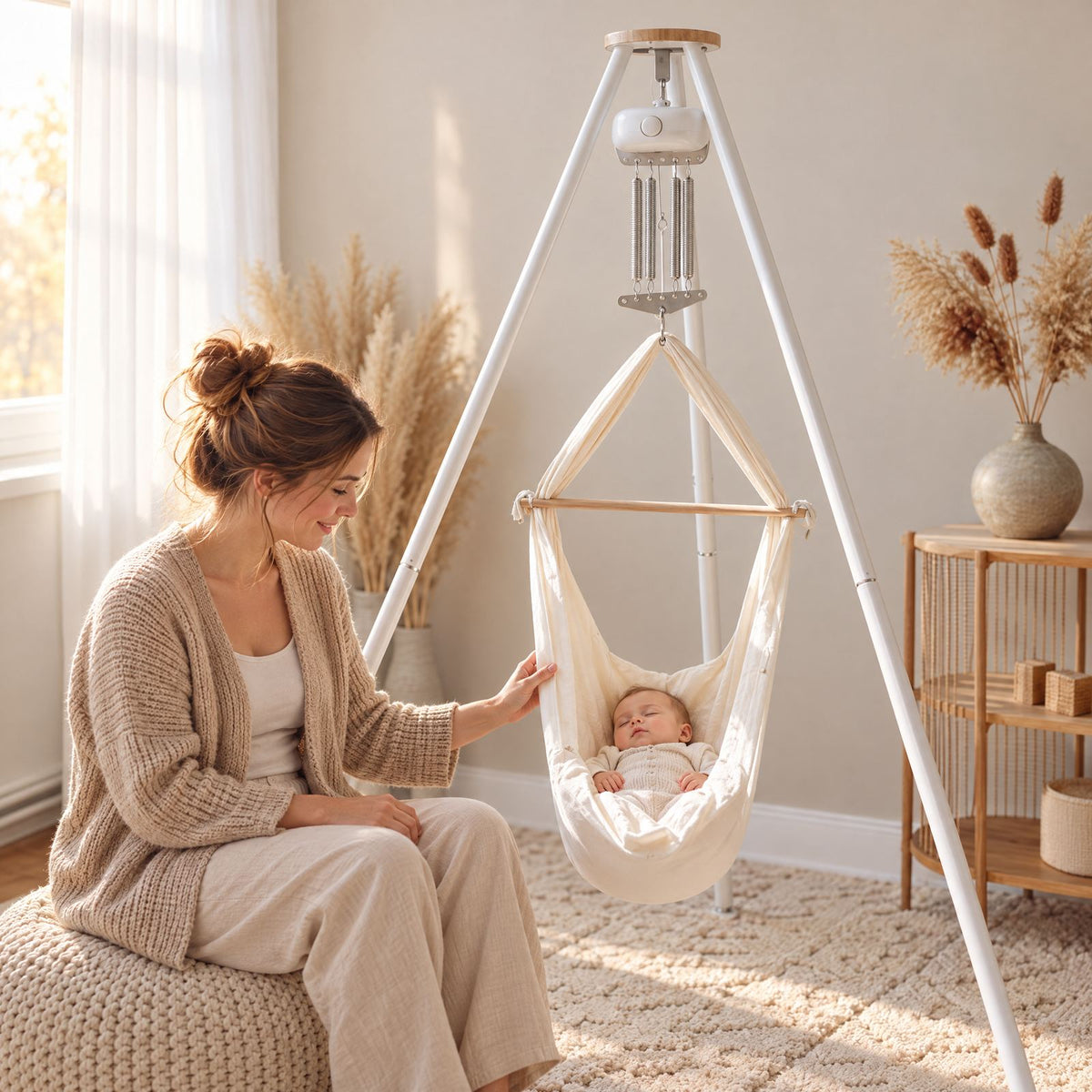
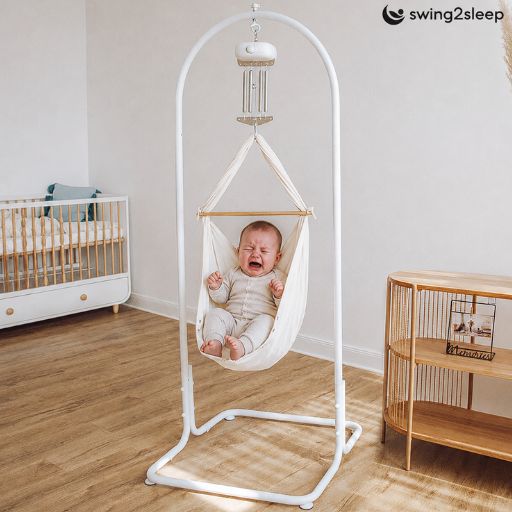
In some situations, a gentle sleep aid can bring the necessary peace: a steady, rhythmic movement has a calming effect on many babies. Here, for example, the use of automatic baby hammocks with a motor such as the one from swing2sleep has proven effective – especially when falling asleep is difficult or your baby becomes more restless at night.
Ultimately, every baby is unique – it is important that they feel safe, secure, and supported in their sleep environment. This supports not only falling asleep but also a growing confidence in their own abilities for self-regulation.

When is the right time for their own bed?
In the fifth month, many babies already sleep for longer periods – often with fewer nightly feedings. Some parents are therefore gradually asking themselves whether the baby is already ready to sleep in their own bed. In principle, there is nothing against approaching this consideration carefully – as long as your baby feels secure and experiences sufficient closeness.
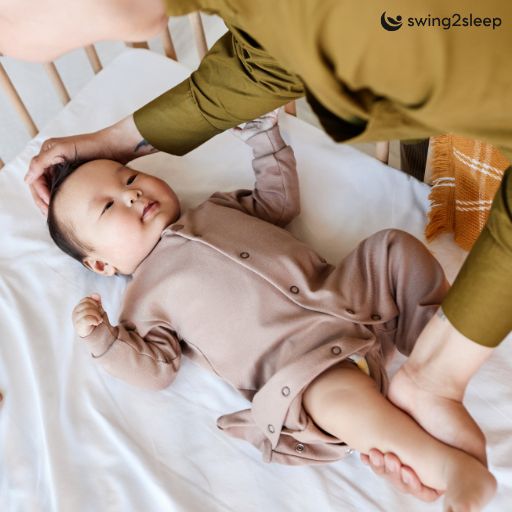
It is important to balance your own gut feeling with the baby's needs: Does the baby seem balanced overall? Does falling asleep work reliably? Then it can be helpful to gently introduce the first experiences in their own bed – for example, during short naps during the day or in direct proximity to the parents' bed. This way, your baby gets used to the new sleeping place bit by bit without an abrupt change being necessary.
Nevertheless: there is no "right age" for this step. The fifth month can be a good time to pay close attention to your baby's signals – whether they feel more comfortable when you are still close to them, or whether they are already showing the first steps towards independence.
Sources:
(1) KidsHealth – Sleep and Your 4- to 7-Month-Old https://kidshealth.org/en/parents/sleep47m.html
(2) WCHC NHS – Safer Sleep: 3 to 6 months https://www.wchc.nhs.uk/wp-content/uploads/2019/12/SaferSleep_3-6months.pdf
(3) Familienportal NRW – Schlafen im ersten Lebensjahr https://www.familienportal.nrw/de/0-bis-1-jahre/gesundheit-kind/schlafen