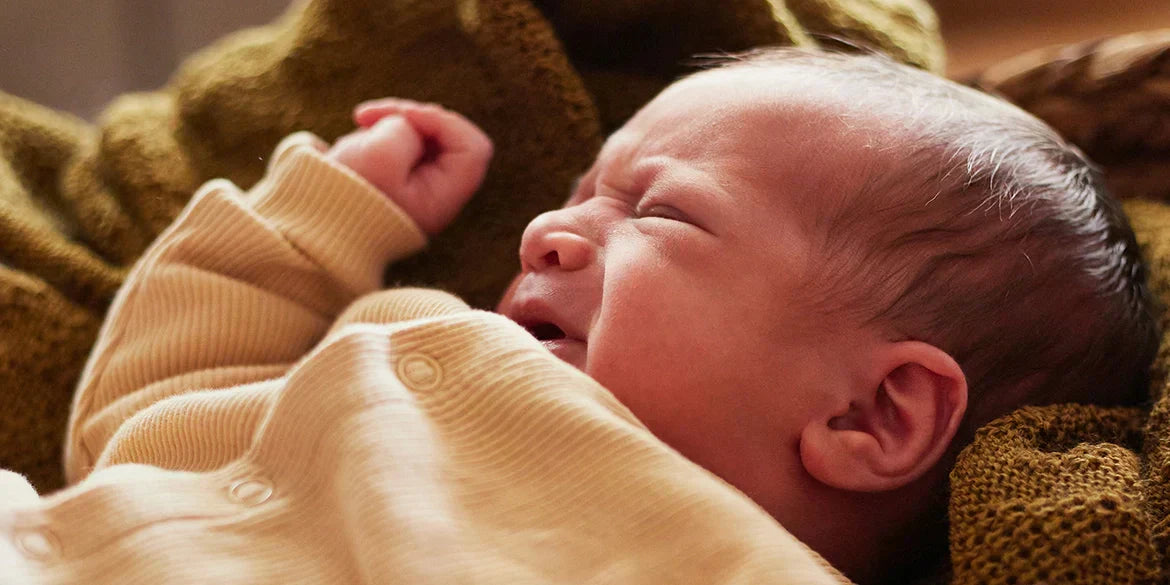


For many parents, there is nothing more beautiful than watching their baby sleep. They lie there peacefully, processing the day's impressions. You might notice that your baby snores or wheezes every now and then. In many cases, this is completely normal and there is no cause for concern. We have summarized for you why your baby snores, what you can do about it, and in which situations you should consult a doctor for clarification.
Why do babies snore and wheeze in their sleep?
When babies snore at night, there is usually no serious cause behind it. There are soft palates located in your baby's small nasal passages.
These vibrate when your baby snores and create the quiet snoring sound. In this case, the snoring has a harmless anatomical cause. However, every child is different: some babies snore every night, while others almost never snore.
Nightly snoring in babies can also be triggered or intensified by colds, infections, dry air, allergies, or mucus. This is because your baby cannot clear their throat yet and therefore cannot get rid of the mucus. In addition to snoring and wheezing, a rattling sound can also occur. This happens when mucus covers the larynx: your baby wheezes, then makes no sound, and then rattles again.
If your baby snores noticeably loudly and the airways seem to be blocked, you should consult a doctor. Parents should observe their child closely and trust their instincts. If your baby's breathing stops repeatedly and it seems that blocked airways could be the cause, you should describe these observations to your pediatrician. Sleep apnea or enlarged tonsils could potentially be the cause.
How do breathing problems manifest in babies & toddlers?
It can be difficult for parents to distinguish between snoring and serious breathing problems in their baby. If you feel that something is not right, you should consult a doctor to be safe and have your baby's breathing checked.
The following symptoms may indicate that your baby is suffering from a breathing problem:
- They breathe too fast for no apparent reason
- Their face or fingers turn blue
- A whistling sound can be heard when breathing in and out
- They tense their chest muscles and flare their nostrils
Breathing problems in babies and toddlers are particularly dangerous because they are hardly noticeable. Your baby is literally out of breath and therefore does not cry – they lack the strength and the air to do so. That is why they rely on you as parents to observe closely how they are doing and whether they might have a breathing problem.

Recognizing breathing problems: Observe your baby during the day too
Breathing problems are not always easy to recognize. After all, you cannot watch your baby all night. Furthermore, the problems may only occur occasionally, but can still have serious consequences for your baby and their development.
Therefore, doctors recommend observing children very closely during the day as well. Babies and toddlers who show the following symptoms could be suffering from breathing problems:
- They are restless and seem unbalanced
- They find it difficult to concentrate and are easily distracted
- They frequently suffer from infections or middle ear infections
- They are noticeably tired during the day as well
- Their development is delayed
These symptoms do not necessarily have to be due to a breathing problem. However, they can be, which is why you should share your suspicion with your pediatrician. There could be underlying causes for the breathing problems that should be treated to ensure age-appropriate development.
What can I do if my baby snores?
If your baby snores quietly in their sleep, there is usually no reason to take action. However, if blocked airways seem to be the trigger, you can make breathing easier for your baby with a few simple steps:
- Use a nasal aspirator: If newborns or toddlers have a cold, mucus can make it difficult for them to breathe. A nasal aspirator helps you get rid of the mucus and clear the blocked nose. This can help make breathing easier for your baby. You should avoid using nasal spray if possible.
- Ensure higher humidity in the room: If the humidity in the bedroom or nursery is low, your infant's throat and mucous membranes can dry out, which in turn can increase snoring. Therefore, check the humidity regularly and increase it if necessary.
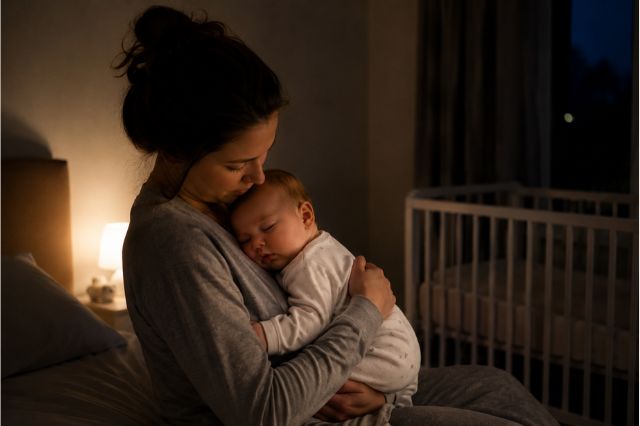
- Introduce rituals: To ensure your baby starts their sleep calmly and relaxed, you should introduce rituals. These can include fixed cuddle times or reading a book. This helps them fall asleep relaxed and gives them a positive feeling, which is conducive to restful sleep.
- Ensure the right room temperature: Temperature is also crucial for promoting healthy sleep for your baby. To prevent overheating, you should ensure cool temperatures. This can have a positive effect on sleep and reduce snoring.
- Avoid pillows & blankets: To ensure your baby can breathe undisturbed, you should avoid any blankets, pillows, and soft toys in the bed. These could block your baby's airways. Instead, opt for a sleeping bag that cannot become dangerous to your baby's airways.
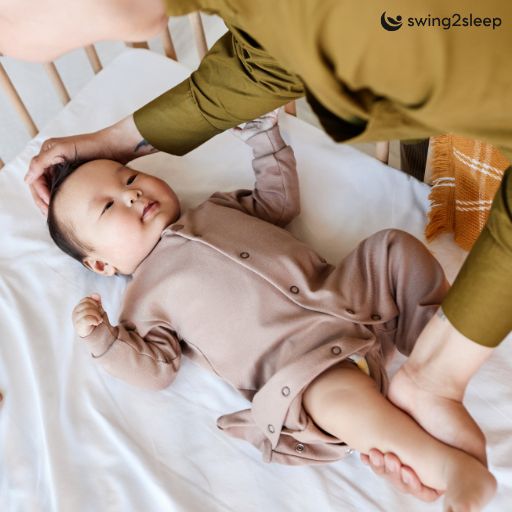
- Change your baby's sleeping position: If your child snores, a change in sleeping position might help. Generally, the back position is recommended as your baby's airways are then clear. Some parents also rely on the side position, as it is said to counteract snoring and wheezing. The prone position (on the stomach), however, is discouraged as this position puts pressure on the lungs and airways.
As you can see, you can ensure that your baby sleeps better and more restfully with simple methods. The measures above can reduce snoring and the risk of breathing problems. Continue to monitor your baby's sleep behavior. If the snoring worsens, you should make an appointment with your pediatrician just to be safe.
Toddler snoring: Have problems with tonsils and adenoids checked
If your baby regularly has problems with their breathing, manifested by snoring and wheezing, then their tonsils (commonly also referred to as adenoids) could be the trigger. The palatine tonsils are important for health as they ward off pathogens.
However, if your baby's tonsils swell and become inflamed, they can block the upper airways. You can recognize swollen tonsils, for example, by your baby's heavy mouth breathing. But frequent infections can also be initial indications of a problem with the pharyngeal tonsils.
During a visit, your pediatrician can determine whether enlarged tonsils are the cause of your baby's symptoms using a simple examination of the throat. In most cases, doctors then advise removing the tonsils to prevent future inflammation. After the procedure, your baby should be able to get enough air again. The breathing problems disappear and the child's breathing normalizes.
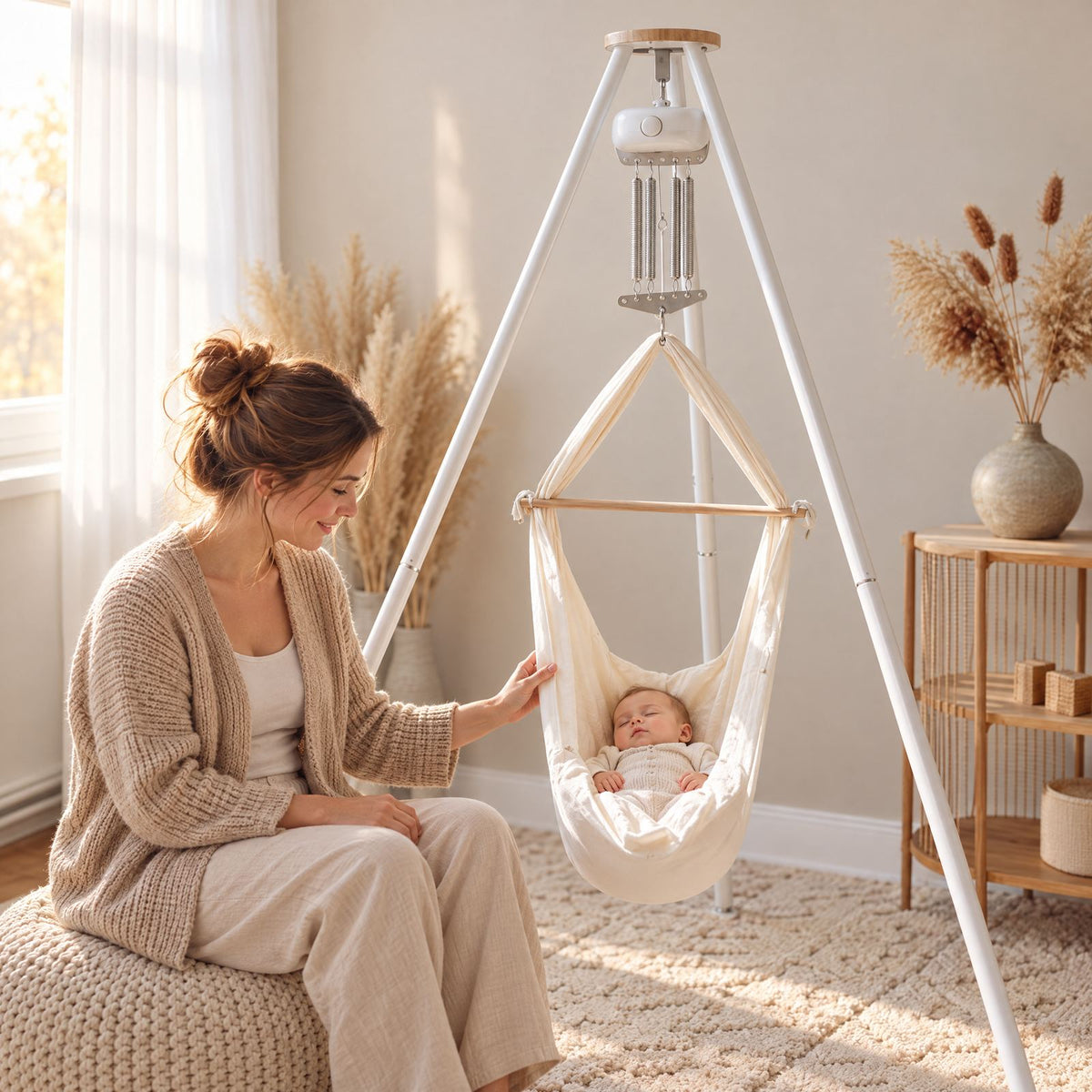
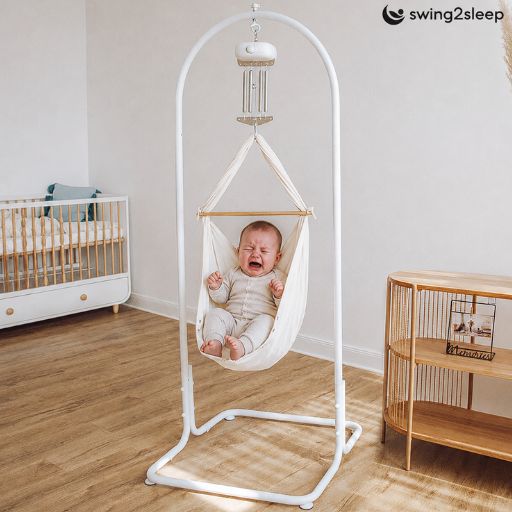
Ensure a relaxed sleeping environment with the automatic baby hammock from swing2sleep
If your baby wheezes or snores, you should first have the cause clarified. If they are completely healthy, you can ensure restful sleep with a good sleeping environment. Your baby feels particularly comfortable in the automatic baby hammock from swing2sleep. It is snugly enclosed by the hammock and then rocked to sleep with gentle up-and-down movements.
This makes it easier for your baby to fall asleep and also promotes sleeping through the night. Conveniently, you can control the automatic baby hammock via smartphone and receive push notifications when your baby wakes up.
Test the automatic baby hammock from swing2sleep and offer your baby a cozy nest – you will see how comfortable your baby will feel.