

How does a baby's mental development actually work? Parents know best: even the very little ones are capable of absorbing an astonishing amount of information and learning new things over and over again. And this begins as early as in the womb.
Mental development begins in the womb
At birth, a child's mental abilities are not yet developed enough to control or reflect on their cognitive processes. This ability only matures gradually along with physical development. However, this does not mean that there is no activity in a newborn's brain. The opposite is the case. At no time in our lives do we learn more and faster than in the first years of life. And this even begins before birth. While still in the womb, the child gathers their first experiences. For example, after birth, they can remember a melody that was played to them through the abdominal wall during pregnancy. If they hear the same melody again later, they react to it.

The baby can also already identify the voices of Mom and Dad, especially if they talk to them a lot before birth.
The recognition of sounds or melodies begins as soon as the fetus's hearing is sufficiently developed. From this time on, the child can even be exposed to quiet music, preferably classical. Loud sounds or aggressive music such as heavy metal, on the other hand, are unsuitable. Their mental development is positively influenced above all by calm, harmonious sounds. Stress and hectic activity, on the other hand, should be avoided.
Development in the first three months
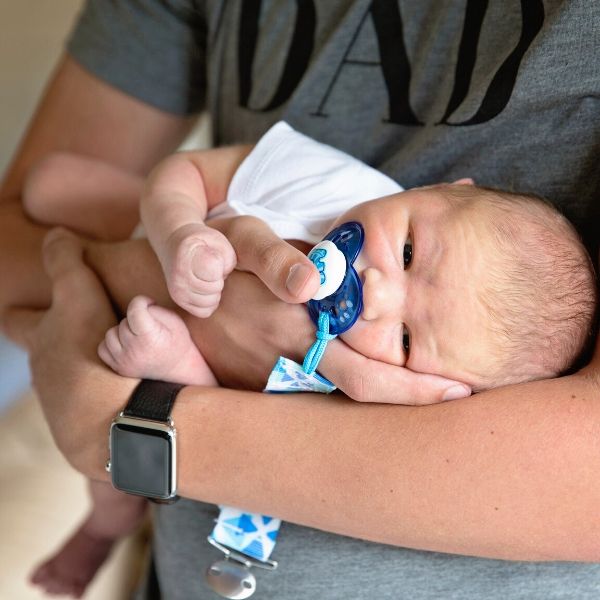
As soon as the baby is born, the rapid development continues. In the process, mental development even overshadows physical growth. In the early stages, the baby experiences their new world primarily through their senses. Impressions hit the child unfiltered. This can be demanding and even overwhelming. Therefore, it is important to protect particularly sensitive children from sensory overload. If it becomes too much, they cry, sleep poorly, are restless and fussy. As important as it is for your baby to be stimulated by constant new impulses, care should be taken, especially with the very little ones, to ensure that they can also cope with the abundance of impressions. Stimuli such as the television, the radio or the smartphone should be kept completely away from babies, because overstimulation can be particularly strong with these flickering and hectic media. You are welcome to challenge your baby a little, play with them and show them new things. However, you should respect it when they signal a need for rest or show that they would like a break by turning their head away.

Through new and repeated experiences, the synapses in your baby's brain join together to form an increasingly complex network. New things form new connections, while repeated experiences and impressions (and later formulated thoughts) continue to expand and strengthen the resulting neural pathways. Over time, an overgrown path becomes an eight-lane highway.
Baby's development at six months
By now, your baby is already a bit more robust. They have learned an incredible amount during the exciting first weeks and months of their life and are still full of thirst for knowledge and curiosity. They want to grasp the world, literally, because exploring the world now largely takes place with their hands. At this age, their own will is already becoming apparent, sometimes quite energetically.
The baby can now distinguish between familiar and strange, which is why they often start to experience stranger anxiety right around now.
At this age, babies can imitate adults, and they intentionally throw objects on the floor to watch them fall or so that Mom and Dad will pick them up again.
A baby at this age does not yet react to their own reflection. It will take another half year before that happens. They also cannot yet understand that you are just in the next room when you leave the room. When they can no longer see you, your child believes you have disappeared.
But the rapid growth continues, and therefore this phase is quickly over as soon as your child has understood the connections.
Memory is becoming increasingly complex. The baby is now developing the ability to think about something without being able to see it or without it having to have a concrete reference to the current situation. So they can think about their bed even though they are currently sitting in the car.

A milestone here is when the baby raises their arms to be picked up by you. Your child is thus showing their first abstract thinking. But that's not all: they specifically link an action with a result.
You can observe almost daily what progress your baby is making. That's why this time is so incredibly exciting for everyone involved.
How can you help the baby with their mental development?
Don't worry, your child develops all by themselves. However, you can of course provide a favorable, encouraging environment. Your baby wants to learn from the first moment after birth. They love looking at faces. They want to understand what you want to say to them.
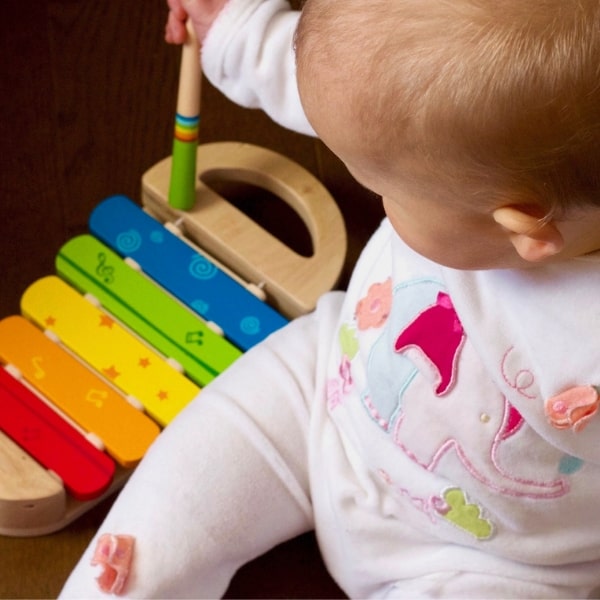
Babies learn best through constant repetition. You can support exactly this through simple games. One of them is that your baby repeatedly throws something down so that you pick it up. They don't do this to annoy you, but because they are learning something in the process. You can also provide your baby with age-appropriate toys and protect them from being overwhelmed.
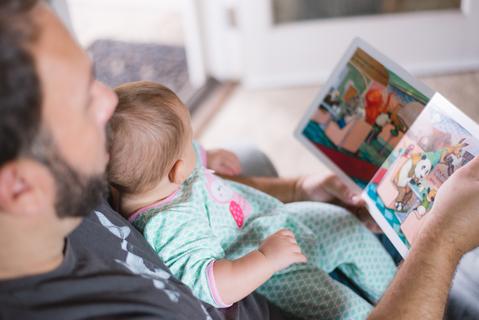
Above all, however, you should read to them and talk to them a lot.
By the way
Rocking also has positive effects on your baby's development – whether in your arms, on an exercise ball, or in our automatic baby hammock from swing2sleep. It specifically promotes the sense of balance and thus supports the child's motor development. The vestibular system is responsible for body coordination, sense of balance, and eye movements and thus plays such a large role in mental development that it is sometimes even said to influence cognitive abilities.
But above all: rocking is fun and makes you happy!