

Many parents believe that they should encourage and support their offspring as early and as intensively as possible. After all, they want to give them the best possible conditions for their later life. But there are pitfalls here too, because it is not at all easy to find the right balance on the narrow line between encouragement and overtaxing.
Early childhood development: the earlier and the more, the better?
It is quite difficult for parents to draw the line between encouragement and overtaxing. Probably everyone harbors the desire to give their offspring the best start in life and therefore does not hesitate to register their child as early as possible for piano lessons, ballet or even figure skating, soccer or English courses. The background is the firm conviction that they are doing something good for their child and paving the way for the future.But: Can that go well? Is early childhood development really so important? Parents who encourage their children early on usually just want the best for their child. But the attempt can backfire quite badly.
Freedom to dawdle, dream, play
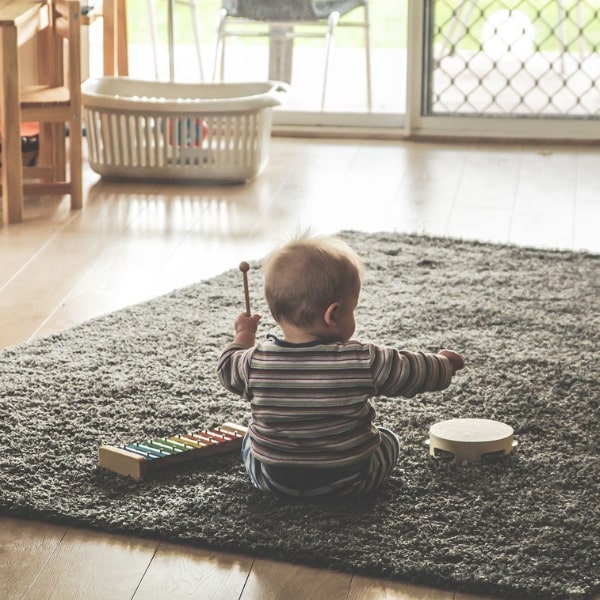
What many parents unfortunately completely ignore: Children absolutely need periods of time in which they can play freely alongside all the development courses and appointments – times when they are not scheduled and in which they might even be bored. A carefree childhood also includes children being able to romp, play and dream data-contrast="auto">. That they can make dates with friends they feel like seeing, and that every minute is not scheduled by the parents. All too often, however, exactly that is the case. The little ones already have schedules like a manager. It is obvious that there is no room left for individual play, and that is not only a great pity, but harmful!
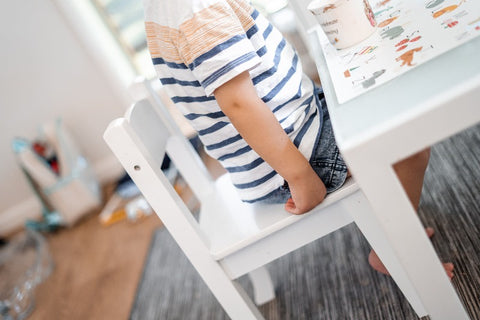
Because performance stress makes children sick.
Anyone who is carted off to riding lessons on Mondays, piano lessons on Tuesdays,
language support on Wednesdays and to a competition on the weekend and also has to study for school in between, will soon find themselves in the spiral of pressure to perform. Aggression, learning deficits, headaches and stomach aches, and sometimes sleep problems, quickly follow.
What are the warning signs?
Children do not always express themselves directly when things become too much for them. Rather, they do not want to disappoint their parents and, so to speak, put on a brave face. That is why parents should look and listen very closely for signals that the child is showing: Actually, this is all too much for me. The symptoms mentioned above in particular can indicate that children feel overwhelmed. This should definitely be taken seriously.
How does it even happen that parents repeatedly overwhelm their children?
Today, we live in an era of perfectionism with a permanent urge for optimization – the striving for perfection. This also has an impact on the upbringing of children. Often, this already starts with the baby. Which one is already sleeping through the night? Which one can already crawl, babble, walk? Many parents try - unfortunately - to drill their children for perfection. Perhaps because they are of the opinion that only then would they be able to master everyday life later on and meet the high demands of life. Only: Perfectionism is anything but child-friendly. Small children are simply not perfectionists, quite the contrary.
Affected children suffer constantly from high pressure and permanent tension. They cannot let themselves go freely because they always have the gnawing feeling that they have to do something even better to please their parents. What a burden is placed on children in this way!
Instead, parents should love their children unconditionally – regardless of what performance they achieve in school or in their private lives.
Children always vie for the recognition of their parents. This is completely normal. The effects can be correspondingly serious if they feel that they do not receive this recognition sufficiently or only in connection with achievements.
Conversely, the goal should naturally not be to let everything slide and leave all of the children's dispositions and talents unsupported. Rather, it is important to find a healthy middle ground. An important aspect of this is to increase the child's self-esteem and give them the certainty: "I am good just the way I am, even with a C in math and even if I am only a mediocre soccer player or piano player."
Accepting one's own weaknesses is a very important experience from which our children will also benefit in later life. No one is perfect, so mistakes must fundamentally also be allowed.
Performance requirements
Another factor that comes into play: The performance requirements that our children face in school and beyond are permanently increasing. This understandably puts parents under pressure. Many of them did not have the educational opportunities that exist today available to them as children themselves and for that very reason want to make them possible for their
child.
The better and more select the nursery, the better the educational opportunities. This naturally tempts parents to pick out the best nursery for their offspring from the wide range available. And indeed: Attending a good nursery enables the child to have a better start in school life and a more successful academic career.
Can overwhelming a child be defined?
Overwhelming is always a risk when parents try to force skills on their child that they do not need or do not (yet) want. The children thereby have a negative learning experience, which tends to have the opposite of the desired effect. In school, this can quickly lead to a "couldn't care less" attitude. Putting children under pressure can quickly prove to be a boomerang.
The solution: No encouragement at all?
Of course, parents should generally encourage their children – not encouraging them at all anymore would certainly be the completely wrong path. Furthermore, children should always be motivated to achieve to a certain extent – but only to a healthy degree. If the child fails to reach a set goal, the parents must convey that they are by no means a failure because of it. A child must neither get the feeling that they are a bad person because they got a failing grade in math, nor that their parents don't love them anymore because they missed out on a medal at a sports competition.
Above all, it is extremely important that children get bored sometimes and have time to do exactly what they want: meet up with friends, read, listen to music, whatever. And that is only possible if they are also granted enough free space.
Three fundamental things should be considered: children want to feel secure, they need opportunities for experience that correspond to their needs, and they must have the opportunity to play with other children. A special course is not necessarily required for this.
Parents should therefore try to find the happy medium: on the one hand, awakening the child's ambition, while avoiding any exertion of pressure. And that is admittedly quite difficult. Furthermore, they should listen to their child and respect it when it absolutely has no desire for something. In addition, parents can also trust their child with a bit more. Many actually know exactly what is good for them and what is not.
Especially regarding the development of children, the following applies: The grass doesn't grow faster if you pull on it.
By the way
Did you know that rocking in a swing2sleep naturally promotes your baby's sense of balance and also supports their motor development? The up and down movement of a swing2sleep not only ensures that your baby feels completely comfortable, it also trains the muscles, the sense of orientation, and stimulates the brain. With a swing2sleep, you promote your child's development in a natural way without overtaxing them. And you even finally have some time for yourself again!