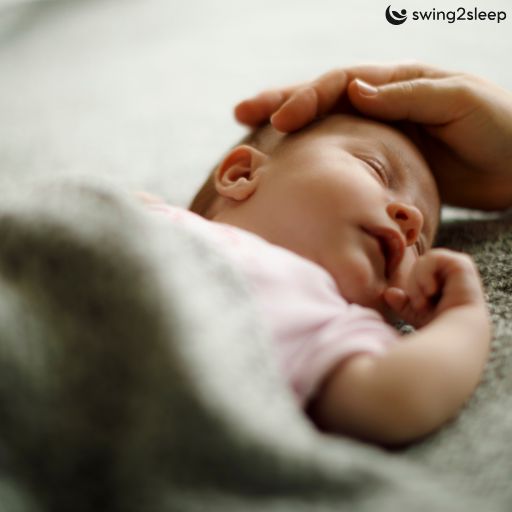
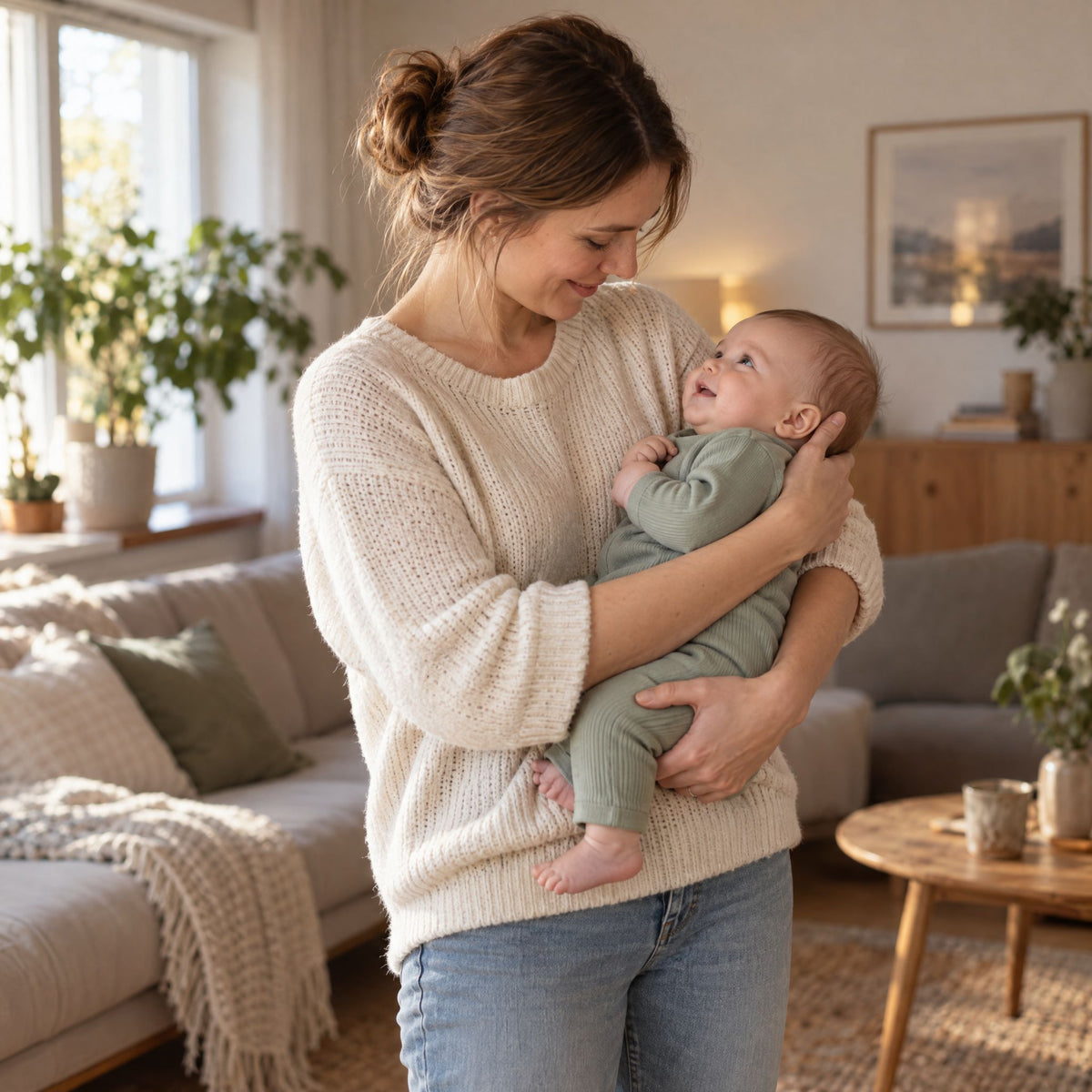


For children and babies, rocking is a truly primal experience. In the first 9 months of life, everyone was in an environment where there was constant rocking: in their mother's womb. Swiss researchers have now discovered that rocking is not only fun (even for adults) – it also makes you smart! This is because it specifically trains the sense of balance, which supports the child's entire motor development. And that is also important for physical development. The fact that there is a concrete connection between physical experience and mental development can best be illustrated symbolically using two examples from language: grasping becomes understanding, catching becomes comprehending.
Letting the baby rock promotes mental development::/H2
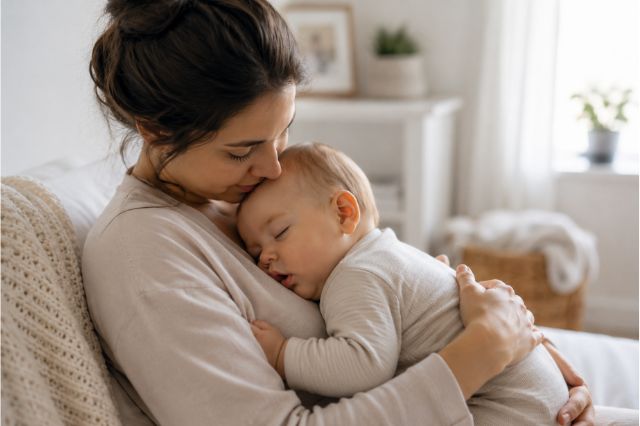
Even during pregnancy, the baby is rocked back and forth with every movement of mom. In the fetus's inner ear, these stimuli are transmitted to the brain. There, the impulses additionally stimulate the networking of brain cells in the vestibular system. In addition, the rocking causes a healthy mixture of tension and relaxation of the muscles, which leads to complex and positive effects on the muscle and movement sensors throughout the body. The result: The brain is promoted and becomes more efficient. After birth, this applies particularly to the first months of the child's life. When you rock your newborn baby, you are killing two birds with one stone: the child falls asleep peacefully, and at the same time their brain is promoted.
When the child is born, it has left its constantly rocking home. If it is lucky, it goes into a cradle where it is at least rocked back and forth every now and then. A crib, on the other hand, does not rock at all, which makes the child miss the womb even more painfully. That is exactly why it is so effective when you rock your baby. It immediately feels secure and reminded of the time in mom's belly.
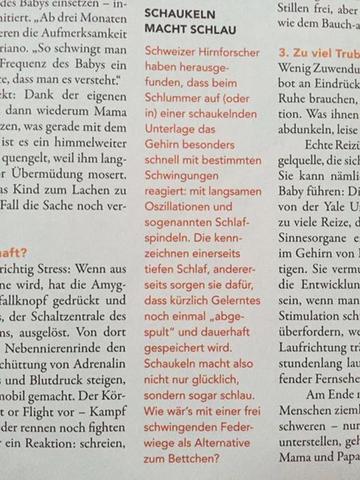
(Excerpt from the magazine "Eltern")
Rocking babies: in the cradle, in the sling, on the exercise ball
There are plenty of rocking opportunities for babies: You can simply carry it around in your arms or dance with it, you can sit on a Pezzi ball with the child, carry it in a sling, rock with it in a rocking chair or place it in an automatic baby hammock.
Even as children get older, rocking is still very popular. This is evidenced, for example, by the great popularity of swings on children's playgrounds. In general, movement has positive effects on brain development. As kids get older, activities like dancing, playing soccer or riding a bike provide proper stimulation for the brain.
Does rocking also make you happy?
Rocking not only makes you smart, but also happy. The tingling in the stomach, the brief feeling of weightlessness, followed by the rush of acceleration – all this ensures the release of happiness hormones that can even make us forget pain. In addition, rocking can also be relaxing – which is why hammocks are also very popular with adults. In fact, we know today that the rocking motion still touches ancient memories in us adults as well.
That may also be the reason why rocking basically accompanies us through our whole life. We might get sick at some point during the rapid up and down of a child's swing, but the adult world is full of roller coasters and free-fall towers, of waterbeds, rocking furniture and rocking chairs – from rapid thrills to contemplative relaxation.
Many adults even feel the impulse on playgrounds to spontaneously sit on the swing themselves for a few swings. So rocking stays with us for our whole life. And it is indeed much more beneficial to health to always stay in motion instead of sitting statically all the time.
Let your baby rock!
So there is reason enough to let your child rock extensively to their heart's content at any age – as a baby in a cradle or automatic baby hammock, as a toddler on a rocking horse and later on a real swing or even a trampoline.
So there is probably hardly any other way to train your brain with so much fun: